

 Share
Share


Welcome to the International Olive Council (IOC), the world’s only intergovernmental organisation bringing together all stakeholders involved in the production and consumption of olive oil and table olives.
Here you will find a summary of the latest sector statistics, including an update on olive oil prices, trends in international trade in olive oil and table olives, and olive oil production prices.
Follow us and visit our website to stay up to date with the latest data. If you have any questions, feel free to contact us at iooc@internationaloliveoil.org.
Market situation
Production
Olive oil: production trends
Global olive oil production has tripled over the last 60 years, reaching 2,589,000 tonnes in the 2023/24 crop year. Provisional data for the 2024/25 crop year points to an increase of 38%, bringing production to 3,572,000 tonnes. For the 2025/26 crop year, estimates indicate a production of 3,440,000 tonnes, which would represent a decrease of 4%.

Table 1 – Olive oil production, consumption and imports.

Graph 1 – Evolution of olive oil production. Annual rates of change based on 1958/59.
Olive oil: provisional 2024/25 crop year
Although these figures are still provisional, world olive oil production in the 2024/25 crop year is estimated at 3,572,000 tonnes, representing an increase of 38%, or 983,000 tonnes more than in the previous crop year. World consumption is expected to be around 3,215,000 tonnes (+15%), while imports are expected to reach 1,198,000 tonnes (+15%).

Table 2 – Olive oil production.
IOC member countries would produce a total of 3,392,000 tonnes, equivalent to 95% of world production this crop year. European countries as a whole would reach 2,110,000 tonnes (+36%). Spain would register a production of 1,419,000 tonnes (+66%), Italy 248,000 tonnes (−25%), Greece 250,000 tonnes (+30%) and Portugal 177,000 tonnes (+10%).
The rest of the IOC member countries would produce 1,282,000 tonnes. Particularly noteworthy are the increases in Türkiye, with 505,000 tonnes (+135%), and Tunisia, with 340,000 tonnes (+55%).
In terms of consumption, IOC member countries would reach a total of 2,179,000 tonnes, while in non-IOC member countries consumption would be around 1,036,000 tonnes (+19%).
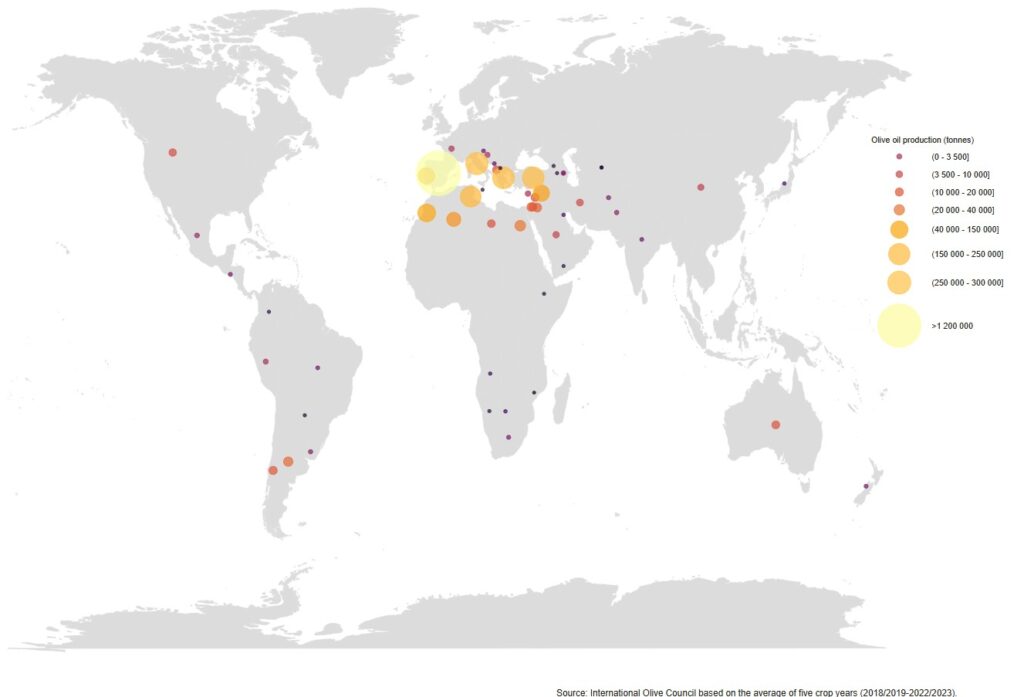
Graph 2 – Olive oil production. Average of five seasons (2018/19–2022/23).
Olive oil: estimated 2025/26 crop year
According to official data from countries and estimates from the IOC Executive Secretariat, world olive oil production in the 2025/26 crop year is expected to be around 3,440,000 tonnes, a 4% drop from the previous crop year. Imports and exports are estimated to exceed 1.2 million tonnes.
IOC member countries estimate a combined production of 3,267,000 tonnes, which would still represent 95% of the world total, but would be a 4% decrease compared to the previous crop year. The producing countries of the European Union forecast production of 2,056,000 tonnes (−3%), while the other IOC member countries are expected to produce 1,211,000 tonnes (−6%).
World consumption could reach 3,248,000 tonnes, which would represent a 1% increase over the previous crop year.
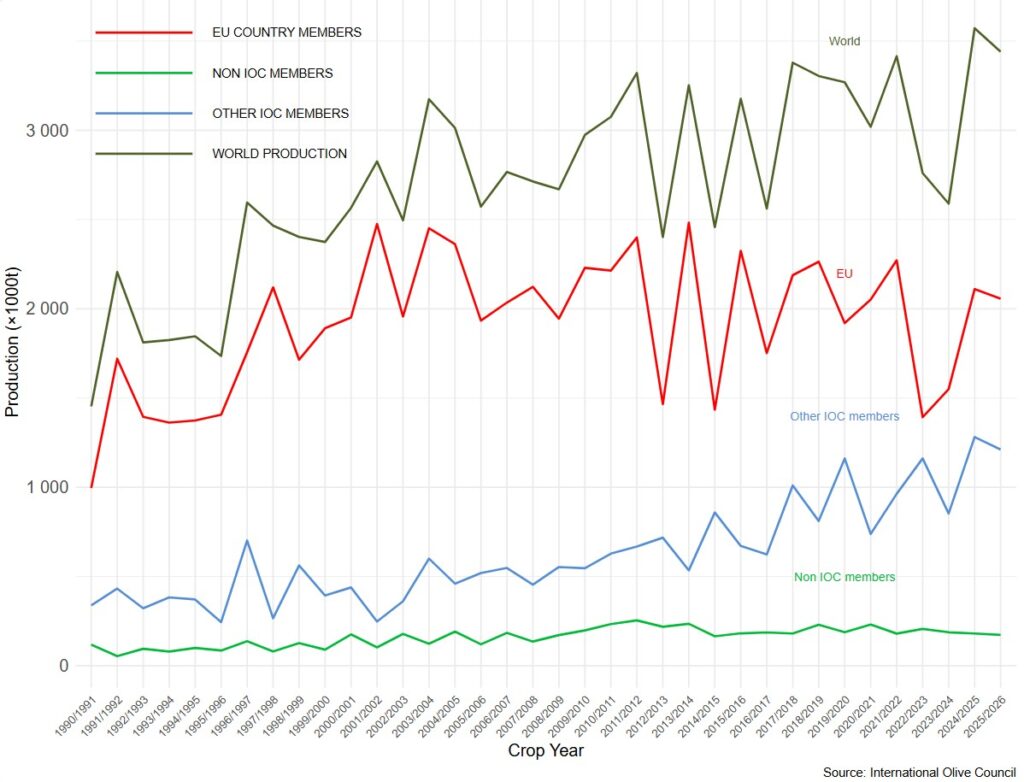
Graph 3 – Evolution of olive oil production.
Table olives: provisional 2024/25 crop year and 2025/26 estimate
World table olive production in the provisional 2024/25 crop year is estimated at 3,316,500 tonnes, representing an increase of 19% over the previous crop year. Among the IOC member countries, the increase recorded in Türkiye (+53%) stands out. Given its weight in world production, it is worth noting the evolution of Egypt, which accounts for 18% of the total, with a 20% drop in the 2024/25 crop year.
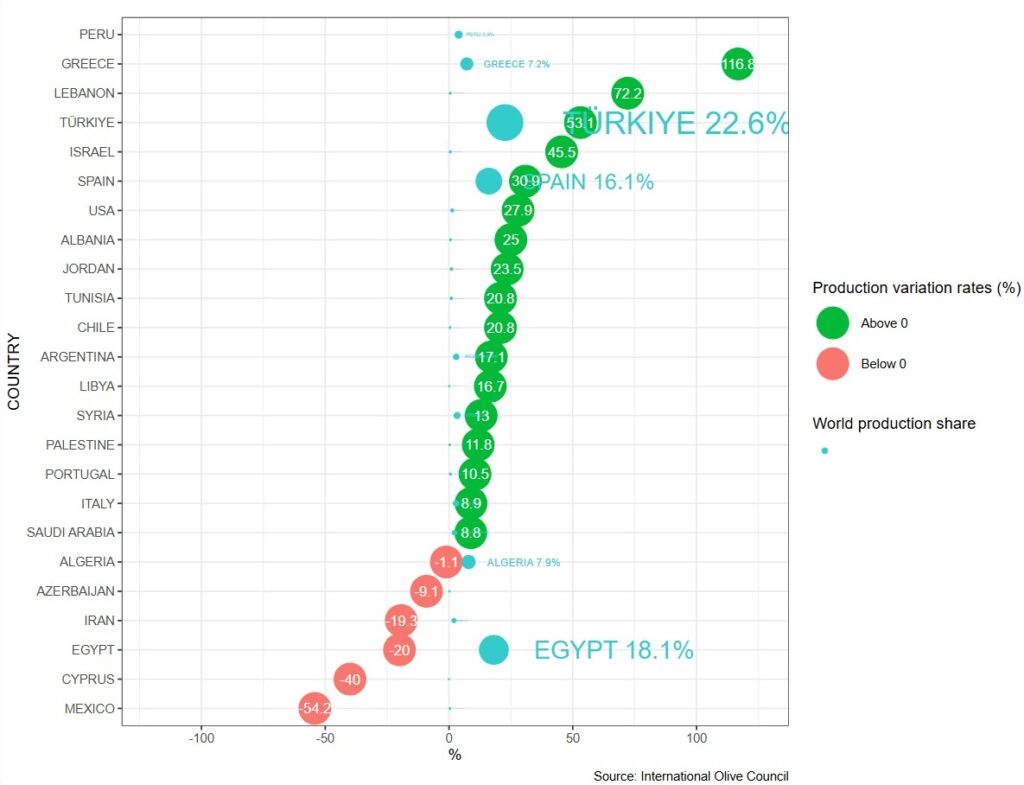
Graph 4 – Growth in table olive production (2024/25–2023/24) and production share (2024/25).
For the 2025/26 crop year, estimates point to a 10% decline, bringing global production to 2,986,000 tonnes.
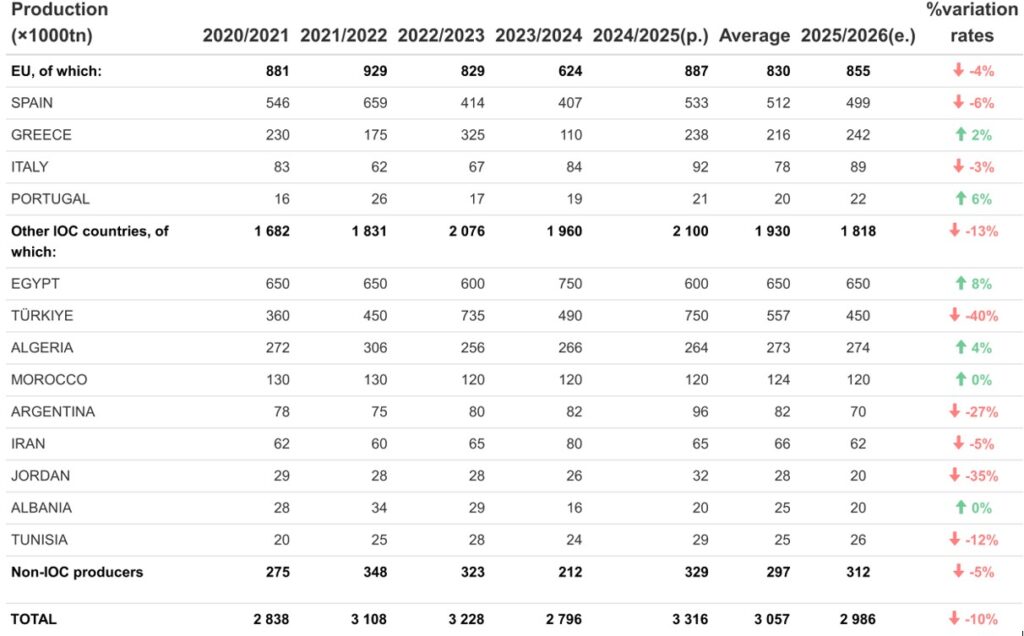
Table 3 – Table olive production.
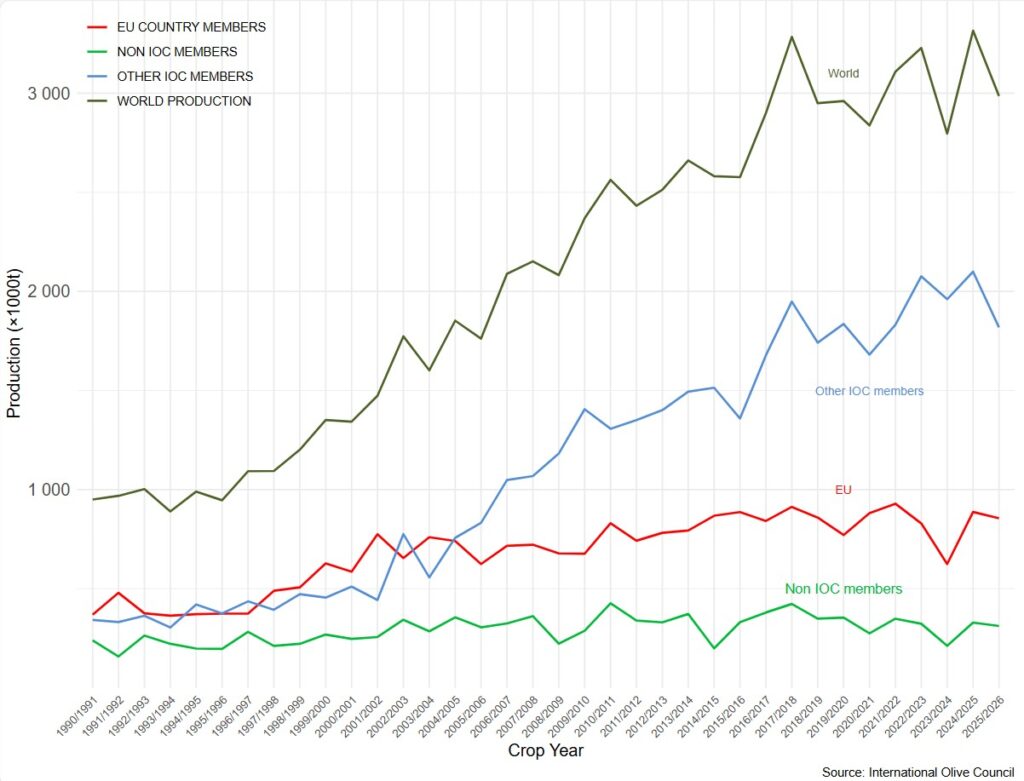
Graph 5 – Evolution of table olive production.
Prices
As for the producer prices of extra virgin olive oil, the latest available data indicate the following:
- Jaén (Spain): in the week of 8 to 14 December, €433 per 100 kg (−11% compared to the same week last crop year).
- Bari (Italy): in the week of 8 to 14 December, €665 per 100 kg (−30%).
- Chania (Greece): in the week of 8 to 14 November, €465 per 100 kg (−6%).

Graph 6 – Extra virgin olive oil prices in the week of 8 to 14 December for Jaén (Spain), Bari (Italy) and Chania (Greece).
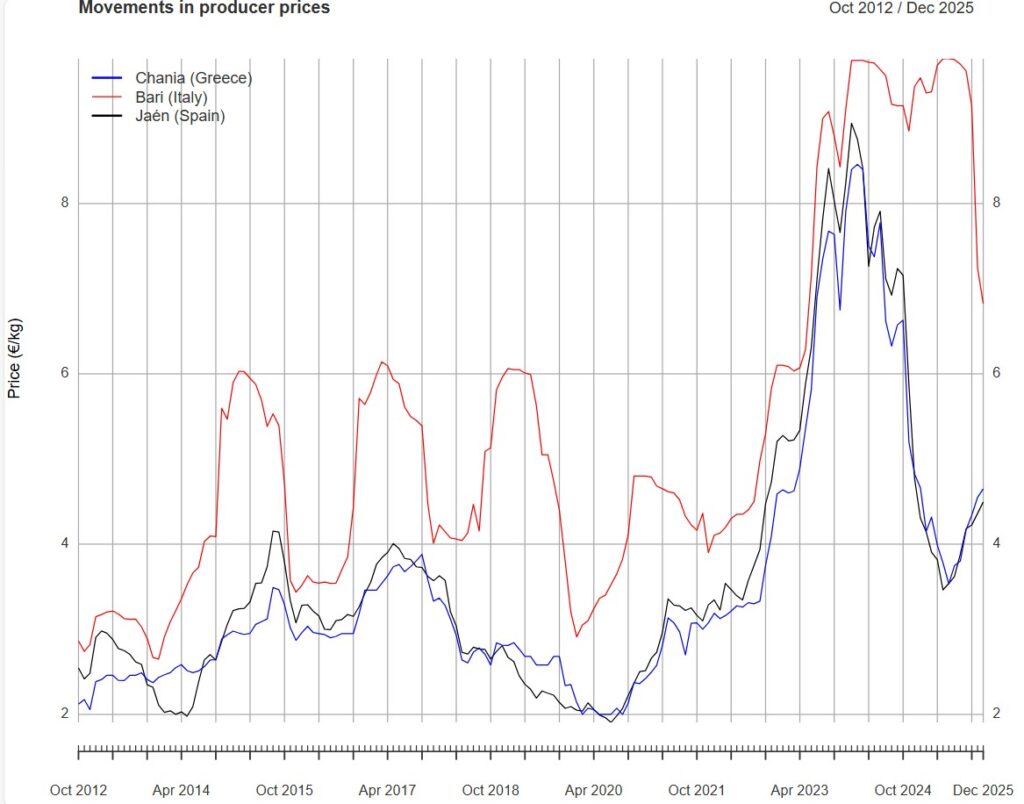
Graph 7 – Evolution of monthly producer prices of extra virgin olive oil.
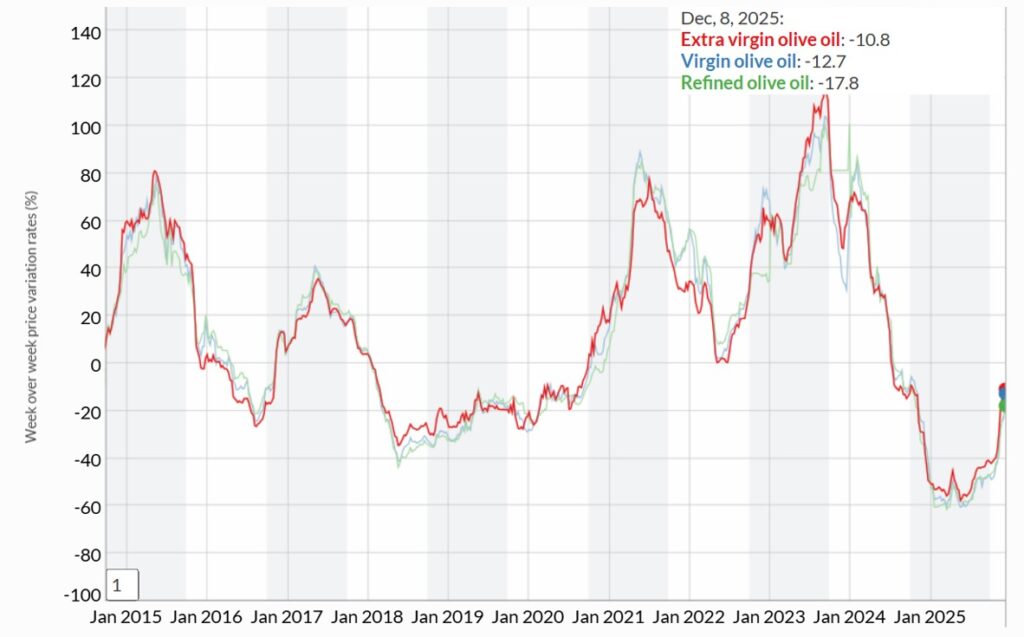
Graph 8 – Evolution of weekly rates of change in the producer price of extra virgin olive oil for Jaén (Spain).
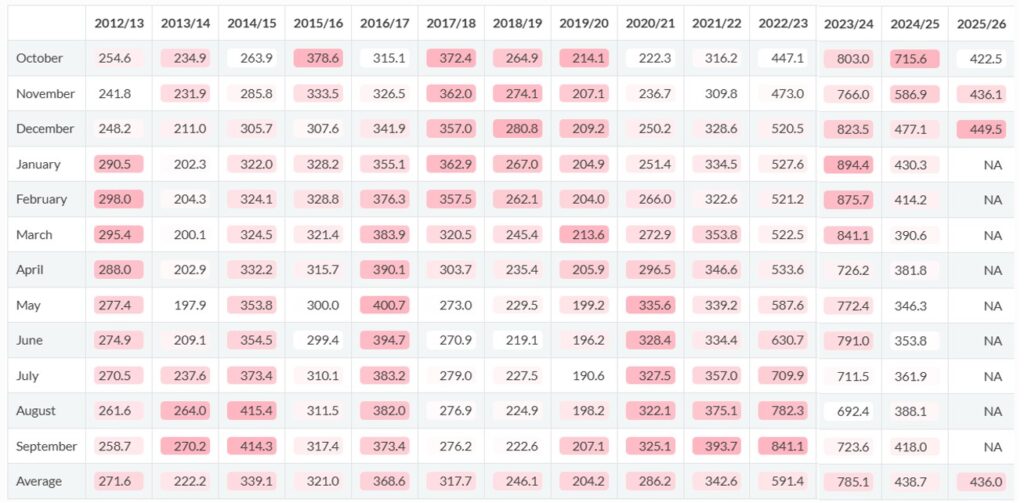
Table 4 – Average monthly producer prices for extra virgin olive oil for Jaén (Spain) (€ / 100 kg).
Note: Some of the data presented is subject to review. Figures may be modified or corrected without prior notice.