• Skip to main content

International Olive Council

The website of the International Olive Council

Logo del Consiglio Oleicolo Internazionale
Linkedin icon Twitter icon
  • Salute
  • Culinario
  • Sostenibilità
Appalti Sovvenzioni Opportunità di Lavoro Patronage
Mail envelope Contatti
Magnifier CERCA
Person icon Area Riservata
Person icon
Menu icon
MENUMENU
  • Il COI
    • Benvenuti
    • Obiettivi e Testi di Base
    • Struttura
    • Elenco dei Membri del COI
    • La nostra sede
    • News
  • Il Nostro Lavoro
    • Unità Standardizzazione e Ricerca
      • Premi Qualità Mario Solinas
      • Laboratori e Panel Riconosciuti dal COI
    • Unità Olivicoltura, Elaiotecnica e Ambiente
    • Unità Gestione Finanziaria
    • Unità Economia e Promozione
    • Unità Amministrazione e Risorse Umane
    • Dipartimento pero l'Informazione e Osservatorio
    • Salute
    • Culinario
    • Sostenibilità
    • Statistiche
  • Il Mondo Dell'Olivo
    • L’olivo
    • Le olive da tavola
    • L’olio d’oliva
    • Olio d’oliva e salute
    • Olive da tavola fatte in casa
    • Musei e itinerari dell’olivo
    • Giornata Mondiale dell’Olivo
      • Celebrazioni della Giornata Mondiale dell’Olivo
    • Ricette
    • Glossario
  • Risorse
    • Carbon Balance Project
    • Catalogo mondiale delle varietà di olivo
    • Pubblicazioni Digitali Gratuite
    • Videos
    • Infographics
  • Norme
  • Statistiche
  • Arabo
  • Inglese
  • Francese
  • Italiano
  • Spagnolo
Appalti Sovvenzioni Opportunità di Lavoro Patronage
Mail envelope Contatti
Magnifier CERCA
We are social
  • Linkedin icon
  • Twitter icon
MENUMENU
  • Il COI
    • Benvenuti
    • Obiettivi e Testi di Base
    • Struttura
    • Elenco dei Membri del COI
    • La nostra sede
    • News
  • Il Nostro Lavoro
    • Unità Standardizzazione e Ricerca
      • Premi Qualità Mario Solinas
      • Laboratori e Panel Riconosciuti dal COI
    • Unità Olivicoltura, Elaiotecnica e Ambiente
    • Unità Gestione Finanziaria
    • Unità Economia e Promozione
    • Unità Amministrazione e Risorse Umane
    • Dipartimento pero l'Informazione e Osservatorio
    • Salute
    • Culinario
    • Sostenibilità
    • Statistiche
  • Il Mondo Dell'Olivo
    • L’olivo
    • Le olive da tavola
    • L’olio d’oliva
    • Olio d’oliva e salute
    • Olive da tavola fatte in casa
    • Musei e itinerari dell’olivo
    • Giornata Mondiale dell’Olivo
      • Celebrazioni della Giornata Mondiale dell’Olivo
    • Ricette
    • Glossario
  • Risorse
    • Carbon Balance Project
    • Catalogo mondiale delle varietà di olivo
    • Pubblicazioni Digitali Gratuite
    • Videos
    • Infographics
  • Norme
  • Statistiche
  • Arabo
  • Inglese
  • Francese
  • Italiano
  • Spagnolo
  • Salute
  • Culinario
  • Sostenibilità
Tools icon

IOC NEWS

Home / Blog / Oleotourism: A strategic tool for sustainable development in the olive sector
Enviar noticiaShare Enlace a facebook Enlace a twitter Enlace a linkedin

Oleotourism: A strategic tool for sustainable development in the olive sector

MADRID, SPAIN / 19.12.2025

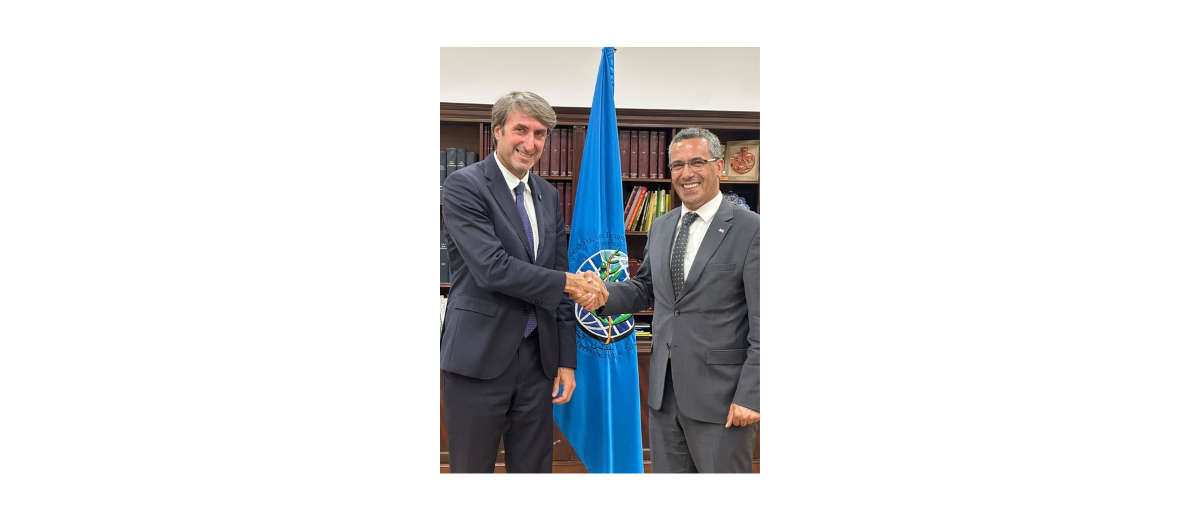
The International Olive Council (IOC) hosted its first webinar on oleotourism on 10 December 2025, gathering over 100 participants from across the olive sector. Organised by the Economy and Promotion Unit, the session was opened by Abderraouf Laajimi, IOC Deputy Executive Director, who underscored the alignment of oleotourism with the IOC’s mission to promote quality, scientific research and transparency, while enhancing the global profile of olive oil and table olives. The keynote address was delivered by Sandra Carvão, Director at UN Tourism, who highlighted the rise of rural tourism and the growing appetite for authentic, gastronomic experiences. The two main sessions of the event featured expert insights from academics and business leaders such as Prof. Manuel Parras Rosa (Spain), Prof. Roberta Garibaldi (Italy), Eleftheria Mamidaki (Greece), Ana Brito Carrilho (Portugal), and testimonials from successful oleotourism initiatives in countries including Brazil, Tunisia, Argentina, Portugal and Italy.

An opportunity for economic, cultural and rural revitalisation

The seminar emphasised that oleotourism is more than a niche trend; it is a strategic opportunity to foster rural development, promote local identity and stimulate economic diversification. Speakers outlined how experiences such as olive mill visits, harvest participation, tastings, and sensory analysis workshops can create deep emotional and educational connections with visitors. These immersive encounters do not just promote extra virgin olive oil—they generate ambassadors for quality, sustainability and culture .

Oleotourism was also framed as a way to build trust and transparency in the olive oil value chain, educate consumers about production processes, and enhance the visibility of traditional landscapes and farming communities. In particular, its contribution to protecting heritage, promoting regenerative tourism, and connecting agriculture with tourism and hospitality was widely praised. Moreover, the integration of digital tools, from mobile apps to virtual experiences, was seen as crucial for widening reach and improving visitor access.

Key challenges to address

Despite its potential, speakers identified several key barriers that must be addressed to allow oleotourism to reach maturity:
• Limited infrastructure in many rural areas, affecting access and visitor comfort.
• Seasonality of tourism and olive oil production cycles, requiring creative programming to ensure year-round activity.
• Fragmented governance, with a lack of national strategies or coordinating bodies to harmonise efforts and support operators.
• Lack of promotion and visibility, both domestically and internationally, particularly among tour operators unfamiliar with the olive sector.
• Insufficient professional training, particularly in sensory analysis, visitor engagement and experience design.
• Risks to authenticity, especially if oleotourism is scaled without adequate cultural safeguards .

Speakers stressed the need for policy support, targeted investment, digitalisation, and education, as well as stronger collaboration among producers, tourism professionals and public authorities.

IOC’s continued commitment

As highlighted in the opening remarks, oleotourism represents a natural extension of the IOC’s work in promoting olive oil culture, quality and sustainability. The Council remains committed to supporting dialogue among stakeholders, sharing international best practices, and fostering integrated approaches that place the olive tree, the landscape and the communities that care for them at the heart of rural development.

Oleotourism has the potential to transform the way the world experiences olive oil—as a symbol of heritage, health, and hospitality. The IOC will continue to champion this movement, helping to ensure it grows in ways that are sustainable, inclusive and rooted in local realities.

Enviar noticiaShare Enlace a facebook Enlace a twitter Enlace a linkedin
Last Posts
Oleotourism: A strategic tool for sustainable development in the olive sector

The International Olive Council (IOC) hosted its first webinar on oleotourism on 10 December 2025, gathering over 100 participants from across the olive sector. Organised by the Economy and Promotion Unit, the session was...

Info

This week on OHIS
MADRID, SPAIN / 05.12.2025

This week on the Olive Health Information System website The newsletter of the University of Navarra and the IOC dedicated to health Article 1 Healthy dietary patterns are generally characterized by a high intake of...

Info

International Seminar Highlights Global Aromas and Sensory Diversity of Extra Virgin Olive Oil

The Fundación del Olivar, with the patronage of the International Olive Council (IOC), hosted the International Seminar on Aromas: The Sensory Diversity of EVOO on 4 December 2025 at Terra Oleum in Mengíbar (Jaén). The...

Info

International olive council logo
Privacy Policy
Il COI sulle reti sociali
  • Linkedin icon
  • Twitter icon
© International Olive Council, 2025
Manage Cookie Consent
To provide the best experiences, we use technologies like cookies to store and/or access device information. Consenting to these technologies will allow us to process data such as browsing behavior or unique IDs on this site. Not consenting or withdrawing consent, may adversely affect certain features and functions.
Functional Sempre attivo
The technical storage or access is strictly necessary for the legitimate purpose of enabling the use of a specific service explicitly requested by the subscriber or user, or for the sole purpose of carrying out the transmission of a communication over an electronic communications network.
Preferencias
El almacenamiento o acceso técnico es necesario para la finalidad legítima de almacenar preferencias no solicitadas por el abonado o usuario.
Statistics
The technical storage or access that is used exclusively for statistical purposes. El almacenamiento o acceso técnico que se utiliza exclusivamente con fines estadísticos anónimos. Sin un requerimiento, el cumplimiento voluntario por parte de tu proveedor de servicios de Internet, o los registros adicionales de un tercero, la información almacenada o recuperada sólo para este propósito no se puede utilizar para identificarte.
Marketing
The technical storage or access is required to create user profiles to send advertising, or to track the user on a website or across several websites for similar marketing purposes.
Gestisci opzioni Gestisci servizi Gestisci {vendor_count} fornitori Per saperne di più su questi scopi
View preferences
{title} {title} {title}

The IOC and the University of Navarra, through OHIS (the Olive Health Information System), a platform dedicated to research on the health properties of olive oil and table olives, publish a weekly or bi-weekly collection of scientific articles and summaries of research carried out in this field.

These articles highlight the numerous health benefits of these products.

You can read the summaries of this research here in French, English and Spanish and access the list of articles, or visit the OHIS portal.

For any assistance, please contact iooc@internationaloliveoil.org.

COI logo
CIA logo

L’olio di oliva per una cucina più ricca di prodotti di origine vegetale

Cucinare oggi: mille idee dalla dieta mediterranea

Scelte alimentari giuste, sane e piene di gusto: il Culinary Institute of America e il Consiglio oleicolo internazionale lavorano a un progetto comune – con un focus su formazione tecnica e menu innovativi dedicato agli chef. Scoprilo qui.

X