• Skip to main content

International Olive Council

The website of the International Olive Council

Logo Consejo Oleícola Internacional
Linkedin icon Twitter icon
  • Salud
  • Culinario
  • Sostenibilidad
Contratos Subvenciones Vacantes Patrocinio
Mail envelope Contacto
Magnifier Buscar
Person icon Área Privada
Person icon
Menu icon
MENUMENU
  • Who we are
    • Mission and Vision
    • Fundamental Texts
    • Governance and Structure
    • Member Countries and Observers
  • Qué Hacemos
    • Unidad de Normalización e Investigación
      • Normas COI, Métodos y Guías
      • Grupos de Trabajo
      • Reconocimiento de Laboratorios y Paneles
      • Premio del COI a la Calidad Mario Solinas
      • Apoyo Institucional del COI
      • Aceite de Oliva, Nutrición y Salud
      • Investigación en la Unidad de Normalización e Investigación
      • Base de Datos de Documentos del COI
    • Olive Growing, Olive Oil Technology and Environment Unit
      • Technical Cooperation and Training
      • Olive Oil Technology and the Environment
      • IOC Scholarships
      • Supporting Member Countries
      • External Projects and Institutional Agreements
      • IOC Network of International Olive Germplasm Banks
      • Key Projects and Technical Resources
    • Unidad de Asuntos Econónicos y Promoción
      • Market Statistics
      • Country Profiles
      • Promotion Campaigns
      • Grants for Promotion Activities
      • Studies & Seminars
  • Press Room
    • Artículos
    • Monthly Olive Sector Statistics
    • Olive Health Information System
    • Agenda 2026
    • Videos
    • Infographics
  • Key Projects
    • Carbon Balance Project
    • Catálogo mundial de variedades del olivo
    • El Día Mundial del Olivo
      • Celebraciones del Día Mundial del Olivo
    • IOC Published Documents
    • Glosario de la terminología oleícola
  • Normas
  • Estadísticas
  • Árabe
  • Inglés
  • Francés
  • Italiano
  • Español
Contratos Subvenciones Vacantes Patronage
Mail envelope Contacto
Magnifier Buscar
We are social
  • Linkedin icon
  • Twitter icon
MENUMENU
  • Who we are
    • Mission and Vision
    • Fundamental Texts
    • Governance and Structure
    • Member Countries and Observers
  • Qué Hacemos
    • Unidad de Normalización e Investigación
      • Normas COI, Métodos y Guías
      • Grupos de Trabajo
      • Reconocimiento de Laboratorios y Paneles
      • Premio del COI a la Calidad Mario Solinas
      • Apoyo Institucional del COI
      • Aceite de Oliva, Nutrición y Salud
      • Investigación en la Unidad de Normalización e Investigación
      • Base de Datos de Documentos del COI
    • Olive Growing, Olive Oil Technology and Environment Unit
      • Technical Cooperation and Training
      • Olive Oil Technology and the Environment
      • IOC Scholarships
      • Supporting Member Countries
      • External Projects and Institutional Agreements
      • IOC Network of International Olive Germplasm Banks
      • Key Projects and Technical Resources
    • Unidad de Asuntos Econónicos y Promoción
      • Market Statistics
      • Country Profiles
      • Promotion Campaigns
      • Grants for Promotion Activities
      • Studies & Seminars
  • Press Room
    • Artículos
    • Monthly Olive Sector Statistics
    • Olive Health Information System
    • Agenda 2026
    • Videos
    • Infographics
  • Key Projects
    • Carbon Balance Project
    • Catálogo mundial de variedades del olivo
    • El Día Mundial del Olivo
      • Celebraciones del Día Mundial del Olivo
    • IOC Published Documents
    • Glosario de la terminología oleícola
  • Normas
  • Estadísticas
  • Árabe
  • Inglés
  • Francés
  • Italiano
  • Español
  • Salud
  • Culinario
  • Sostenibilidad
Tools icon

IOC NEWS

Home / Blog / This week on the Olive Health Information System website
Enviar noticiaShare Enlace a facebook Enlace a twitter Enlace a linkedin

This week on the Olive Health Information System website

MADRID, SPAIN / 13.12.2023

The newsletter of the University of Navarra and the IOC dedicated to health

Important scientific advances have suggested that the gut microbiota is involved in several biological processes and has an influence on diverse human diseases. This week’s newsletter brings you information on studies showing that diet can influence the relationship between gut microbiota and individual health outcomes. A systematic review evaluated the effects of the Mediterranean diet (MedDiet) on the composition and metabolism of the gut microbiota. Results showed that the MedDiet could affect the microbial ecosystem due to changes in the substrates flowing to the large bowel. In another study, investigators revealed that greater adherence to the MedDiet is associated with lower visceral adipose tissue and inflammation levels (C-reactive protein), and these associations could be explained by mediation of the gut microbiome (higher relative abundance of Porphyromonadaceae and lower relative abundance of Peptostreptococcaceae). Nonetheless, these findings should be validated in further studies.

This week, two recent reviews have focused specifically on olive oil, the main culinary component of the MedDiet, and have gone over its beneficial effects on several chronic diseases, especially cardiovascular diseases. In the first review, the authors highlighted the benefits shown in the PREDIMED clinical trial regarding the reduction of the incidence of serious cardiovascular events in the MedDiet with extra-virgin olive oil (EVOO) and the MedDiet with nuts groups compared with the low-fat diet  group (incidence rates were 8.1, 8.0, and 11.2 per 1,000 person-years, respectively).

The second review focused on the health effects of polyphenols present in olive mill waste water (OMWW), a by-product of olive oil production.  OMWW extracts are rich in polyphenols, with phenolic acids such as hydroxytyrosol and tyrosol being most abundant. Both have shown potent antioxidant, anti-inflammatory effects, and anti-cancer properties, making them potential candidates for areas of research in cancer prevention and treatment. Hydroxytyrosol is additionally known for its cardioprotective and neuroprotective properties and tyrosol for its anti-microbial properties. Moreover, there is some evidence to suggest that other phenolic compounds in OMWW may have regulating effects on insulin and blood sugar.  Overall, the potential biomedical uses of OMWW constitute an interesting line of research given that it would also indirectly contribute to the reduction of waste in the production of olive oil, making the entire process more sustainable.

Click HERE to see the latest posts…
Enviar noticiaShare Enlace a facebook Enlace a twitter Enlace a linkedin
Last Posts
Global excellence in extra virgin olive oil under evaluation at the 26th Mario Solinas Quality Award

International Jury convenes in Madrid to assess 123 EVOOs from across the northern hemisphere From 14 to 17 April 2026, the International Olive Council (IOC) hosted the international jury of the 26th edition of the Mario...

Info

IOC and CIHEAM Zaragoza to organise two regional training courses in May 2026

Deadline extended: 17 April 2026. The International Olive Council (IOC), in collaboration with the International Centre for Advanced Mediterranean Agronomic Studies (CIHEAM Zaragoza), will organise two regional training...

Info

Estadísticas del sector oleícola – abril 2026
MADRID, ESPAÑA / 08.04.2026

Bienvenido al Consejo Oleícola Internacional (COI), la única organización intergubernamental del mundo que reúne a todas las partes interesadas en la producción y el consumo de aceite de oliva y aceitunas de mesa. Aquí...

Info

International olive council logo
Privacy Policy
Somos sociales
  • Linkedin icon
  • Twitter icon
© International Olive Council, 2026
Gestionar consentimiento de cookies
Para proporcionar las mejores experiencias, utilizamos tecnologías como las cookies para almacenar y/o acceder a la información del dispositivo. Consentir estas tecnologías nos permitirá procesar datos como el comportamiento de navegación o IDs únicos en este sitio. No consentir o retirar el consentimiento, puede afectar negativamente a ciertas características y funciones.
Funcional Siempre activo
El almacenamiento o acceso técnico es estrictamente necesario para el fin legítimo de permitir el uso de un servicio específico solicitado explícitamente por el abonado o usuario, o con el único fin de llevar a cabo la transmisión de una comunicación a través de una red de comunicaciones electrónicas.
Preferencias
El almacenamiento o acceso técnico es necesario para el fin legítimo de almacenar preferencias no solicitadas por el abonado o usuario.
Estadísticas
El almacenamiento o acceso técnico que se utiliza exclusivamente con fines estadísticos. El almacenamiento o acceso técnico que se utiliza exclusivamente con fines estadísticos anónimos. Sin una citación judicial, el cumplimiento voluntario por parte de su proveedor de servicios de Internet o registros adicionales de un tercero, la información almacenada o recuperada únicamente con este fin no puede utilizarse normalmente para identificarle.
Marketing
El almacenamiento o acceso técnico es necesario para crear perfiles de usuario para enviar publicidad, o para seguir al usuario en un sitio web o en varios sitios web con fines de marketing similares.
Administrar opciones Gestionar los servicios Gestionar {vendor_count} proveedores Leer más sobre estos propósitos
Ver preferencias
{title} {title} {title}

Culinary

Olive Oil and the Plant-Forward Kitchen

Discover how the Mediterranean Diet inspires contemporary cooking.

Explore this collaboration between the International Olive Council and The Culinary Institute of America, designed to promote healthy, sustainable and flavourful food choices, with a strong focus on technical training and menu innovation for chefs.

External link

COI logo
CIA logo

Salud

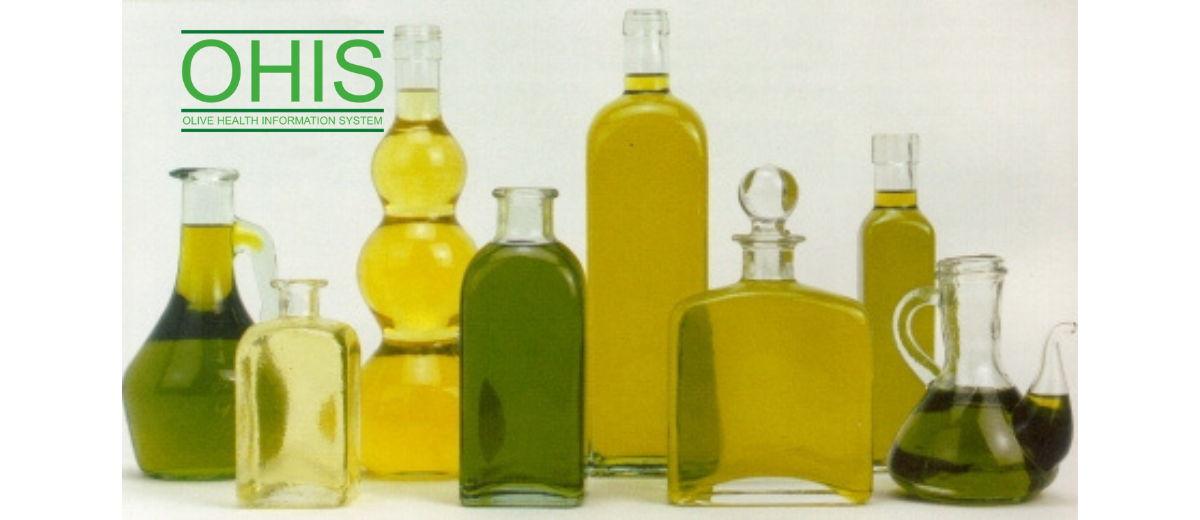
El COI y la Universidad de Navarra, a través de OHIS (Olive Health Information System), una plataforma dedicada a la investigación sobre las propiedades saludables del aceite de oliva y las aceitunas de mesa, publican semanal o quincenalmente una recopilación de artículos científicos y un resumen de las investigaciones realizadas en este ámbito.

Estos artículos ponen de relieve los numerosos beneficios para la salud de estos productos.

Puede leer los resúmenes de estas investigaciones aquí en francés, inglés y español y acceder a la lista de artículos, o visitar el portal de OHIS.

Summaries OHIS portal

Para cualquier asistencia, póngase en contacto con iooc@internationaloliveoil.org.

Sustainability in the Olive Sector

Access the sustainability portal developed in collaboration between the IOC, the University of Jaén and the Instituto Universitario de Investigación en Olivar y Aceites de Oliva.

Explore research, tools and knowledge supporting sustainable olive growing and responsible production practices.

External link

X