• Skip to main content

International Olive Council

The website of the International Olive Council

Logo du Conseil oléicole international
Linkedin icon Twitter icon
  • Santé
  • Alimentation
  • Durabilité
Marchés Subventions Postes Vacants Parrainage
Mail envelope Contact
Magnifier Recherche
Person icon Espace Privé
Person icon
Menu icon
MENUMENU
  • Qui sommes-nous
    • Mission et vision
    • Textes fondamentaux
    • Gouvernance et structure
    • Pays membres et observateurs
  • Nos Missions
    • Unité de Normalisation et Recherche
      • Normes, Méthodes et Guides COI
      • Groupes de Travail
      • Agrément aux Laboratoires et aux Jurys de Dégustateurs
      • Prix à la Qualité Mario Solinas
      • Soutien institutionnel du COI
      • Huile d’Olive, Nutrition et Santé
      • Recherche au Sein de l’Unité de Normalisationet Recherche
      • Base de données des documents du COI
    • Unité Oléiculture, Oléotechnie et Environnement
      • Technical Cooperation and Training
      • Olive Oil Technology and the Environment
      • IOC Scholarships
      • Supporting Member Countries
      • External Projects and Institutional Agreements
      • IOC Network of International Olive Germplasm Banks
      • Key Projects and Technical Resources
    • Unité d’Économie et de Promotion
      • Market Statistics
      • Country Profiles
      • Promotion Campaigns
      • Grants for Promotion Activities
      • Studies & Seminars
  • Press Room
    • Tous les articles
    • Olive Health Information System
    • Monthly Olive Sector Statistics
    • Agenda 2026
    • Videos
    • Infographics
  • Key Projects
    • Projet Bilan Carbone
    • Catalogue mondial des variétés d'olivier
    • La Journée Mondiale de l’Olivier
      • Célébrations de la Journée mondiale de l’olivier
    • IOC Published Documents
    • Glossary of olive terms
  • Normes
  • Statistiques
  • Arabe
  • Anglais
  • Français
  • Italien
  • Espagnol
Marchés Subventions Postes Vacants Parrainage
Mail envelope Contact
Magnifier Recherche
Nos réseaux sociaux
  • Linkedin icon
  • Twitter icon
MENUMENU
  • Qui sommes-nous
    • Mission et vision
    • Textes fondamentaux
    • Gouvernance et structure
    • Pays membres et observateurs
  • Nos Missions
    • Unité de Normalisation et Recherche
      • Normes, Méthodes et Guides COI
      • Groupes de Travail
      • Agrément aux Laboratoires et aux Jurys de Dégustateurs
      • Prix à la Qualité Mario Solinas
      • Soutien institutionnel du COI
      • Huile d’Olive, Nutrition et Santé
      • Recherche au Sein de l’Unité de Normalisationet Recherche
      • Base de données des documents du COI
    • Unité Oléiculture, Oléotechnie et Environnement
      • Technical Cooperation and Training
      • Olive Oil Technology and the Environment
      • IOC Scholarships
      • Supporting Member Countries
      • External Projects and Institutional Agreements
      • IOC Network of International Olive Germplasm Banks
      • Key Projects and Technical Resources
    • Unité d’Économie et de Promotion
      • Market Statistics
      • Country Profiles
      • Promotion Campaigns
      • Grants for Promotion Activities
      • Studies & Seminars
  • Press Room
    • Tous les articles
    • Olive Health Information System
    • Monthly Olive Sector Statistics
    • Agenda 2026
    • Videos
    • Infographics
  • Key Projects
    • Projet Bilan Carbone
    • Catalogue mondial des variétés d'olivier
    • La Journée Mondiale de l’Olivier
      • Célébrations de la Journée mondiale de l’olivier
    • IOC Published Documents
    • Glossary of olive terms
  • Normes
  • Statistiques
  • Arabe
  • Anglais
  • Français
  • Italien
  • Espagnol
  • Santé
  • Alimentation
  • Durabilité
Tools icon

IOC NEWS

Home / Blog / Pakistan moves closer to the IOC
Enviar noticiaShare Enlace a facebook Enlace a twitter Enlace a linkedin

Pakistan moves closer to the IOC

Islamabad / 24.10.2021

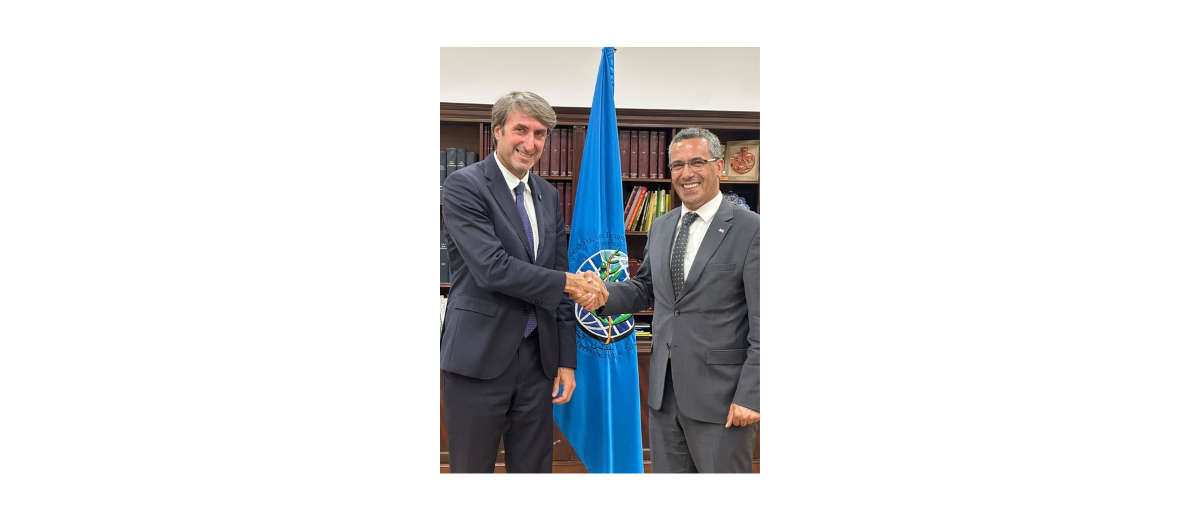
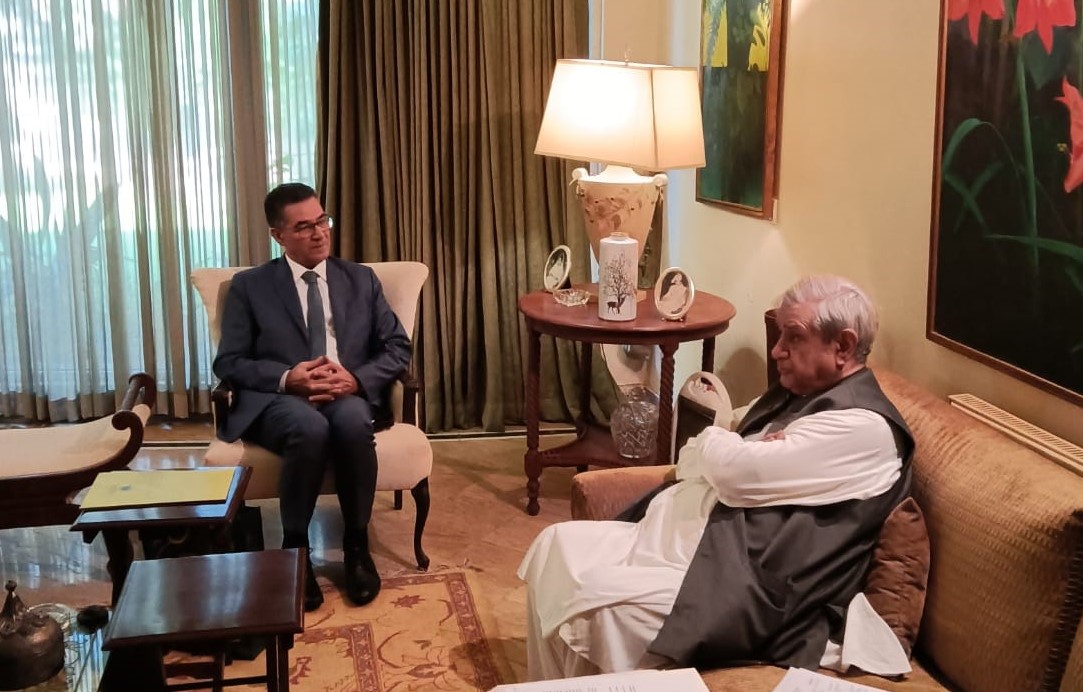
Mission of the Executive Director to Pakistan (III) – On the third day of his mission to Pakistan, the Executive Director and the Head of the External Relations Department of the IOC Executive Secretariat were received by H.E. Fakher Imam, Federal Minister for Food Security and Research of Pakistan. During their two-hour meeting, they discussed the state of the agriculture and food sector as well as the development plan for the olive sector.
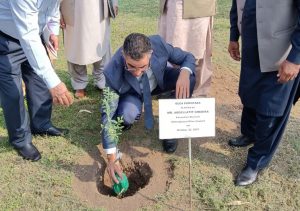
The Minister emphasised two subjects to which he attached great importance: the training of experts and technology transfer. The Executive Director concurred, stressing the importance of human resources before embarking on such ambitious projects.

The two officials agreed on the procedure for Pakistan to accede to the IOC. The Minister expressed his country’s determination to complete the required steps quickly and indicated that all parties concerned were committed to achieve this goal.

Gifts were exchanged at the end of the meeting.

The IOC delegation then visited the National Advanced Institute of Genome and Biotechnology. The officials presented their work on sequencing and DNA research of olive varieties planted in Pakistan and their identification.
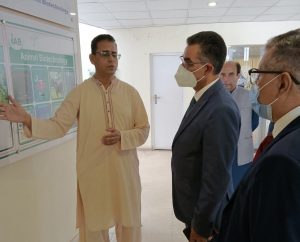
The Executive Director congratulated the team that had implemented the programme and already identified a large number of varieties, both local and imported.

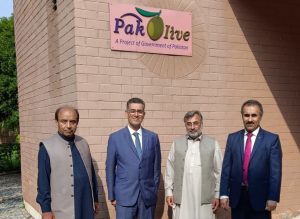
In the afternoon, they visited Pak Olive, the government unit in charge of the plan to develop the olive sector in Pakistan. The visit to the premises demonstrated the efforts made by this institution in terms of project management, communication, encouraging farmers to plant olive trees, attempts to produce small quantities of packaged products and especially developing new products from the olive tree, such as cosmetics or olive leaf tea.

The Executive Director was positively surprised by their progress despite the rudimentary means employed and stated that with new technology, Pakistan would soon enter the big league. Aware of the technological gap, he called for assistance in terms of expertise and technological developments. They added that they were looking forward to their membership in the IOC to acquire new knowledge and develop their tools and production facilities.


Mission du Directeur exécutif au Pakistan (III)
Islamabad –  – Au troisième jour de sa mission au Pakistan, le Directeur exécutif du COI et le chef du Département des Relations extérieures du Secrétariat exécutif de l’Organisation ont été reçus par S.E. Fakher Imam, ministre fédéral chargé de la sécurité alimentaire et de la recherche du Pakistan. Durant leur entretien, qui a duré deux heures, ils ont abordé l’état du secteur agricole et de l’alimentation en général et le plan de développement du secteur oléicole en particulier.

Le ministre a insisté sur deux sujets auxquels il accorde une grande importance : la formation des experts et les transferts de technologie. Le Directeur exécutif a abondé dans ce sens en soulignant l’importance des ressources humaines avant de se lancer dans des projets d’une telle ambition.

Les deux responsables se sont mis d’accord sur la procédure à suivre pour que le Pakistan accède au COI. Le ministre a fait part de la détermination de son pays à accomplir toutes les démarches requises dans un laps de temps très court et indiqué que toutes les parties concernées étaient décidées à atteindre cet objectif.

Des cadeaux ont été échangés à l’issue de cette rencontre.

La délégation du COI s’est ensuite rendue à l’Institut national supérieur du génome et de la biotechnologie. Les responsables de cette institution ont présenté au Directeur exécutif du COI leurs travaux de séquençage et de recherche sur l’ADN des variétés d’olivier plantées au Pakistan et leur identification.

Le Directeur exécutif a félicité l’équipe scientifique qui a mis en œuvre le programme et déjà identifié un grand nombre de variétés, aussi bien locales qu’importées.

L’après-midi a été consacré à la visite de Pak Olive, l’unité gouvernementale chargée du plan de développement du secteur oléicole au Pakistan. Une visite des locaux a permis de se rendre compte des efforts fournis par cette institution en termes de pilotage du projet, de communication, d’incitation des agriculteurs pour la plantation des oliviers, de tentatives de production de petites quantités conditionnées et surtout de développement des produits dérivés de l’olivier, comme les produits cosmétiques ou le thé á base de feuilles d’olivier.

Le Directeur exécutif s’est dit positivement surpris par une telle avancée malgré les moyens rudimentaires employés et déclaré qu’avec les nouvelles technologies, le Pakistan entrerait bientôt dans la cour des grands. Ses interlocuteurs se sont dit conscients du retard technologique et ont appelé de leurs vœux la fourniture d’assistance, en termes d’expertise et de nouveautés technologiques. Ils ont ajouté qu’ils comptaient bien sur leur adhésion au COI pour acquérir de nouvelles connaissances et développer leurs outils et moyens de production.

 

Enviar noticiaShare Enlace a facebook Enlace a twitter Enlace a linkedin
Derniers Messages
Le COI et le CIHEAM Zaragoza organiseront deux cours régionaux de formation en mai 2026.

Le Conseil oléicole international (COI), en collaboration avec le Centre international de hautes études agronomiques méditerranéennes (CIHEAM Zaragoza), organisera deux cours régionaux de formation en mai 2026 dans le...

Info

Le COI et l’UPM signent un protocole d’accord
MADRID, ESPAGNE / 16.03.2026

Le Conseil oléicole international (COI) et l’Université polytechnique de Madrid (UPM) d’Espagne viennent de signer un protocole d’accord visant à renforcer leur coopération dans le secteur oléicole....

Info

Cette semaine sur l’OHIS
MADRID, ESPAGNE / 13.03.2026

Cette semaine sur le site de l’Olive Health Information System La newsletter de l’Université de Navarre et du COI consacrée à la santé Article 1 Des études récentes ont examiné le rôle des habitudes alimentaires...

Info

International olive council logo
Privacy Policy
Nos réseaux sociaux
  • Linkedin icon
  • Twitter icon
© International Olive Council, 2026
Manage Cookie Consent
To provide the best experiences, we use technologies like cookies to store and/or access device information. Consenting to these technologies will allow us to process data such as browsing behavior or unique IDs on this site. Not consenting or withdrawing consent, may adversely affect certain features and functions.
Functional Toujours activé
The technical storage or access is strictly necessary for the legitimate purpose of enabling the use of a specific service explicitly requested by the subscriber or user, or for the sole purpose of carrying out the transmission of a communication over an electronic communications network.
Preferencias
El almacenamiento o acceso técnico es necesario para la finalidad legítima de almacenar preferencias no solicitadas por el abonado o usuario.
Statistics
The technical storage or access that is used exclusively for statistical purposes. El almacenamiento o acceso técnico que se utiliza exclusivamente con fines estadísticos anónimos. Sin un requerimiento, el cumplimiento voluntario por parte de tu proveedor de servicios de Internet, o los registros adicionales de un tercero, la información almacenada o recuperada sólo para este propósito no se puede utilizar para identificarte.
Marketing
The technical storage or access is required to create user profiles to send advertising, or to track the user on a website or across several websites for similar marketing purposes.
Gérer les options Gérer les services Gérer {vendor_count} fournisseurs En savoir plus sur ces finalités
View preferences
{title} {title} {title}

Culinary

Olive Oil and the Plant-Forward Kitchen

Discover how the Mediterranean Diet inspires contemporary cooking.

Explore this collaboration between the International Olive Council and The Culinary Institute of America, designed to promote healthy, sustainable and flavourful food choices, with a strong focus on technical training and menu innovation for chefs.

External link

COI logo
CIA logo

Santé

Le COI et l’Université de Navarre, à travers l’OHIS (de l’anglais Olive Health Information System), une plateforme dédiée à la recherche sur les propriétés de l’huile d’olive et des olives de table sur la santé, publient chaque semaine ou toutes les deux semaines un recueil d’articles scientifiques et une synthèse des recherches menées dans ce domaine.

Ces articles mettent en lumière les nombreux bienfaits de ces produits pour la santé.

Vous pouvez lire les résumés de ces recherches ici en français, anglais et espagnol et accéder à la liste des articles, ou visiter le portail OHIS.

Summaries OHIS portal

Pour toute assistance, veuillez contacter iooc@internationaloliveoil.org.

Sustainability in the Olive Sector

Access the sustainability portal developed in collaboration between the IOC, the University of Jaén and the Instituto Universitario de Investigación en Olivar y Aceites de Oliva.

Explore research, tools and knowledge supporting sustainable olive growing and responsible production practices.

External link

X