• Skip to main content

International Olive Council

The website of the International Olive Council

Logo Consejo Oleícola Internacional
Linkedin icon Twitter icon
  • Salud
  • Culinario
  • Sostenibilidad
Contratos Subvenciones Vacantes Patrocinio
Mail envelope Contacto
Magnifier Buscar
Person icon Área Privada
Person icon
Menu icon
MENUMENU
  • Who we are
    • Mission and Vision
    • Fundamental Texts
    • Governance and Structure
    • Member Countries and Observers
  • Qué Hacemos
    • Unidad de Normalización e Investigación
      • Normas COI, Métodos y Guías
      • Grupos de Trabajo
      • Reconocimiento de Laboratorios y Paneles
      • Premio del COI a la Calidad Mario Solinas
      • Apoyo Institucional del COI
      • Aceite de Oliva, Nutrición y Salud
      • Investigación en la Unidad de Normalización e Investigación
      • Base de Datos de Documentos del COI
    • Olive Growing, Olive Oil Technology and Environment Unit
      • Technical Cooperation and Training
      • Olive Oil Technology and the Environment
      • IOC Scholarships
      • Supporting Member Countries
      • External Projects and Institutional Agreements
      • IOC Network of International Olive Germplasm Banks
      • Key Projects and Technical Resources
    • Unidad de Asuntos Econónicos y Promoción
      • Market Statistics
      • Country Profiles
      • Promotion Campaigns
      • Grants for Promotion Activities
      • Studies & Seminars
  • Press Room
    • Todos los artículos
    • Olive Health Information System
    • Monthly Olive Sector Statistics
    • Agenda 2026
    • Videos
    • Infographics
  • Key Projects
    • Carbon Balance Project
    • Catálogo mundial de variedades del olivo
    • El Día Mundial del Olivo
      • Celebraciones del Día Mundial del Olivo
    • IOC Published Documents
    • Glossary of olive terms
  • Normas
  • Estadísticas
  • Árabe
  • Inglés
  • Francés
  • Italiano
  • Español
Contratos Subvenciones Vacantes Patronage
Mail envelope Contacto
Magnifier Buscar
We are social
  • Linkedin icon
  • Twitter icon
MENUMENU
  • Who we are
    • Mission and Vision
    • Fundamental Texts
    • Governance and Structure
    • Member Countries and Observers
  • Qué Hacemos
    • Unidad de Normalización e Investigación
      • Normas COI, Métodos y Guías
      • Grupos de Trabajo
      • Reconocimiento de Laboratorios y Paneles
      • Premio del COI a la Calidad Mario Solinas
      • Apoyo Institucional del COI
      • Aceite de Oliva, Nutrición y Salud
      • Investigación en la Unidad de Normalización e Investigación
      • Base de Datos de Documentos del COI
    • Olive Growing, Olive Oil Technology and Environment Unit
      • Technical Cooperation and Training
      • Olive Oil Technology and the Environment
      • IOC Scholarships
      • Supporting Member Countries
      • External Projects and Institutional Agreements
      • IOC Network of International Olive Germplasm Banks
      • Key Projects and Technical Resources
    • Unidad de Asuntos Econónicos y Promoción
      • Market Statistics
      • Country Profiles
      • Promotion Campaigns
      • Grants for Promotion Activities
      • Studies & Seminars
  • Press Room
    • Todos los artículos
    • Olive Health Information System
    • Monthly Olive Sector Statistics
    • Agenda 2026
    • Videos
    • Infographics
  • Key Projects
    • Carbon Balance Project
    • Catálogo mundial de variedades del olivo
    • El Día Mundial del Olivo
      • Celebraciones del Día Mundial del Olivo
    • IOC Published Documents
    • Glossary of olive terms
  • Normas
  • Estadísticas
  • Árabe
  • Inglés
  • Francés
  • Italiano
  • Español
  • Salud
  • Culinario
  • Sostenibilidad
Tools icon

IOC NEWS

Home / Blog / Looking Back at the 120th Session of the IOC Council of Members
Enviar noticiaShare Enlace a facebook Enlace a twitter Enlace a linkedin

Looking Back at the 120th Session of the IOC Council of Members

MADRID, SPAIN / 27.11.2024

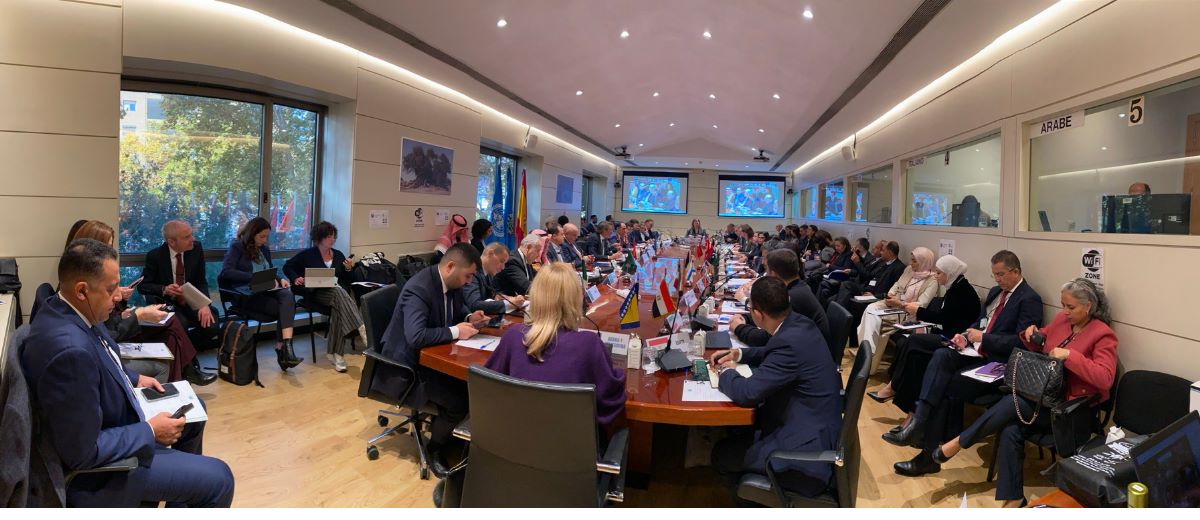
The Council of Members of the International Olive Council (IOC) convened on 20 November for its 120th session, a key occasion to review activities undertaken in its three main areas of action: olive growing, olive oil technology and the environment; chemistry and standardisation; and economy and promotion. This event highlighted the progress achieved and saw the adoption of strategic decisions for the future of the olive sector.

Advances in Olive Growing and the Environment

Significant achievements in the field of olive growing were showcased. Iran’s olive germplasm collection was recognised as an international collection within the IOC network. Additionally, a historic agreement was signed this year between the FAO, the IOC, and Spain to integrate the Spanish olive germplasm bank into the International Treaty on Plant Genetic Resources. This integration represents a major step in preserving genetic resources and sharing knowledge.
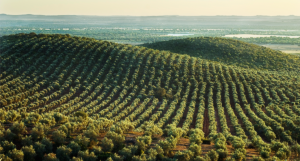
The World Catalogue of Olive Varieties has been updated and will soon be available on the IOC website, providing a valuable tool for sector stakeholders to better understand the diversity of olive varieties worldwide. Furthermore, significant progress has been made in the olive grove carbon balance project, amongst which we find an innovative methodology that is being developed to measure CO2 emissions and absorptions, contributing to global sustainability goals.

In terms of capacity building, the IOC continues to strengthen professional skills. It awarded four doctoral scholarships, four master’s scholarships, and 28 specialised scholarships for virgin olive oil tasting. In September 2024, the seminar on olive by-products brought together 65 participants from 27 countries, underlining the IOC’s role as a platform for exchange and training. Finally, nine national and international activities were organised to address the diverse needs expressed by member countries.

Standardisation and Research: Enhanced Harmonisation
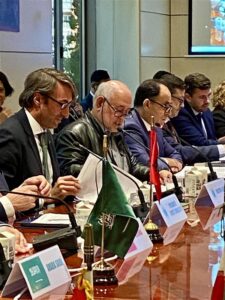
The Council also reaffirmed its commitment to the international harmonisation of standards. The number of recognised laboratories for the physico-chemical and sensory analysis of olive oils has significantly increased: 130 laboratories from 21 countries and 120 tasting panels from 27 countries have been recognised by the IOC. These developments illustrate the Organisation’s dedication to ensuring high and uniform standards globally.

Argentina was designated as the host country for the next edition of the Mario Solinas Quality Award for Extra Virgin Olive Oils in the Southern Hemisphere in 2025, further recognising the excellence of the olive sector worldwide. The Council also adopted several key revisions, including updates to the Trade Standard Applying to Olive Oils and Olive-Pomace Oils, the rules for the 2025 Mario Solinas Quality Awards, and the guide for training and selecting tasters. A provisional method for analysing volatile compounds in virgin olive oils was also adopted.


Economy and Promotion: Renewed Momentum

On the economic and promotional front, the IOC’s efforts are yielding results. The number and quality of requests from member countries for grants to organise promotional activities have increased, prompting the Council to allocate a larger budget for these activities. Following the successful initial months of the promotional campaign in Brazil, new initiatives are planned for 2025. The IOC Executive Secretariat is also considering launching a new promotional campaign in a non-member country; South Africa and Mexico have been suggested.

The IOC continues to invest in economic research, with updated data on consumer behaviour and the organisation of a dedicated seminar in 2025. These initiatives aim to better understand consumer expectations and adapt the sector’s strategies accordingly.

Memorable Moments
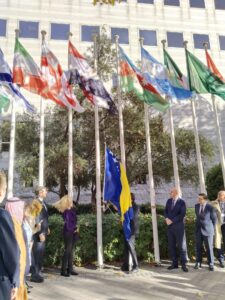
The 120th session also celebrated Bosnia-Herzegovina’s recent accession to the IOC with a flag-raising ceremony. The following day, members participated in an event organised in collaboration with the CSIC and CIHEAM to mark World Olive Day. This day also commemorated the 30th anniversary of the publication of the Mediterranean Diet Pyramid, a model of health and sustainability.

Renowned speakers such as Antonia Trichopoulou, Miguel Ángel Martínez-González, Frank Hu, Walter Willett, and Greg Drescher highlighted the Mediterranean diet’s unique position as a global model for a healthy and environmentally friendly lifestyle, with olive oil and table olives playing a central role in this diet.


For more information on the decisions and documents adopted during this session, visit the official IOC website.

 

Enviar noticiaShare Enlace a facebook Enlace a twitter Enlace a linkedin
Last Posts
IOC and CIHEAM Zaragoza to organise two regional training courses in May 2026

The International Olive Council (IOC), in collaboration with the International Centre for Advanced Mediterranean Agronomic Studies (CIHEAM Zaragoza), will organise two regional training courses in May 2026 as part of its...

Info

IOC and UPM sign MoU
MADRID, SPAIN / 16.03.2026

The International Olive Council (IOC) and the Polytechnic University of Madrid (UPM) in Spain have signed a Memorandum of Understanding (MoU) to strengthen cooperation in the olive sector. The agreement was signed by Mr...

Info

Esta semana en el OHIS
MADRID, ESPAÑA / 13.03.2026

Esta semana en el sitio web del Olive Health Information Service La newsletter de la Universidad de Navarra y el COI dedicada a la salud Artículo 1 Estudios recientes han examinado el papel de los patrones alimentarios...

Info

International olive council logo
Privacy Policy
Somos sociales
  • Linkedin icon
  • Twitter icon
© International Olive Council, 2026
Gestionar consentimiento de cookies
Para proporcionar las mejores experiencias, utilizamos tecnologías como las cookies para almacenar y/o acceder a la información del dispositivo. Consentir estas tecnologías nos permitirá procesar datos como el comportamiento de navegación o IDs únicos en este sitio. No consentir o retirar el consentimiento, puede afectar negativamente a ciertas características y funciones.
Funcional Siempre activo
El almacenamiento o acceso técnico es estrictamente necesario para el fin legítimo de permitir el uso de un servicio específico solicitado explícitamente por el abonado o usuario, o con el único fin de llevar a cabo la transmisión de una comunicación a través de una red de comunicaciones electrónicas.
Preferencias
El almacenamiento o acceso técnico es necesario para el fin legítimo de almacenar preferencias no solicitadas por el abonado o usuario.
Estadísticas
El almacenamiento o acceso técnico que se utiliza exclusivamente con fines estadísticos. El almacenamiento o acceso técnico que se utiliza exclusivamente con fines estadísticos anónimos. Sin una citación judicial, el cumplimiento voluntario por parte de su proveedor de servicios de Internet o registros adicionales de un tercero, la información almacenada o recuperada únicamente con este fin no puede utilizarse normalmente para identificarle.
Marketing
El almacenamiento o acceso técnico es necesario para crear perfiles de usuario para enviar publicidad, o para seguir al usuario en un sitio web o en varios sitios web con fines de marketing similares.
Administrar opciones Gestionar los servicios Gestionar {vendor_count} proveedores Leer más sobre estos propósitos
Ver preferencias
{title} {title} {title}

Culinary

Olive Oil and the Plant-Forward Kitchen

Discover how the Mediterranean Diet inspires contemporary cooking.

Explore this collaboration between the International Olive Council and The Culinary Institute of America, designed to promote healthy, sustainable and flavourful food choices, with a strong focus on technical training and menu innovation for chefs.

External link

COI logo
CIA logo

Salud

El COI y la Universidad de Navarra, a través de OHIS (Olive Health Information System), una plataforma dedicada a la investigación sobre las propiedades saludables del aceite de oliva y las aceitunas de mesa, publican semanal o quincenalmente una recopilación de artículos científicos y un resumen de las investigaciones realizadas en este ámbito.

Estos artículos ponen de relieve los numerosos beneficios para la salud de estos productos.

Puede leer los resúmenes de estas investigaciones aquí en francés, inglés y español y acceder a la lista de artículos, o visitar el portal de OHIS.

Summaries OHIS portal

Para cualquier asistencia, póngase en contacto con iooc@internationaloliveoil.org.

Sustainability in the Olive Sector

Access the sustainability portal developed in collaboration between the IOC, the University of Jaén and the Instituto Universitario de Investigación en Olivar y Aceites de Oliva.

Explore research, tools and knowledge supporting sustainable olive growing and responsible production practices.

External link

X