

 Share
Share


Spain, Italy, Tunisia and China are the countries of origin of the twenty extra virgin olive oils that have received this quality award this year.
The International Olive Council (IOC) is pleased to announce the winners of the 26th edition of the Mario Solinas Quality Award, which continues its tradition of more than two decades of highlighting the excellence of extra virgin olive oils (EVOO) worldwide.
For this edition – launched in July 2025 – 122 oils from Algeria, China, Spain, France, Greece, Iran, Italy, Jordan, Morocco, Portugal and Tunisia were entered into the competition. These oils were submitted by individual producers, associations and packer companies and, in accordance with the competition rules, were classified into the following categories: robust green fruitiness, medium green fruitiness, delicate green fruitiness, ripe fruitiness, small-scale producers and packers.
The oils entered in this edition underwent a rigorous sensory evaluation process, using the IOC Panel platform, developed by the Fundación del Olivar. The international jury, comprising nine expert tasters, assessed the participating oils based on the olfactory, gustatory and retronasal sensations of each sample, as well as their harmony, complexity and persistence.
“This competition recognises the effort to achieve excellence in the production of extra virgin olive oil, as well as the work and dedication of those who cultivate olive trees and obtain from their olives a unique and healthy product. It also aims to raise consumer awareness of the extraordinary diversity of sensory experiences—both gustatory and olfactory—that extra virgin olive oils can offer,” said Jaime Lillo, Executive Director of the IOC.
The awards ceremony will be held on 18 June 2026 at the IOC headquarters in Madrid, where the winners will be honoured.
Read the full list of winners here.
A product full of nuances
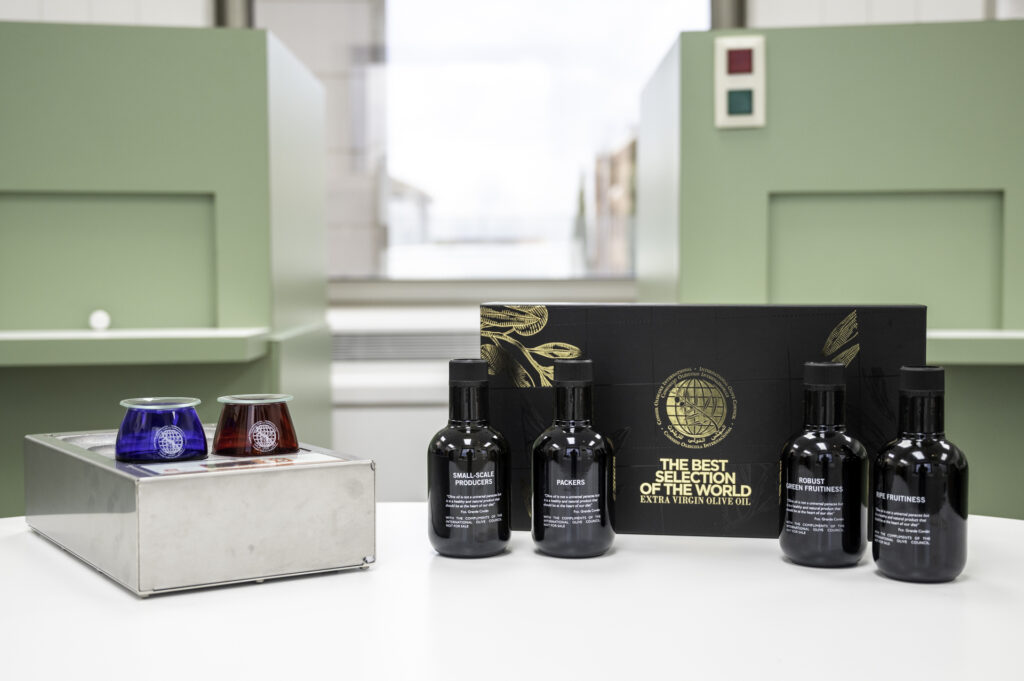 The Mario Solinas Quality Award was established in 1993 as a tribute to Professor Mario Solinas, who played a crucial role in developing the first scientific method for the organoleptic evaluation of virgin olive oil.
Unlike other foods, the quality of virgin olive oil is based not only on chemical parameters, but also on the sensory perception of these attributes, which vary according to the olive variety, the climate and the extraction techniques. This process, which combines science with human expertise, ensures the authenticity and transparency of the market, promoting excellence in the production of extra virgin olive oil (EVOO) and, ultimately, protecting the consumer.
Sensory analysis allows extra virgin olive oils to be classified according to their organoleptic characteristics, such as fruitiness, and the presence of other positive attributes like bitterness and pungency. These attributes, assessed by tasting panels recognised by the IOC, define the sensory identity of each oil and are essential for categorising it as green fruity (robust, medium or delicate) or ripe.
Over the years, the IOC has expanded the scope of the award by introducing an edition organised in the Southern Hemisphere from 2024, with the aim of encompassing the diversity of origins, varieties and climates that enrich the world of extra virgin olive oil.