• Skip to main content

International Olive Council

The website of the International Olive Council

Logo del Consiglio Oleicolo Internazionale
Linkedin icon Twitter icon
  • Salute
  • Culinario
  • Sostenibilità
Appalti Sovvenzioni Opportunità di Lavoro Patronage
Mail envelope Contatti
Magnifier CERCA
Person icon Area Riservata
Person icon
Menu icon
MENUMENU
  • Who we are
    • Mission and Vision
    • Fundamental Texts
    • Governance and Structure
    • Member Countries and Observers
  • What we do
    • Unità Standardizzazione e Ricerca
      • Norme, Metodi e Manuali
      • Gruppi de Lavoro
      • Laboratori e Panel Riconosciuti dal COI
      • Premio alla Qualità Mario Solinas
      • Sostegno istituzionale del COI
      • Olio di Oliva, Alimentazione e Salute
      • Attività di Ricerca presso l’Unità Standardizzazione e Ricerca
      • Database documenti del COI
    • Olive Growing, Olive Oil Technology and Environment Unit
      • Technical Cooperation and Training
      • Olive Oil Technology and the Environment
      • IOC Scholarships
      • Supporting Member Countries
      • External Projects and Institutional Agreements
      • IOC Network of International Olive Germplasm Banks
      • Key Projects and Technical Resources
    • Unità Economia e Promozione
      • Market Statistics
      • Country Profiles
      • Promotion Campaigns
      • Grants for Promotion Activities
      • Studies & Seminars
  • Olive World
    • L’olivo
    • Le olive da tavola
    • L’olio d’oliva
    • Olio d’oliva e salute
    • Olive da tavola fatte in casa
    • Musei e itinerari dell’olivo
    • Giornata Mondiale dell’Olivo
    • Ricette
    • Glossario
  • Resources
    • Carbon Balance Project
    • World Catalogue of Olive Varieties
    • Publications
    • Videos
    • Infographics
  • Norme, Metodi e Manuali
  • Statistiche
  • Arabo
  • Inglese
  • Francese
  • Italiano
  • Spagnolo
Appalti Sovvenzioni Opportunità di Lavoro Patronage
Mail envelope Contatti
Magnifier CERCA
We are social
  • Linkedin icon
  • Twitter icon
MENUMENU
  • Who we are
    • Mission and Vision
    • Fundamental Texts
    • Governance and Structure
    • Member Countries and Observers
  • What we do
    • Unità Standardizzazione e Ricerca
      • Norme, Metodi e Manuali
      • Gruppi de Lavoro
      • Laboratori e Panel Riconosciuti dal COI
      • Premio alla Qualità Mario Solinas
      • Sostegno istituzionale del COI
      • Olio di Oliva, Alimentazione e Salute
      • Attività di Ricerca presso l’Unità Standardizzazione e Ricerca
      • Database documenti del COI
    • Olive Growing, Olive Oil Technology and Environment Unit
      • Technical Cooperation and Training
      • Olive Oil Technology and the Environment
      • IOC Scholarships
      • Supporting Member Countries
      • External Projects and Institutional Agreements
      • IOC Network of International Olive Germplasm Banks
      • Key Projects and Technical Resources
    • Unità Economia e Promozione
      • Market Statistics
      • Country Profiles
      • Promotion Campaigns
      • Grants for Promotion Activities
      • Studies & Seminars
  • Olive World
    • L’olivo
    • Le olive da tavola
    • L’olio d’oliva
    • Olio d’oliva e salute
    • Olive da tavola fatte in casa
    • Musei e itinerari dell’olivo
    • Giornata Mondiale dell’Olivo
    • Ricette
    • Glossario
  • Resources
    • Carbon Balance Project
    • World Catalogue of Olive Varieties
    • Publications
    • Videos
    • Infographics
  • Norme, Metodi e Manuali
  • Statistiche
  • Arabo
  • Inglese
  • Francese
  • Italiano
  • Spagnolo
  • Salute
  • Culinario
  • Sostenibilità
Tools icon

IOC NEWS

Home / Blog / EXPERTS WILL GATHER AT THE IOC TO ANALYSE THE OLIVE GROVE’S FUNDAMENTAL ROLE IN ADDRESSING CLIMATE CHANGE ACTING AS A PERMANENT CO2 SINK
Enviar noticiaShare Enlace a facebook Enlace a twitter Enlace a linkedin

EXPERTS WILL GATHER AT THE IOC TO ANALYSE THE OLIVE GROVE’S FUNDAMENTAL ROLE IN ADDRESSING CLIMATE CHANGE ACTING AS A PERMANENT CO2 SINK

MADRID, SPAGNA / 04.10.2023

Climate change is indisputably one of the greatest challenges faced by humankind across the globe in the current century. It is rapidly affecting our way of living every day, rendering the urgent search for solutions to this threat a main priority item in the international agenda. The United Nations has established a series of climate goals that are aimed in large part at reducing the global carbon dioxide (CO2) emissions in order to avoid our planet from overheating. A task which requires the input and effort from all aspects of society.

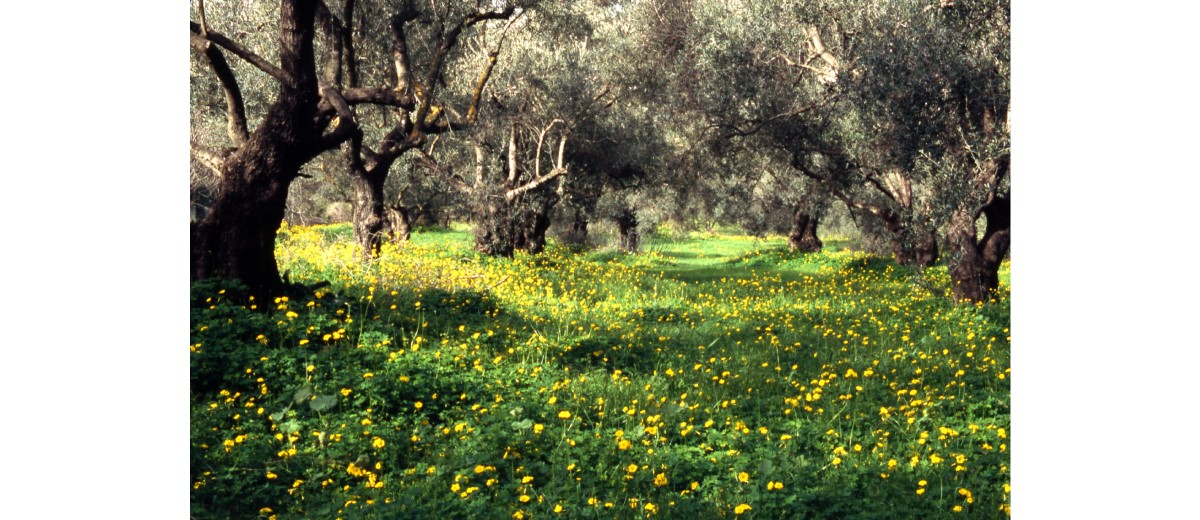
It is no wonder that the olive tree, a crop as old as time that is at the heart of the prosperity, life and health of the Mediterranean basin and other corners of the world, also plays a key role in addressing climate change. As part of their millennial photosynthesis process, olive trees capture and absorb carbon, storing it in the soil. According to a 2017 study developed by the International Olive Council (IOC), the world olive-growing area spans approximately 10.5 million hectares, meaning it could remove around 47 million tons of CO2 per year. The data sustains that, on average, one hectare of olive grove can capture 4.5 tons of CO2 per year. Taking into account the total life cycle of olive oil, this means that the production of 1 kg of olive oil can remove up to 10 kg of CO2 from the atmosphere.

Unquestionably, the olive grove stands in a unique position as part of the solution to climate change and should receive a well-earned recognition for its fundamental environmental role. Moreover, this acknowledgement could also have a potentially positive effect on the life of farmers as a whole, as their sustainable and positive agronomic practices could be recognised in the context of ‘carbon credit’ initiatives. For instance, the European Union (EU) is currently working on the development of a framework for certifying carbon removals, implying that these ‘carbon credits’ from agriculture could hypothetically be monetised on the voluntary emissions market.

The IOC, in its unique capacity as the world’s only intergovernmental organisation focusing on olive oil and table olives, is entirely engaged with and committed to the development of sustainable solutions to climate change that put the olive tree at the centre of its actions and that ultimately have a positive effect for all of its stakeholders. In this context, the IOC will be organising an international workshop under the working title “Carbon balance of the olive sector: part of the solution against climate change” at its headquarters in Madrid from Tuesday 17th to Thursday 19th of October, 2023. The event will bring together leading stakeholders from the olive sector, from experts, lawyers and policy makers to project coordinators and representatives of private companies. The workshop participants will discuss on a wide range of topics relating to the carbon balance of olive groves, such as on the scientific consensus surrounding the topic and on the possibility of putting forward an algorithm for calculating said balance, among many other themes. It will be a unique opportunity for them to exchange on their experiences, reflect on the position of the olive and table olive sector in its contribution to addressing climate change, and on how the current situation can actually benefit the sector as a whole.

More detailed information on the workshop will be published on the IOC’s website in the following weeks and in upcoming editions of our monthly newsletter.

Enviar noticiaShare Enlace a facebook Enlace a twitter Enlace a linkedin
Last Posts
IOC and UPM sign MoU
MADRID, SPAIN / 16.03.2026

The International Olive Council (IOC) and the Polytechnic University of Madrid (UPM) in Spain have signed a Memorandum of Understanding (MoU) to strengthen cooperation in the olive sector. The agreement was signed by Mr...

Info

This week on OHIS
MADRID, SPAIN / 13.03.2026

This week on the Olive Health Information System website The newsletter of the University of Navarra and the IOC dedicated to health Article 1 Recent studies have examined the role of overall dietary patterns in...

Info

European Day for the Prevention of Cardiovascular Risk
MADRID, SPAIN / 13.03.2026

Olive oil, an ally in cardiovascular prevention On the occasion of the European Day for the Prevention of Cardiovascular Risk, the International Olive Council (IOC) reiterates the importance of preventing cardiovascular...

Info

International olive council logo
Privacy Policy
Il COI sulle reti sociali
  • Linkedin icon
  • Twitter icon
© International Olive Council, 2026
Manage Cookie Consent
To provide the best experiences, we use technologies like cookies to store and/or access device information. Consenting to these technologies will allow us to process data such as browsing behavior or unique IDs on this site. Not consenting or withdrawing consent, may adversely affect certain features and functions.
Functional Sempre attivo
The technical storage or access is strictly necessary for the legitimate purpose of enabling the use of a specific service explicitly requested by the subscriber or user, or for the sole purpose of carrying out the transmission of a communication over an electronic communications network.
Preferencias
El almacenamiento o acceso técnico es necesario para la finalidad legítima de almacenar preferencias no solicitadas por el abonado o usuario.
Statistics
The technical storage or access that is used exclusively for statistical purposes. El almacenamiento o acceso técnico que se utiliza exclusivamente con fines estadísticos anónimos. Sin un requerimiento, el cumplimiento voluntario por parte de tu proveedor de servicios de Internet, o los registros adicionales de un tercero, la información almacenada o recuperada sólo para este propósito no se puede utilizar para identificarte.
Marketing
The technical storage or access is required to create user profiles to send advertising, or to track the user on a website or across several websites for similar marketing purposes.
Gestisci opzioni Gestisci servizi Gestisci {vendor_count} fornitori Per saperne di più su questi scopi
View preferences
{title} {title} {title}

Culinary

Olive Oil and the Plant-Forward Kitchen

Discover how the Mediterranean Diet inspires contemporary cooking.

Explore this collaboration between the International Olive Council and The Culinary Institute of America, designed to promote healthy, sustainable and flavourful food choices, with a strong focus on technical training and menu innovation for chefs.

External link

COI logo
CIA logo

Salute

The IOC and the University of Navarra, through OHIS (the Olive Health Information System), a platform dedicated to research on the health properties of olive oil and table olives, publish a weekly or bi-weekly collection of scientific articles and summaries of research carried out in this field.

These articles highlight the numerous health benefits of these products.

You can read the summaries of this research here in French, English and Spanish and access the list of articles, or visit the OHIS portal.

Summaries OHIS portal

For any assistance, please contact iooc@internationaloliveoil.org.

Sustainability in the Olive Sector

Access the sustainability portal developed in collaboration between the IOC, the University of Jaén and the Instituto Universitario de Investigación en Olivar y Aceites de Oliva.

Explore research, tools and knowledge supporting sustainable olive growing and responsible production practices.

External link

X