• Skip to main content

International Olive Council

The website of the International Olive Council

Logo du Conseil oléicole international
Linkedin icon Twitter icon
  • Santé
  • Alimentation
  • Durabilité
Marchés Subventions Postes Vacants Parrainage
Mail envelope Contact
Magnifier Recherche
Person icon Espace Privé
Person icon
Menu icon
MENUMENU
  • Qui sommes-nous
    • Mission et vision
    • Textes fondamentaux
    • Gouvernance et structure
    • Pays membres et observateurs
  • Nos Missions
    • Unité de Normalisation et Recherche
      • Normes, Méthodes et Guides COI
      • Groupes de Travail
      • Agrément aux Laboratoires et aux Jurys de Dégustateurs
      • Prix à la Qualité Mario Solinas
      • Soutien institutionnel du COI
      • Huile d’Olive, Nutrition et Santé
      • Recherche au Sein de l’Unité de Normalisationet Recherche
      • Base de données des documents du COI
    • Unité Oléiculture, Oléotechnie et Environnement
      • Technical Cooperation and Training
      • Olive Oil Technology and the Environment
      • IOC Scholarships
      • Supporting Member Countries
      • External Projects and Institutional Agreements
      • IOC Network of International Olive Germplasm Banks
      • Key Projects and Technical Resources
    • Unité d’Économie et de Promotion
      • Market Statistics
      • Country Profiles
      • Promotion Campaigns
      • Grants for Promotion Activities
      • Studies & Seminars
  • Press Room
    • Tous les articles
    • Olive Health Information System
    • Monthly Olive Sector Statistics
    • Agenda 2026
    • Videos
    • Infographics
  • Key Projects
    • Projet Bilan Carbone
    • Catalogue mondial des variétés d'olivier
    • La Journée Mondiale de l’Olivier
      • Célébrations de la Journée mondiale de l’olivier
    • IOC Published Documents
    • Glossary of olive terms
  • Normes
  • Statistiques
  • Arabe
  • Anglais
  • Français
  • Italien
  • Espagnol
Marchés Subventions Postes Vacants Parrainage
Mail envelope Contact
Magnifier Recherche
Nos réseaux sociaux
  • Linkedin icon
  • Twitter icon
MENUMENU
  • Qui sommes-nous
    • Mission et vision
    • Textes fondamentaux
    • Gouvernance et structure
    • Pays membres et observateurs
  • Nos Missions
    • Unité de Normalisation et Recherche
      • Normes, Méthodes et Guides COI
      • Groupes de Travail
      • Agrément aux Laboratoires et aux Jurys de Dégustateurs
      • Prix à la Qualité Mario Solinas
      • Soutien institutionnel du COI
      • Huile d’Olive, Nutrition et Santé
      • Recherche au Sein de l’Unité de Normalisationet Recherche
      • Base de données des documents du COI
    • Unité Oléiculture, Oléotechnie et Environnement
      • Technical Cooperation and Training
      • Olive Oil Technology and the Environment
      • IOC Scholarships
      • Supporting Member Countries
      • External Projects and Institutional Agreements
      • IOC Network of International Olive Germplasm Banks
      • Key Projects and Technical Resources
    • Unité d’Économie et de Promotion
      • Market Statistics
      • Country Profiles
      • Promotion Campaigns
      • Grants for Promotion Activities
      • Studies & Seminars
  • Press Room
    • Tous les articles
    • Olive Health Information System
    • Monthly Olive Sector Statistics
    • Agenda 2026
    • Videos
    • Infographics
  • Key Projects
    • Projet Bilan Carbone
    • Catalogue mondial des variétés d'olivier
    • La Journée Mondiale de l’Olivier
      • Célébrations de la Journée mondiale de l’olivier
    • IOC Published Documents
    • Glossary of olive terms
  • Normes
  • Statistiques
  • Arabe
  • Anglais
  • Français
  • Italien
  • Espagnol
  • Santé
  • Alimentation
  • Durabilité
Tools icon

IOC NEWS

Home / Blog / CERTIFICATION SYSTEM FOR OLIVE TREE PLANTS
Enviar noticiaShare Enlace a facebook Enlace a twitter Enlace a linkedin

CERTIFICATION SYSTEM FOR OLIVE TREE PLANTS

Cordoba - Spain, 25-29 October 2021 / 28.10.2021
The International Olive Council (IOC) network of germplasm banks, the True Healthy Olive Cultivars (THOC) Project and the World Catalogue of the main genetically authenticated olive tree varieties

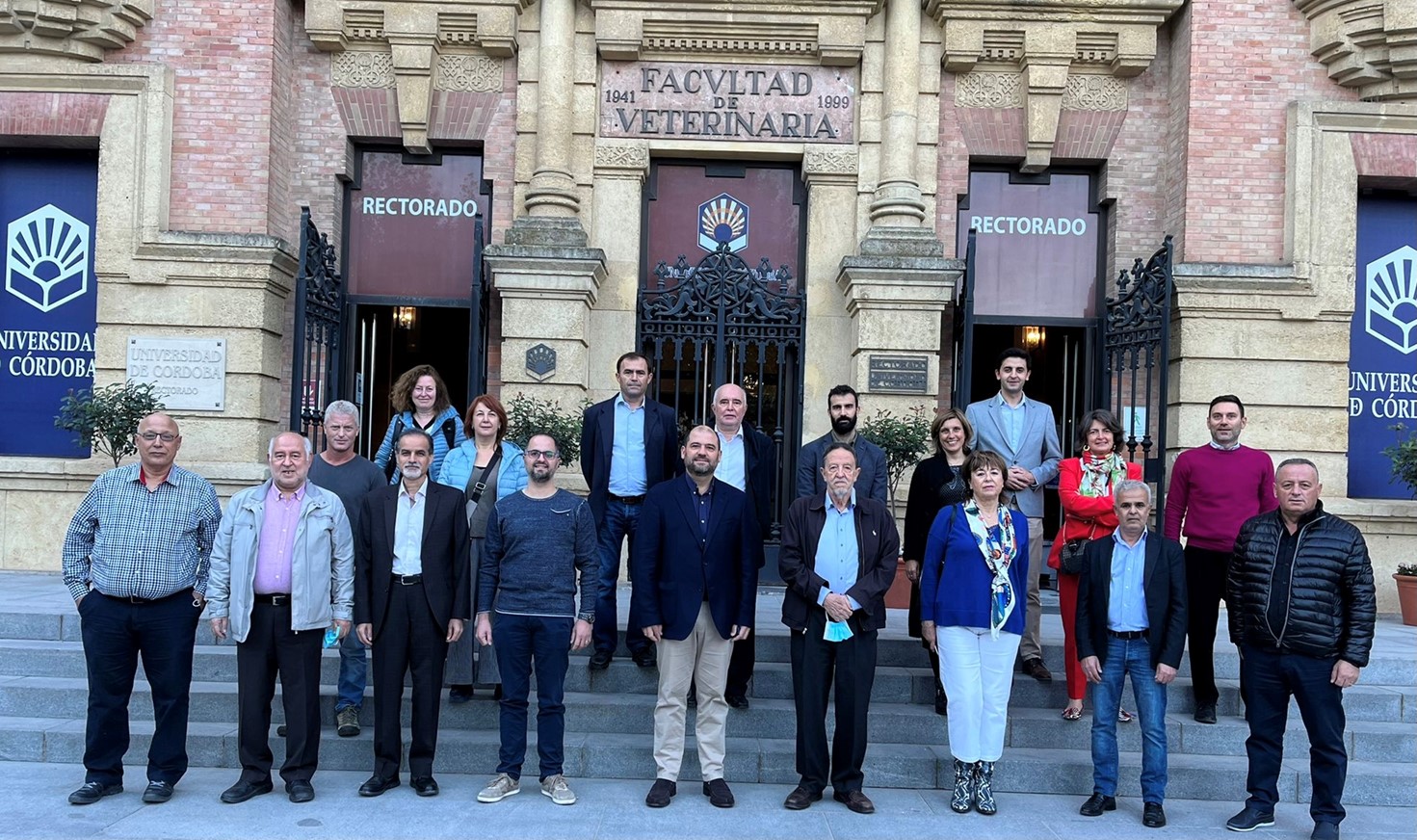
The International Olive Council (IOC) has gathered representatives from its member-countries at the University of Córdoba (UCO) for a workshop from 25 to 29 October 2021. The aim of the workshop is to strengthen and harmonise a certification system for olive plant trees so that producers and farmers can guarantee that the vegetable material they work with is true to type and healthy. The workshop will address one of the most important issues facing the olive sector and therefore also our Institution today.

The production of olive plants without certification may result in the dissemination of pest and diseases and mistaken varieties that do not meet requirements entering plantations.

The workshop was opened by Enrique Quesada Moraga, the Vice-Rector for Research and Territorial Development of the UCO, and Jaime Lillo López, Deputy Executive Director of the IOC. They were joined by Luis Rallo Romero, the coordinator of the IOC network of olive germplasm banks; Abdelkrim Adi, the Head of the Olive Growing, Olive Oil Technology and Environment Unit of the IOC; Catarina Bairrao Balula, the Head of the Technical Cooperation and Training Department; Pablo Morello Parra, the Head of the Olive Oil Technology and Environment Department; and officials from the IOC olive germplasm banks.

The meeting was held collaboratively, thus intensifying links between the IOC network of banks through the True Healthy Olive Cultivars (THOC) project and the World Catalogue of the main genetically authenticated olive tree varieties.

As it is well known, the IOC has been promoting a network of banks containing olive genetic material since 1994. These banks aim to preserve the heritage of olive varieties grown in countries around the world.

The IOC network currently includes 23 banks in as many countries and three international collections (Cordoba, Spain; Marrakech, Morocco; and Izmir, Turkey) that preserve all the varieties of the network located in the different countries in the three different climatic zones.

The THOC project intends to provide authenticated and healthy initial material of the main commercial varieties of each country on the IOC network of germplasm banks.

Authentic and healthy varieties will be provided to banks to be preserved as initial material in the corresponding isolated conservatories.

This step is the starting point for certification protocols for nursery stock.

The certification system aims to ensure that varieties traded internationally are authentic and free from pathogens, in line with the recommendations and regulations issued by the European and Mediterranean Plant Protection Organization (EPPO) and the European Union (EU).


ATELIER : SYSTÈME DE CERTIFICATION DES PLANTS D’OLIVIER

Réseau de banques de germoplasme du Conseil oléicole international (COI), Projet True Healthy Olive Cultivars (THOC) et Catalogue mondial des principales variétés d’olivier génétiquement authentifiées

Cordoue (Espagne), 25-29 octobre 2021 – Le Conseil oléicole international (COI) a réuni des représentants de ses pays membres à l’Université de Cordoue (UCO) pour un atelier qui s’est déroulé du 25 au 29 octobre 2021. L’objectif était de renforcer et d’harmoniser le système de certification des oliviers afin que les producteurs et les agriculteurs puissent garantir que l’authenticité et l’état de santé du matériel végétal qu’ils cultivent. Cet atelier a ainsi abordé l’une des questions les plus importantes auxquelles est confronté le secteur oléicole aujourd’hui et, par conséquent, notre institution.

La production de plants d’olivier sans certification peut entraîner la dissémination de parasites et de maladies et l’introduction dans les plantations de variétés non vérifiées et qui ne répondent pas aux exigences.

L’atelier a été ouvert par Enrique Quesada Moraga, vice-recteur chargé de la recherche et du développement territorial de l’UCO, et Jaime Lillo López, Directeur exécutif adjoint du COI. Ils ont été rejoints par Luis Rallo Romero, coordinateur du réseau des banques de germoplasme oléicole du COI ; Abdelkrim Adi, chef de l’Unité Oléiculture, Oléotechnie et Environnement du COI ; Catarina Bairrao Balula, chef du Département Coopération technique et Formation ; Pablo Morello Parra, chef du Département Oléotechnie et Environnement ; et par des responsables des banques de germoplasme oléicole du COI.

La réunion s’est déroulée en collaboration, ce qui a permis de renforcer les liens entre le réseau de banques du COI dans le cadre du projet « True Healthy Olive Cultivars » (THOC) et du Catalogue mondial des principales variétés d’oliviers génétiquement authentifiées.

Le COI promeut depuis 1994 un réseau de banques dans lesquelles est conservé du matériel génétique oléicole. L’objectif de ces banques est de préserver le patrimoine des variétés d’oliviers cultivées dans les pays du monde entier.

Le réseau du COI est actuellement composé de 23 banques dans autant de pays et de trois collections internationales situées dans trois zones climatiques différentes (Cordoue – Espagne, Marrakech – Maroc, et Izmir – Turquie) dans lesquelles sont conservées toutes les variétés du réseau.

Le projet THOC vise à fournir au réseau des banques de germoplasme du COI du matériel initial authentifié et sain des principales variétés commerciales de chaque pays.

Les variétés authentifiées et exemptes de maladies et de parasites seront fournies aux banques pour être conservées comme matériel initial dans des conservatoires isolés.

Cette étape est le point de départ des protocoles de certification pour le matériel de pépinière.

Le système de certification vise à garantir que les variétés faisant l’objet d’un commerce international sont authentiques et exemptes d’agents pathogènes, conformément aux recommandations et règlements de l’Organisation Européenne et Méditerranéenne pour la Protection des Plantes (OEPP) et de l’Union Européenne.
 

Enviar noticiaShare Enlace a facebook Enlace a twitter Enlace a linkedin
Derniers Messages
Le COI et le CIHEAM Zaragoza organiseront deux cours régionaux de formation en mai 2026.

Le Conseil oléicole international (COI), en collaboration avec le Centre international de hautes études agronomiques méditerranéennes (CIHEAM Zaragoza), organisera deux cours régionaux de formation en mai 2026 dans le...

Info

Le COI et l’UPM signent un protocole d’accord
MADRID, ESPAGNE / 16.03.2026

Le Conseil oléicole international (COI) et l’Université polytechnique de Madrid (UPM) d’Espagne viennent de signer un protocole d’accord visant à renforcer leur coopération dans le secteur oléicole....

Info

Cette semaine sur l’OHIS
MADRID, ESPAGNE / 13.03.2026

Cette semaine sur le site de l’Olive Health Information System La newsletter de l’Université de Navarre et du COI consacrée à la santé Article 1 Des études récentes ont examiné le rôle des habitudes alimentaires...

Info

International olive council logo
Privacy Policy
Nos réseaux sociaux
  • Linkedin icon
  • Twitter icon
© International Olive Council, 2026
Manage Cookie Consent
To provide the best experiences, we use technologies like cookies to store and/or access device information. Consenting to these technologies will allow us to process data such as browsing behavior or unique IDs on this site. Not consenting or withdrawing consent, may adversely affect certain features and functions.
Functional Toujours activé
The technical storage or access is strictly necessary for the legitimate purpose of enabling the use of a specific service explicitly requested by the subscriber or user, or for the sole purpose of carrying out the transmission of a communication over an electronic communications network.
Preferencias
El almacenamiento o acceso técnico es necesario para la finalidad legítima de almacenar preferencias no solicitadas por el abonado o usuario.
Statistics
The technical storage or access that is used exclusively for statistical purposes. El almacenamiento o acceso técnico que se utiliza exclusivamente con fines estadísticos anónimos. Sin un requerimiento, el cumplimiento voluntario por parte de tu proveedor de servicios de Internet, o los registros adicionales de un tercero, la información almacenada o recuperada sólo para este propósito no se puede utilizar para identificarte.
Marketing
The technical storage or access is required to create user profiles to send advertising, or to track the user on a website or across several websites for similar marketing purposes.
Gérer les options Gérer les services Gérer {vendor_count} fournisseurs En savoir plus sur ces finalités
View preferences
{title} {title} {title}

Culinary

Olive Oil and the Plant-Forward Kitchen

Discover how the Mediterranean Diet inspires contemporary cooking.

Explore this collaboration between the International Olive Council and The Culinary Institute of America, designed to promote healthy, sustainable and flavourful food choices, with a strong focus on technical training and menu innovation for chefs.

External link

COI logo
CIA logo

Santé

Le COI et l’Université de Navarre, à travers l’OHIS (de l’anglais Olive Health Information System), une plateforme dédiée à la recherche sur les propriétés de l’huile d’olive et des olives de table sur la santé, publient chaque semaine ou toutes les deux semaines un recueil d’articles scientifiques et une synthèse des recherches menées dans ce domaine.

Ces articles mettent en lumière les nombreux bienfaits de ces produits pour la santé.

Vous pouvez lire les résumés de ces recherches ici en français, anglais et espagnol et accéder à la liste des articles, ou visiter le portail OHIS.

Summaries OHIS portal

Pour toute assistance, veuillez contacter iooc@internationaloliveoil.org.

Sustainability in the Olive Sector

Access the sustainability portal developed in collaboration between the IOC, the University of Jaén and the Instituto Universitario de Investigación en Olivar y Aceites de Oliva.

Explore research, tools and knowledge supporting sustainable olive growing and responsible production practices.

External link

X