• Skip to main content

International Olive Council

The website of the International Olive Council

Logo Consejo Oleícola Internacional
Linkedin icon Twitter icon
  • Salud
  • Culinario
  • Sostenibilidad
Contratos Subvenciones Vacantes Patrocinio
Mail envelope Contacto
Magnifier Buscar
Person icon Área Privada
Person icon
Menu icon
MENUMENU
  • Who we are
    • Mission and Vision
    • Fundamental Texts
    • Governance and Structure
    • Member Countries and Observers
  • Qué Hacemos
    • Unidad de Normalización e Investigación
      • Normas COI, Métodos y Guías
      • Grupos de Trabajo
      • Reconocimiento de Laboratorios y Paneles
      • Premio del COI a la Calidad Mario Solinas
      • Apoyo Institucional del COI
      • Aceite de Oliva, Nutrición y Salud
      • Investigación en la Unidad de Normalización e Investigación
      • Base de Datos de Documentos del COI
    • Olive Growing, Olive Oil Technology and Environment Unit
      • Technical Cooperation and Training
      • Olive Oil Technology and the Environment
      • IOC Scholarships
      • Supporting Member Countries
      • External Projects and Institutional Agreements
      • IOC Network of International Olive Germplasm Banks
      • Key Projects and Technical Resources
    • Unidad de Asuntos Econónicos y Promoción
      • Market Statistics
      • Country Profiles
      • Promotion Campaigns
      • Grants for Promotion Activities
      • Studies & Seminars
  • Press Room
    • Todos los artículos
    • Olive Health Information System
    • Monthly Olive Sector Statistics
    • Agenda 2026
    • Videos
    • Infographics
  • Key Projects
    • Carbon Balance Project
    • Catálogo mundial de variedades del olivo
    • El Día Mundial del Olivo
      • Celebraciones del Día Mundial del Olivo
    • IOC Published Documents
    • Glossary of olive terms
  • Normas
  • Estadísticas
  • Árabe
  • Inglés
  • Francés
  • Italiano
  • Español
Contratos Subvenciones Vacantes Patronage
Mail envelope Contacto
Magnifier Buscar
We are social
  • Linkedin icon
  • Twitter icon
MENUMENU
  • Who we are
    • Mission and Vision
    • Fundamental Texts
    • Governance and Structure
    • Member Countries and Observers
  • Qué Hacemos
    • Unidad de Normalización e Investigación
      • Normas COI, Métodos y Guías
      • Grupos de Trabajo
      • Reconocimiento de Laboratorios y Paneles
      • Premio del COI a la Calidad Mario Solinas
      • Apoyo Institucional del COI
      • Aceite de Oliva, Nutrición y Salud
      • Investigación en la Unidad de Normalización e Investigación
      • Base de Datos de Documentos del COI
    • Olive Growing, Olive Oil Technology and Environment Unit
      • Technical Cooperation and Training
      • Olive Oil Technology and the Environment
      • IOC Scholarships
      • Supporting Member Countries
      • External Projects and Institutional Agreements
      • IOC Network of International Olive Germplasm Banks
      • Key Projects and Technical Resources
    • Unidad de Asuntos Econónicos y Promoción
      • Market Statistics
      • Country Profiles
      • Promotion Campaigns
      • Grants for Promotion Activities
      • Studies & Seminars
  • Press Room
    • Todos los artículos
    • Olive Health Information System
    • Monthly Olive Sector Statistics
    • Agenda 2026
    • Videos
    • Infographics
  • Key Projects
    • Carbon Balance Project
    • Catálogo mundial de variedades del olivo
    • El Día Mundial del Olivo
      • Celebraciones del Día Mundial del Olivo
    • IOC Published Documents
    • Glossary of olive terms
  • Normas
  • Estadísticas
  • Árabe
  • Inglés
  • Francés
  • Italiano
  • Español
  • Salud
  • Culinario
  • Sostenibilidad
Tools icon

IOC NEWS

Home / Blog / World Olive Day at IOC
finale jmo 2018
Enviar noticiaShare Enlace a facebook Enlace a twitter Enlace a linkedin

World Olive Day at IOC

22.11.2018

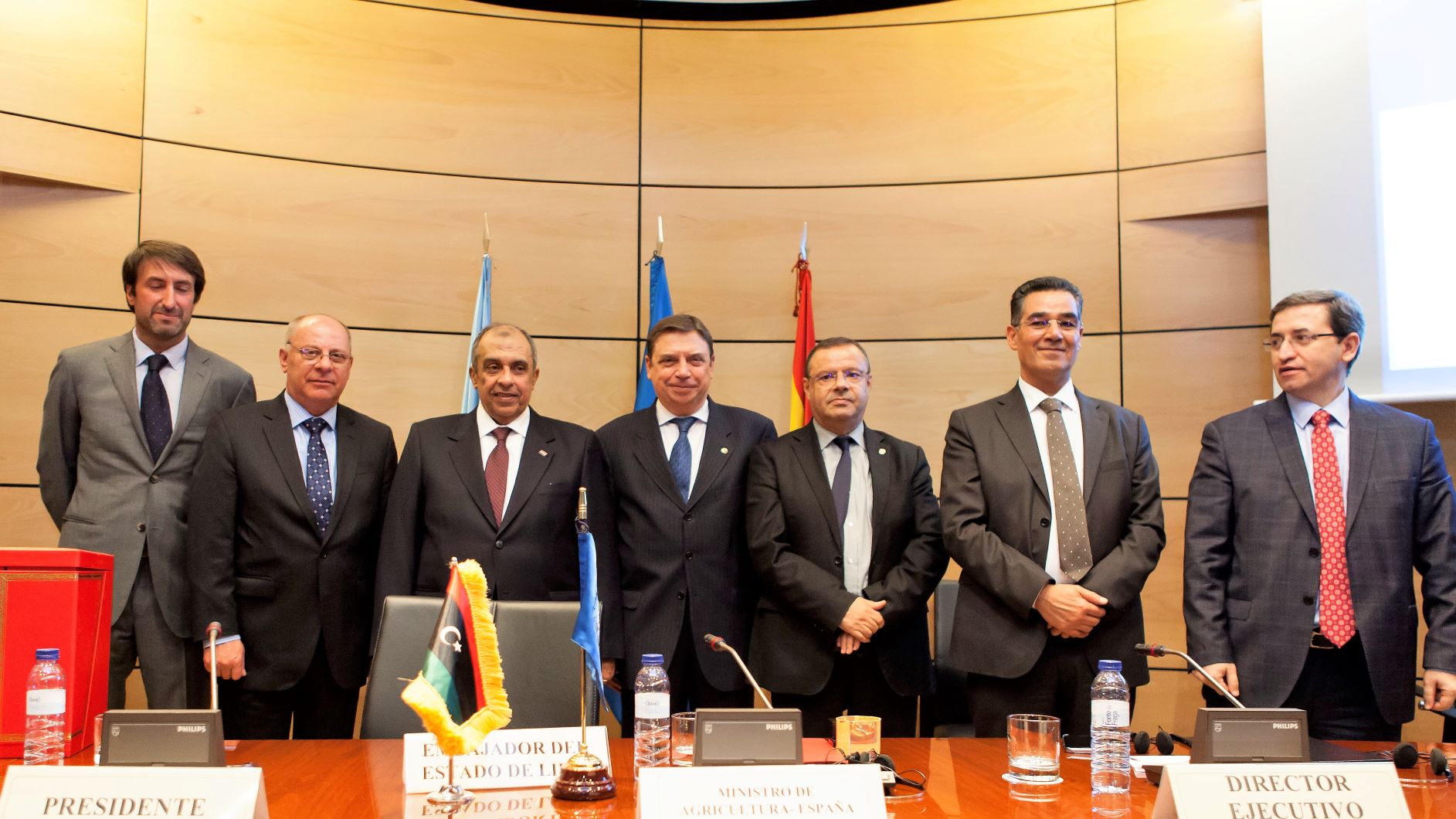
Madrid – We celebrated World Olive Day at IOC headquarters in the presence of the Agricultural Ministers for Spain, Luis Planas, for Tunisia, Samir Taieb, and for Egypt, Ezz El Din Abu Steit, as well as a number of authorities and accredited diplomatic bodies. I welcome you here today to celebrate the IOC’s commitment to the sector, as we celebrate alongside representatives from five continents. Since its creation in 1959, the International Olive Council has regulated the olive-growing sector and worked towards defining and elaborating norms and standards of quality in the international trade of olive oils and table olives. We work for the good of the sector at all stages of the production chain, from the first farmer to the final consumer.


Today, Mr Ghedira continued, we move onto a new phase in our development that brings us to answer the question so often brought to us: why the IOC? Aside from its role of safeguarding quality and standards, the IOC is above all a hotbed of over a thousand specialists and experts in the field of olive-growing. Researchers, engineers, economists, chemists, tasters, nutritionists, statisticians… all engage with the science as one through the forum that is the IOC, in the planned meetings and the over 150 laboratories officially recognised by us around the world.


For this reason, the IOC constitutes a unique scientific forum for the internationally renowned olive-growing sector. It interacts with a range of institutions, both in the private sector, through the Advisory Committee on Olive Oils and Table Olives, putting us at the heart of the day-to-day realities of olive-growing; and in the regional and international organisations dedicated to implementing activities for mutual interest and benefit.


According to official statistics, world production of olive oil has increased by half in 20 years, with a tipping point occurring over the past 10 years and a demand that continues to drive supply. Consumption has doubled in new countries, to the detriment of demand in traditional consumer countries.


This trend just goes to show the lasting interest this noble product arouses, not only for the dietary benefits for the consumer, but also for the socio-economic and environmental benefits for the producer.


This World Olive Day, continued Mr Ghedira, we renew our call for producers to keep using good practices all along the production chain in order to offer consumers the best of this nectar, and for consumers to continue to demand high quality oil for their health and for a product that can help in the fight against climate change for generations to come.


Mr Ghedira concluded by renewing our call for intergovernmental, international and regional organisations to work with us in order to foster sustainable development, to ensure fair pay for small farmers in difficult areas, to conserve natural resources and to promote a healthy and balanced diet.

.

Enviar noticiaShare Enlace a facebook Enlace a twitter Enlace a linkedin
Last Posts
IOC and CIHEAM Zaragoza to organise two regional training courses in May 2026

The International Olive Council (IOC), in collaboration with the International Centre for Advanced Mediterranean Agronomic Studies (CIHEAM Zaragoza), will organise two regional training courses in May 2026 as part of its...

Info

IOC and UPM sign MoU
MADRID, SPAIN / 16.03.2026

The International Olive Council (IOC) and the Polytechnic University of Madrid (UPM) in Spain have signed a Memorandum of Understanding (MoU) to strengthen cooperation in the olive sector. The agreement was signed by Mr...

Info

Esta semana en el OHIS
MADRID, ESPAÑA / 13.03.2026

Esta semana en el sitio web del Olive Health Information Service La newsletter de la Universidad de Navarra y el COI dedicada a la salud Artículo 1 Estudios recientes han examinado el papel de los patrones alimentarios...

Info

International olive council logo
Privacy Policy
Somos sociales
  • Linkedin icon
  • Twitter icon
© International Olive Council, 2026
Gestionar consentimiento de cookies
Para proporcionar las mejores experiencias, utilizamos tecnologías como las cookies para almacenar y/o acceder a la información del dispositivo. Consentir estas tecnologías nos permitirá procesar datos como el comportamiento de navegación o IDs únicos en este sitio. No consentir o retirar el consentimiento, puede afectar negativamente a ciertas características y funciones.
Funcional Siempre activo
El almacenamiento o acceso técnico es estrictamente necesario para el fin legítimo de permitir el uso de un servicio específico solicitado explícitamente por el abonado o usuario, o con el único fin de llevar a cabo la transmisión de una comunicación a través de una red de comunicaciones electrónicas.
Preferencias
El almacenamiento o acceso técnico es necesario para el fin legítimo de almacenar preferencias no solicitadas por el abonado o usuario.
Estadísticas
El almacenamiento o acceso técnico que se utiliza exclusivamente con fines estadísticos. El almacenamiento o acceso técnico que se utiliza exclusivamente con fines estadísticos anónimos. Sin una citación judicial, el cumplimiento voluntario por parte de su proveedor de servicios de Internet o registros adicionales de un tercero, la información almacenada o recuperada únicamente con este fin no puede utilizarse normalmente para identificarle.
Marketing
El almacenamiento o acceso técnico es necesario para crear perfiles de usuario para enviar publicidad, o para seguir al usuario en un sitio web o en varios sitios web con fines de marketing similares.
Administrar opciones Gestionar los servicios Gestionar {vendor_count} proveedores Leer más sobre estos propósitos
Ver preferencias
{title} {title} {title}

Culinary

Olive Oil and the Plant-Forward Kitchen

Discover how the Mediterranean Diet inspires contemporary cooking.

Explore this collaboration between the International Olive Council and The Culinary Institute of America, designed to promote healthy, sustainable and flavourful food choices, with a strong focus on technical training and menu innovation for chefs.

External link

COI logo
CIA logo

Salud

El COI y la Universidad de Navarra, a través de OHIS (Olive Health Information System), una plataforma dedicada a la investigación sobre las propiedades saludables del aceite de oliva y las aceitunas de mesa, publican semanal o quincenalmente una recopilación de artículos científicos y un resumen de las investigaciones realizadas en este ámbito.

Estos artículos ponen de relieve los numerosos beneficios para la salud de estos productos.

Puede leer los resúmenes de estas investigaciones aquí en francés, inglés y español y acceder a la lista de artículos, o visitar el portal de OHIS.

Summaries OHIS portal

Para cualquier asistencia, póngase en contacto con iooc@internationaloliveoil.org.

Sustainability in the Olive Sector

Access the sustainability portal developed in collaboration between the IOC, the University of Jaén and the Instituto Universitario de Investigación en Olivar y Aceites de Oliva.

Explore research, tools and knowledge supporting sustainable olive growing and responsible production practices.

External link

X