• Skip to main content

International Olive Council

The website of the International Olive Council

Logo Consejo Oleícola Internacional
Linkedin icon Twitter icon
  • Salud
  • Culinario
  • Sostenibilidad
Contratos Subvenciones Vacantes Patrocinio
Mail envelope Contacto
Magnifier Buscar
Person icon Área Privada
Person icon
Menu icon
MENUMENU
  • Who we are
    • Mission and Vision
    • Fundamental Texts
    • Governance and Structure
    • Member Countries and Observers
  • Qué Hacemos
    • Unidad de Normalización e Investigación
      • Normas COI, Métodos y Guías
      • Grupos de Trabajo
      • Reconocimiento de Laboratorios y Paneles
      • Premio del COI a la Calidad Mario Solinas
      • Apoyo Institucional del COI
      • Aceite de Oliva, Nutrición y Salud
      • Investigación en la Unidad de Normalización e Investigación
      • Base de Datos de Documentos del COI
    • Olive Growing, Olive Oil Technology and Environment Unit
      • Technical Cooperation and Training
      • Olive Oil Technology and the Environment
      • IOC Scholarships
      • Supporting Member Countries
      • External Projects and Institutional Agreements
      • IOC Network of International Olive Germplasm Banks
      • Key Projects and Technical Resources
    • Unidad de Asuntos Econónicos y Promoción
      • Market Statistics
      • Country Profiles
      • Promotion Campaigns
      • Grants for Promotion Activities
      • Studies & Seminars
  • Press Room
    • Artículos
    • Monthly Olive Sector Statistics
    • Olive Health Information System
    • Agenda 2026
    • Videos
    • Infographics
  • Key Projects
    • Carbon Balance Project
    • Catálogo mundial de variedades del olivo
    • El Día Mundial del Olivo
      • Celebraciones del Día Mundial del Olivo
    • IOC Published Documents
    • Glosario de la terminología oleícola
  • Normas
  • Estadísticas
  • Árabe
  • Inglés
  • Francés
  • Italiano
  • Español
Contratos Subvenciones Vacantes Patronage
Mail envelope Contacto
Magnifier Buscar
We are social
  • Linkedin icon
  • Twitter icon
MENUMENU
  • Who we are
    • Mission and Vision
    • Fundamental Texts
    • Governance and Structure
    • Member Countries and Observers
  • Qué Hacemos
    • Unidad de Normalización e Investigación
      • Normas COI, Métodos y Guías
      • Grupos de Trabajo
      • Reconocimiento de Laboratorios y Paneles
      • Premio del COI a la Calidad Mario Solinas
      • Apoyo Institucional del COI
      • Aceite de Oliva, Nutrición y Salud
      • Investigación en la Unidad de Normalización e Investigación
      • Base de Datos de Documentos del COI
    • Olive Growing, Olive Oil Technology and Environment Unit
      • Technical Cooperation and Training
      • Olive Oil Technology and the Environment
      • IOC Scholarships
      • Supporting Member Countries
      • External Projects and Institutional Agreements
      • IOC Network of International Olive Germplasm Banks
      • Key Projects and Technical Resources
    • Unidad de Asuntos Econónicos y Promoción
      • Market Statistics
      • Country Profiles
      • Promotion Campaigns
      • Grants for Promotion Activities
      • Studies & Seminars
  • Press Room
    • Artículos
    • Monthly Olive Sector Statistics
    • Olive Health Information System
    • Agenda 2026
    • Videos
    • Infographics
  • Key Projects
    • Carbon Balance Project
    • Catálogo mundial de variedades del olivo
    • El Día Mundial del Olivo
      • Celebraciones del Día Mundial del Olivo
    • IOC Published Documents
    • Glosario de la terminología oleícola
  • Normas
  • Estadísticas
  • Árabe
  • Inglés
  • Francés
  • Italiano
  • Español
  • Salud
  • Culinario
  • Sostenibilidad
Tools icon

IOC NEWS

Home / Blog / The IOC Executive Director is received by the Ambassador of Iraq
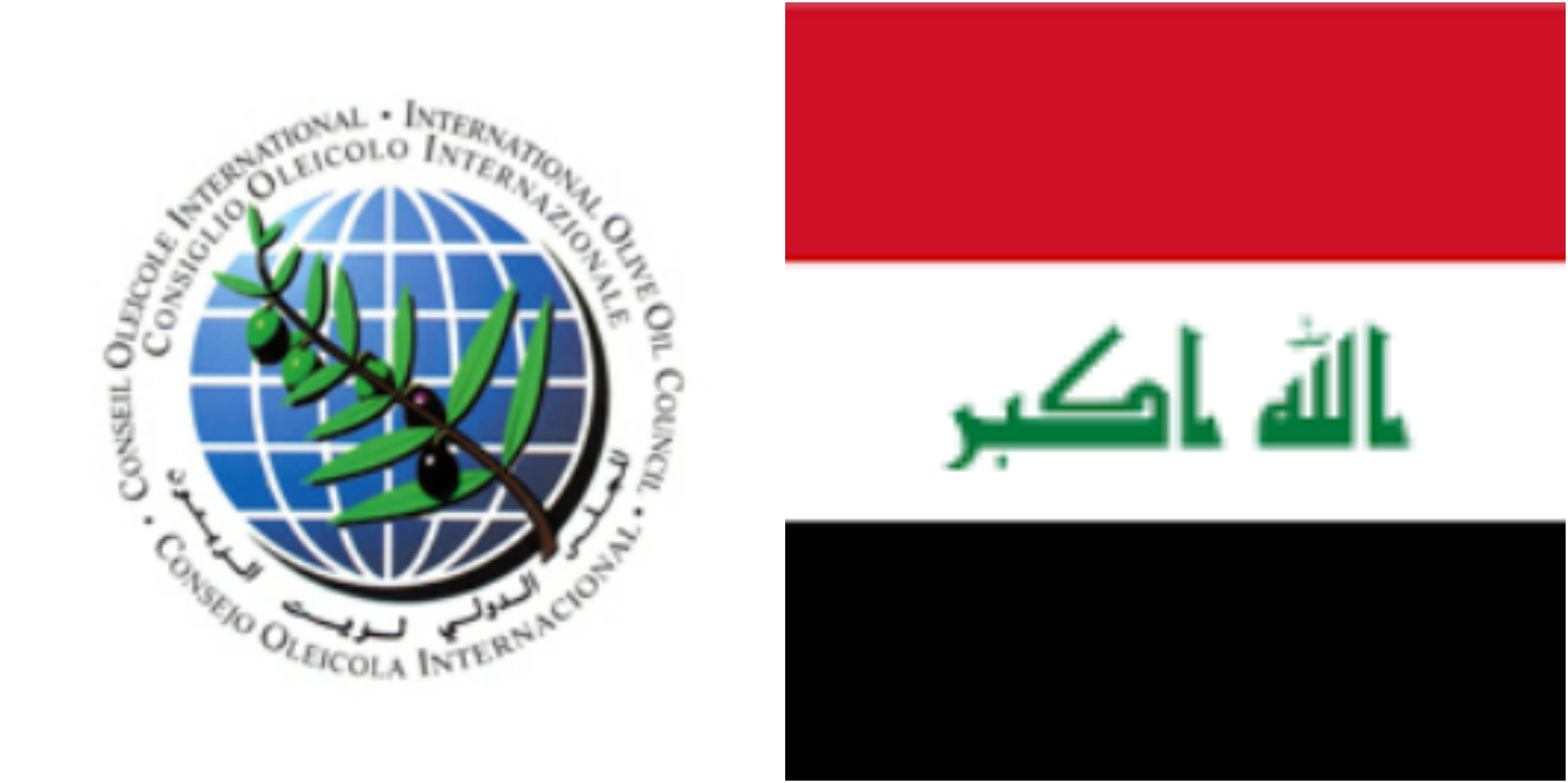
coi - irak
Enviar noticiaShare Enlace a facebook Enlace a twitter Enlace a linkedin

The IOC Executive Director is received by the Ambassador of Iraq

Madrid / 10.10.2016

The IOC Executive Director, Mr Abdellatif Ghedira, was received on 5 October 2016 by H.E. Mr Alaa Majid Hussein Al Hashimy, who has been Ambassador of the Republic of Iraq in Madrid since 7 April 2016.


Olive growing is an important sector in Iraq, helping to combat soil erosion in areas exposed to this country’s dry summers. Olives are mainly grown in the north of the country, under extensive and rain fed farming, with an average of 280 trees per hectare. The main varieties grown are Pashiqi and Ashrassi, which are used for table olive processing. In total the country uses 12 500 hectares of land for olive growing.


Olive trees are attracting increasing attention in Iraq: a number of intensive olive orchards have been planted in the centre of the country in recent years, as well as in the northern and southern regions. Autochthonous and foreign varieties, especially Spanish varieties, have been used for these new intensive plantations under irrigation. The State, under its Olive Growing Project, has also provided olive plants for farmers interested in growing this crop.


Iraq has participated in various courses organised by the IOC in collaboration with other institutions, and Iraqi students and experts have received IOC grants to participate in training, in particular the olive oil tasting expert courses of the University of Jaen, the course on olive oil marketing strategy, the seminar on integrated production for olive growing and the course on methods of evaluation of olive oil.


During this first visit to the Embassy of Iraq, the Executive Director highlighted the importance of Iraq as an IOC member since March 2008. He informed the Ambassador of upcoming courses and workshops and of the IOC programme for the recognition of physico-chemical laboratories and tasting panels. He added that the IOC will award grant funding to member countries for activities to celebrate World Olive Day on 26 November. He also indicated that the IOC would participate in the COP22 conference, to talk about the role of olive growing in mitigating the effects of global warming. 


The Executive Director outlined the main differences in the new International Agreement on Olive Oil and Table Olives compared to the previous text, namely regarding the provisions that open up IOC membership to consumer countries. Mr Ghedira recalled that member countries had been invited to deposit their instrument of ratification of the new Agreement with the Depositary (UN in New York) before the end of 2016 or, where that was not possible, to submit a notification of their provisional implementation of the Agreement as of 1 January 2017.


.

Enviar noticiaShare Enlace a facebook Enlace a twitter Enlace a linkedin
Last Posts
IOC and CIHEAM Zaragoza to organise two regional training courses in May 2026

Deadline extended: 17 April 2026. The International Olive Council (IOC), in collaboration with the International Centre for Advanced Mediterranean Agronomic Studies (CIHEAM Zaragoza), will organise two regional training...

Info

Estadísticas del sector oleícola – abril 2026
MADRID, ESPAÑA / 08.04.2026

Bienvenido al Consejo Oleícola Internacional (COI), la única organización intergubernamental del mundo que reúne a todas las partes interesadas en la producción y el consumo de aceite de oliva y aceitunas de mesa. Aquí...

Info

IOC and UPM sign MoU
MADRID, SPAIN / 16.03.2026

The International Olive Council (IOC) and the Polytechnic University of Madrid (UPM) in Spain have signed a Memorandum of Understanding (MoU) to strengthen cooperation in the olive sector. The agreement was signed by Mr...

Info

International olive council logo
Privacy Policy
Somos sociales
  • Linkedin icon
  • Twitter icon
© International Olive Council, 2026
Gestionar consentimiento de cookies
Para proporcionar las mejores experiencias, utilizamos tecnologías como las cookies para almacenar y/o acceder a la información del dispositivo. Consentir estas tecnologías nos permitirá procesar datos como el comportamiento de navegación o IDs únicos en este sitio. No consentir o retirar el consentimiento, puede afectar negativamente a ciertas características y funciones.
Funcional Siempre activo
El almacenamiento o acceso técnico es estrictamente necesario para el fin legítimo de permitir el uso de un servicio específico solicitado explícitamente por el abonado o usuario, o con el único fin de llevar a cabo la transmisión de una comunicación a través de una red de comunicaciones electrónicas.
Preferencias
El almacenamiento o acceso técnico es necesario para el fin legítimo de almacenar preferencias no solicitadas por el abonado o usuario.
Estadísticas
El almacenamiento o acceso técnico que se utiliza exclusivamente con fines estadísticos. El almacenamiento o acceso técnico que se utiliza exclusivamente con fines estadísticos anónimos. Sin una citación judicial, el cumplimiento voluntario por parte de su proveedor de servicios de Internet o registros adicionales de un tercero, la información almacenada o recuperada únicamente con este fin no puede utilizarse normalmente para identificarle.
Marketing
El almacenamiento o acceso técnico es necesario para crear perfiles de usuario para enviar publicidad, o para seguir al usuario en un sitio web o en varios sitios web con fines de marketing similares.
Administrar opciones Gestionar los servicios Gestionar {vendor_count} proveedores Leer más sobre estos propósitos
Ver preferencias
{title} {title} {title}

Culinary

Olive Oil and the Plant-Forward Kitchen

Discover how the Mediterranean Diet inspires contemporary cooking.

Explore this collaboration between the International Olive Council and The Culinary Institute of America, designed to promote healthy, sustainable and flavourful food choices, with a strong focus on technical training and menu innovation for chefs.

External link

COI logo
CIA logo

Salud

El COI y la Universidad de Navarra, a través de OHIS (Olive Health Information System), una plataforma dedicada a la investigación sobre las propiedades saludables del aceite de oliva y las aceitunas de mesa, publican semanal o quincenalmente una recopilación de artículos científicos y un resumen de las investigaciones realizadas en este ámbito.

Estos artículos ponen de relieve los numerosos beneficios para la salud de estos productos.

Puede leer los resúmenes de estas investigaciones aquí en francés, inglés y español y acceder a la lista de artículos, o visitar el portal de OHIS.

Summaries OHIS portal

Para cualquier asistencia, póngase en contacto con iooc@internationaloliveoil.org.

Sustainability in the Olive Sector

Access the sustainability portal developed in collaboration between the IOC, the University of Jaén and the Instituto Universitario de Investigación en Olivar y Aceites de Oliva.

Explore research, tools and knowledge supporting sustainable olive growing and responsible production practices.

External link

X