• Skip to main content

International Olive Council

The website of the International Olive Council

Logo Consejo Oleícola Internacional
Linkedin icon Twitter icon
  • Salud
  • Culinario
  • Sostenibilidad
Contratos Subvenciones Vacantes Patrocinio
Mail envelope Contacto
Magnifier Buscar
Person icon Área Privada
Person icon
Menu icon
MENUMENU
  • Acerca del COI
    • Mensaje de Bienvenida
    • Misión y Textos Básicos
    • Estructura
    • Lista de miembros del COI
    • Dónde estamos
    • Noticias
  • Qué Hacemos
    • Unidad de Normalización e Investigación
      • Normas COI, Métodos y Guías
      • Grupos de Trabajo
      • Reconocimiento de Laboratorios y Paneles
      • Premio del COI a la Calidad Mario Solinas
      • Apoyo Institucional del COI
      • Aceite de Oliva, Nutrición y Salud
      • Investigación en la Unidad de Normalización e Investigación
      • Base de Datos de Documentos del COI
    • Olive Growing, Olive Oil Technology and Environment Unit
      • Technical Cooperation and Training
      • Olive Oil Technology and the Environment
      • IOC Scholarships
      • Supporting Member Countries
      • External Projects and Institutional Agreements
      • IOC Network of International Olive Germplasm Banks
      • Key Projects and Technical Resources
    • Unidad de Gestión Financiera
    • Unidad de Asuntos Econónicos y Promoción
      • Market Statistics
      • Country Profiles
      • Promotion Campaigns
      • Grants for Promotion Activities
      • Studies & Seminars
    • Unidad de Gestión Administrativa y Recursos Humanos
    • Observatorio y Sistemas Informáticos
    • Salud
    • Culinario
    • Sostenibilidad
    • Estadísticas
  • El Mundo del Olivo
    • El Olivo
    • Aceitunas de Mesa
    • Aceite de Oliva
    • Aceite de Oliva y Salud
    • Aceitunas Caseras
    • Museos y Rutas del Olivo
    • El Día Mundial del Olivo
      • Celebraciones del Día Mundial del Olivo
    • Recetas
    • Glosario
  • Recursos
    • Carbon Balance Project
    • Catálogo mundial de variedades del olivo
    • IOC Published Documents
    • Videos
    • Infographics
  • Normas
  • Estadísticas
  • Árabe
  • Inglés
  • Francés
  • Italiano
  • Español
Contratos Subvenciones Vacantes Patronage
Mail envelope Contacto
Magnifier Buscar
We are social
  • Linkedin icon
  • Twitter icon
MENUMENU
  • Acerca del COI
    • Mensaje de Bienvenida
    • Misión y Textos Básicos
    • Estructura
    • Lista de miembros del COI
    • Dónde estamos
    • Noticias
  • Qué Hacemos
    • Unidad de Normalización e Investigación
      • Normas COI, Métodos y Guías
      • Grupos de Trabajo
      • Reconocimiento de Laboratorios y Paneles
      • Premio del COI a la Calidad Mario Solinas
      • Apoyo Institucional del COI
      • Aceite de Oliva, Nutrición y Salud
      • Investigación en la Unidad de Normalización e Investigación
      • Base de Datos de Documentos del COI
    • Olive Growing, Olive Oil Technology and Environment Unit
      • Technical Cooperation and Training
      • Olive Oil Technology and the Environment
      • IOC Scholarships
      • Supporting Member Countries
      • External Projects and Institutional Agreements
      • IOC Network of International Olive Germplasm Banks
      • Key Projects and Technical Resources
    • Unidad de Gestión Financiera
    • Unidad de Asuntos Econónicos y Promoción
      • Market Statistics
      • Country Profiles
      • Promotion Campaigns
      • Grants for Promotion Activities
      • Studies & Seminars
    • Unidad de Gestión Administrativa y Recursos Humanos
    • Observatorio y Sistemas Informáticos
    • Salud
    • Culinario
    • Sostenibilidad
    • Estadísticas
  • El Mundo del Olivo
    • El Olivo
    • Aceitunas de Mesa
    • Aceite de Oliva
    • Aceite de Oliva y Salud
    • Aceitunas Caseras
    • Museos y Rutas del Olivo
    • El Día Mundial del Olivo
      • Celebraciones del Día Mundial del Olivo
    • Recetas
    • Glosario
  • Recursos
    • Carbon Balance Project
    • Catálogo mundial de variedades del olivo
    • IOC Published Documents
    • Videos
    • Infographics
  • Normas
  • Estadísticas
  • Árabe
  • Inglés
  • Francés
  • Italiano
  • Español
  • Salud
  • Culinario
  • Sostenibilidad
Tools icon

IOC NEWS

Home / Blog / Celebrating the olive tree as a symbol of peace
Enviar noticiaShare Enlace a facebook Enlace a twitter Enlace a linkedin

Celebrating the olive tree as a symbol of peace

ZARAGOZA, SPAIN / 25.09.2024

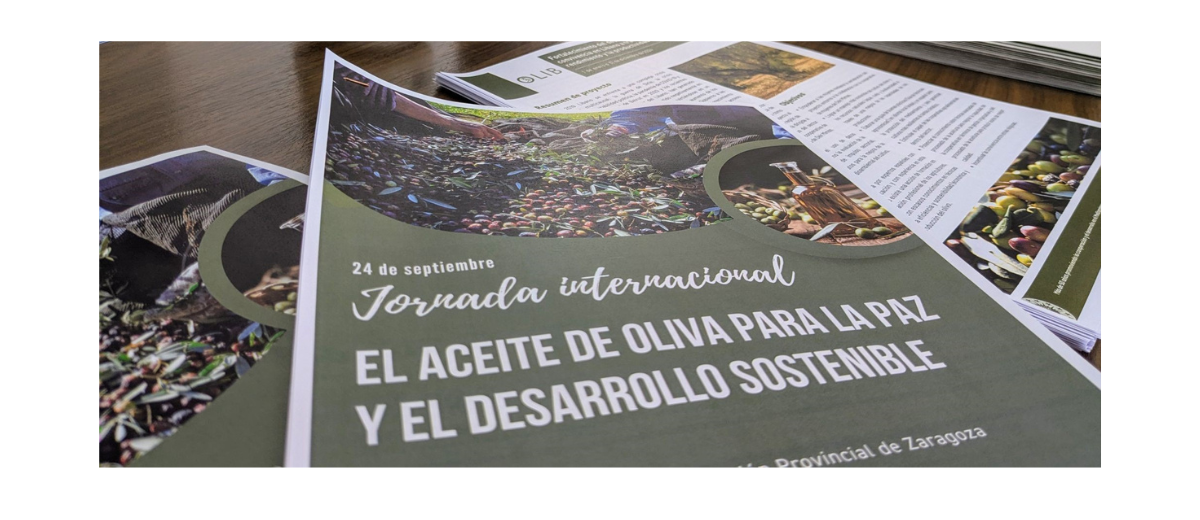
The IOC at the International Conference on “Olive Oil for Peace and Sustainable Development” organised by CIHEAM Zaragoza

To commemorate this year’s International Peace Day, celebrated annually on 21 September, the Mediterranean Agronomic Institute of Zaragoza (CIHEAM Zaragoza), a longstanding partner of the IOC, organised the International Conference on “Olive Oil for Peace and Sustainable Development” with the support of the University of Zaragoza. The conference highlighted olive oil’s contribution to local development across the Mediterranean and beyond, as well as its role as a symbol of peace, coinciding with the 25th anniversary of the United Nations General Assembly’s adoption of the Declaration and Programme of Action on a Culture of Peace.

The event gathered representatives from the public and private sectors, including government officials, intergovernmental organisations, universities, cooperatives, companies, and social leaders, to examine the role of cooperation in ensuring that olive oil production supports sustainable development. Discussions focused on production techniques, management strategies, and agri-food cooperation initiatives aimed at promoting a culture of peace.
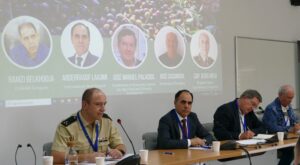
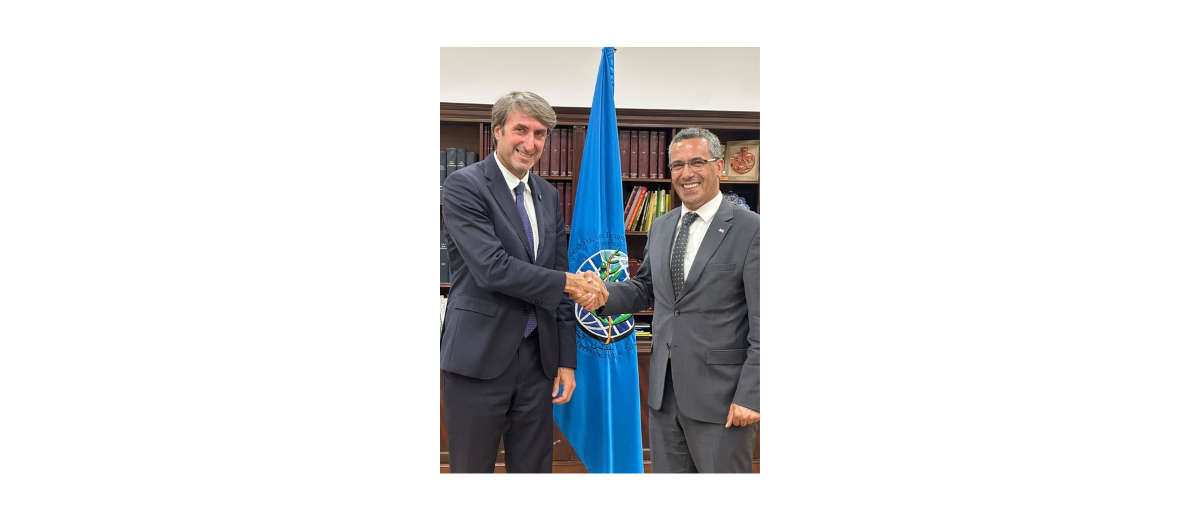
The conference was opened by Raúl Compés, Director of CIHEAM Zaragoza. On this occasion, the IOC was represented by its Deputy Executive Director Abderraouf Laajimi who participated in the roundtable on “Institutional support for the promotion of olive growing”. In his intervention, he highlighted the specific measures that governmental institutions could take to support the modernisation and sustainability of olive cultivation. He also emphasised the importance of adopting policies that would improve the competitive potential of olive oil in the international market.
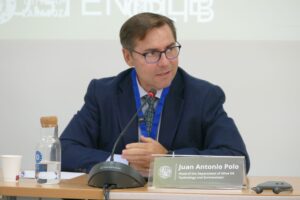


Juan Antonio Polo, Head of the Olive Technology and Environment Department, highlighted the environmental and social importance of olive growing in the Mediterranean. He noted that the UN identifies “carbon farming” as key to meeting 2050 climate neutrality goals. Olive groves, serving as permanent CO2 sinks, provide essential ecosystem services that should be recognised and potentially monetised. In 2024, the IOC launched a project to develop a scheme for calculating the carbon balance of olive groves and generating voluntary carbon credits for farmers.


The olive tree has long been a symbol of peace, dating back to ancient civilizations. In fact, the United Nations emblem displays an olive branch, reinforcing this important crop’s association with global peace. It is symbol of unity, understanding and cooperation for civilisations of the Mediterranean and elsewhere.


You can read the conference programme here.
Enviar noticiaShare Enlace a facebook Enlace a twitter Enlace a linkedin
Last Posts
IOC and TAGEM sign MoU
SPAIN/TÜRKIYE / 06.03.2026

The International Olive Council (IOC) and the General Directorate of Agricultural Research and Policies (TAGEM) of Türkiye have signed a Memorandum of Understanding (MoU) to strengthen cooperation in the olive sector....

Info

IOC Executive Director inaugurates WOOE
MADRID, SPAIN / 05.03.2026

The Executive Director of the International Olive Council (IOC) inaugurated the 13th edition of the World Olive Oil Exhibition (WOOE) in Madrid on 3 March, one of the leading international meeting points for the olive oil...

Info

IOC celebrates young culinary talent in Puglia
PUGLIA, ITALY / 04.03.2026

The Organisation reaffirms its commitment to the Italian olive sector Last week, the International Olive Council (IOC) visited Puglia, Italy’s main olive oil producing region. On this occasion, Dr Mercedes Fernández...

Info

International olive council logo
Privacy Policy
Somos sociales
  • Linkedin icon
  • Twitter icon
© International Olive Council, 2026
Gestionar consentimiento de cookies
Para proporcionar las mejores experiencias, utilizamos tecnologías como las cookies para almacenar y/o acceder a la información del dispositivo. Consentir estas tecnologías nos permitirá procesar datos como el comportamiento de navegación o IDs únicos en este sitio. No consentir o retirar el consentimiento, puede afectar negativamente a ciertas características y funciones.
Funcional Siempre activo
El almacenamiento o acceso técnico es estrictamente necesario para el fin legítimo de permitir el uso de un servicio específico solicitado explícitamente por el abonado o usuario, o con el único fin de llevar a cabo la transmisión de una comunicación a través de una red de comunicaciones electrónicas.
Preferencias
El almacenamiento o acceso técnico es necesario para el fin legítimo de almacenar preferencias no solicitadas por el abonado o usuario.
Estadísticas
El almacenamiento o acceso técnico que se utiliza exclusivamente con fines estadísticos. El almacenamiento o acceso técnico que se utiliza exclusivamente con fines estadísticos anónimos. Sin una citación judicial, el cumplimiento voluntario por parte de su proveedor de servicios de Internet o registros adicionales de un tercero, la información almacenada o recuperada únicamente con este fin no puede utilizarse normalmente para identificarle.
Marketing
El almacenamiento o acceso técnico es necesario para crear perfiles de usuario para enviar publicidad, o para seguir al usuario en un sitio web o en varios sitios web con fines de marketing similares.
Administrar opciones Gestionar los servicios Gestionar {vendor_count} proveedores Leer más sobre estos propósitos
Ver preferencias
{title} {title} {title}

Culinary

Olive Oil and the Plant-Forward Kitchen

Discover how the Mediterranean Diet inspires contemporary cooking.

Explore this collaboration between the International Olive Council and The Culinary Institute of America, designed to promote healthy, sustainable and flavourful food choices, with a strong focus on technical training and menu innovation for chefs.

External link

COI logo
CIA logo

Salud

El COI y la Universidad de Navarra, a través de OHIS (Olive Health Information System), una plataforma dedicada a la investigación sobre las propiedades saludables del aceite de oliva y las aceitunas de mesa, publican semanal o quincenalmente una recopilación de artículos científicos y un resumen de las investigaciones realizadas en este ámbito.

Estos artículos ponen de relieve los numerosos beneficios para la salud de estos productos.

Puede leer los resúmenes de estas investigaciones aquí en francés, inglés y español y acceder a la lista de artículos, o visitar el portal de OHIS.

Summaries OHIS portal

Para cualquier asistencia, póngase en contacto con iooc@internationaloliveoil.org.

Sustainability in the Olive Sector

Access the sustainability portal developed in collaboration between the IOC, the University of Jaén and the Instituto Universitario de Investigación en Olivar y Aceites de Oliva.

Explore research, tools and knowledge supporting sustainable olive growing and responsible production practices.

External link

X