• Skip to main content

International Olive Council

The website of the International Olive Council

International olive council logo
Linkedin icon Twitter icon
  • Health
  • Culinary
  • Sustainability
Contracts Grants Vacancies Patronage
Mail envelope Contact us
Magnifier Search
Person icon Private area
Person icon
Menu icon
MENUMENU
  • Who we are
    • Mission and Vision
    • Fundamental Texts
    • Governance and Structure
    • Member Countries and Observers
  • What we do
    • Standardisation and Research Unit
      • IOC Standards, Methods and Guides
      • Working Groups
      • Recognition of Laboratories and Panels
      • IOC Mario Solinas Quality Award
      • IOC Institutional Support
      • Olive Oil, Nutrition and Health
      • Research & Internship in the Standardisation and Research Unit
      • Database of IOC Documents
    • Olive Growing, Olive Oil Technology and Environment Unit
      • Technical Cooperation and Training
      • Olive Oil Technology and the Environment
      • IOC Scholarships
      • Supporting Member Countries
      • External Projects and Institutional Agreements
      • IOC Network of International Olive Germplasm Banks
      • Key Projects and Technical Resources
    • Economic Affairs & Promotion Unit
      • Market Statistics
      • Country Profiles
      • Promotion Campaigns
      • Grants for Promotion Activities
      • Studies & Seminars
  • Press Room
    • All articles
    • Olive Health Information System
    • Monthly Olive Sector Statistics
    • Agenda 2026
    • Videos
    • Infographics
  • Key Projects
    • Carbon Balance Project
    • World Catalogue of Olive Varieties 
    • World Olive Tree Day
      • World Olive Day Celebrations
    • IOC Published Documents
    • Glossary of olive terms
  • Standards
  • Statistics
  • Arabic
  • English
  • French
  • Italian
  • Spanish
Contracts Grants Vacancies Patronage
Mail envelope Contact
Magnifier Search
We are social
  • Linkedin icon
  • Twitter icon
MENUMENU
  • Who we are
    • Mission and Vision
    • Fundamental Texts
    • Governance and Structure
    • Member Countries and Observers
  • What we do
    • Standardisation and Research Unit
      • IOC Standards, Methods and Guides
      • Working Groups
      • Recognition of Laboratories and Panels
      • IOC Mario Solinas Quality Award
      • IOC Institutional Support
      • Olive Oil, Nutrition and Health
      • Research & Internship in the Standardisation and Research Unit
      • Database of IOC Documents
    • Olive Growing, Olive Oil Technology and Environment Unit
      • Technical Cooperation and Training
      • Olive Oil Technology and the Environment
      • IOC Scholarships
      • Supporting Member Countries
      • External Projects and Institutional Agreements
      • IOC Network of International Olive Germplasm Banks
      • Key Projects and Technical Resources
    • Economic Affairs & Promotion Unit
      • Market Statistics
      • Country Profiles
      • Promotion Campaigns
      • Grants for Promotion Activities
      • Studies & Seminars
  • Press Room
    • All articles
    • Olive Health Information System
    • Monthly Olive Sector Statistics
    • Agenda 2026
    • Videos
    • Infographics
  • Key Projects
    • Carbon Balance Project
    • World Catalogue of Olive Varieties 
    • World Olive Tree Day
      • World Olive Day Celebrations
    • IOC Published Documents
    • Glossary of olive terms
  • Standards
  • Statistics
  • Arabic
  • English
  • French
  • Italian
  • Spanish
  • Health
  • Culinary
  • Sustainability
Tools icon

IOC NEWS

Home / Blog / International Olive Council holds 15th edition of extra virgin olive oil Quality Award
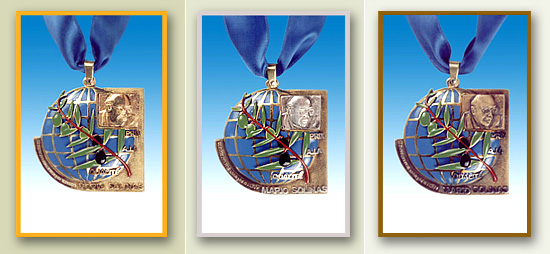
Medallas Mario Solinas
Enviar noticiaShare Enlace a facebook Enlace a twitter Enlace a linkedin

International Olive Council holds 15th edition of extra virgin olive oil Quality Award

Madrid / 26.06.2015

For the 15th year running, the International Olive Council  (IOC for short, or COI in other languages) has held its annual competition for the Mario Solinas Quality Award. Established in 2000 to promote excellence in extra virgin olive oils, the Award is named after the late Professor Mario Solinas, one of the leading advocates of the sensory analysis of this liquid gold. Entries are welcomed from individual producers, producer associations and packers alike and are judged by an international panel who select the oils with the very best organoleptic characteristics in each competition section.
Award ceremony
For the first time in the history of the competition, the IOC has held two editions this year to draw entries from countries in the southern hemisphere where the olive harvest and olive oil production season differ from those in the northern hemisphere. The oils for both editions have been assessed by an international panel of judges, all leaders of official tasting panels recognised by the IOC in their home countries. To meet entry requirements, the extra virgin olive oils had to be produced this season, satisfy the criteria stipulated in the IOC trade standard and be from a uniform, minimum batch of 3,000 litres. The prizes for both editions will be officially awarded on 29 June, for the first time ever against the backdrop of the New York Summer Fancy Food Show, America’s largest speciality food show.

All the entries for both editions have been tasted by the international line-up of judges and classified in the four competition categories according to type and intensity of fruitiness. The task of the judges was to propose first, second and third prize winners and finalists. The winners in each section have been chosen on the basis of their taste, smell and retronasal sensations as well as their harmony, complexity and persistence.

A total of 111 oils from seven countries – Greece (4), Israel (1), Italy (1), Morocco (2), Portugal (34), Spain (64) and Tunisia (5) – vied with each other in the first edition. The biggest number came from Spain and Portugal, which walked away with all the prizes. In the second round, the tasters had to judge 37 oils from nine countries: Argentina (2), Australia (1), Chile (2), Greece (1), Italy (2), Peru (1), Portugal (20), Spain (7) and Uruguay (1).

In the first edition, oils from various provinces of Spain and Portugal scooped up first prize in the ripe fruitiness and intense, medium and mild green fruitiness sections and an oil from Tunisia was nominated as a finalist. In the second edition, prizes were awarded to Italy, Portugal and Spain, and oils from Australia, Chile and Peru classified as finalists.

Well-earned recognition of achievement

As a token of recognition, winners receive a gold, silver or bronze medal and a diploma. They can also order numbered stickers from the IOC to announce the prizes on bottles of oil from the winning batch. The IOC controls the distribution of the stickers, which show the effigy of Mario Solinas, the IOC logo, the prize and the year of award. This way the IOC makes sure that the Award is one of only a few quality competitions in the world to guarantee that what consumers buy is really award-winning oil.


Through the competition, the IOC looks to increase familiarity with the best in extra virgin olive oils and to encourage their production and consumption. It also seeks to showcase the characteristics of the olive oils produced in different countries, as well as to encourage producers to hone their technical skills and scientific expertise and to help to expand olive oil culture.

Quality above all else

The fact that winners receive no monetary retribution is a guarantee that entries are judged exclusively on the grounds of quality. Writing recently in an open letter, IOC Executive Director Jean-Louis Barjol highlighted the current proliferation of quality competitions, which might lead to confusion about the source or assessment of the oils, and announced that the IOC is considering the possibility of granting its patronage for competitions meeting certain requirements in terms of sample representativeness and taster skills. The aim is to provide reliable tools for distributors and consumers who choose to buy award-winning oils and at the same time to help create stronger international visibility for winners. At its recent session in June 2015, the Council of Members instructed the IOC Executive Secretariat to begin by drawing up a set of guidelines for such competitions, which it will examine at its next session in November 2015.

Enviar noticiaShare Enlace a facebook Enlace a twitter Enlace a linkedin
Last Posts
IOC and CIHEAM Zaragoza to organise two regional training courses in May 2026

The International Olive Council (IOC), in collaboration with the International Centre for Advanced Mediterranean Agronomic Studies (CIHEAM Zaragoza), will organise two regional training courses in May 2026 as part of its...

Info

IOC and UPM sign MoU
MADRID, SPAIN / 16.03.2026

The International Olive Council (IOC) and the Polytechnic University of Madrid (UPM) in Spain have signed a Memorandum of Understanding (MoU) to strengthen cooperation in the olive sector. The agreement was signed by Mr...

Info

This week on OHIS
MADRID, SPAIN / 13.03.2026

This week on the Olive Health Information System website The newsletter of the University of Navarra and the IOC dedicated to health Article 1 Recent studies have examined the role of overall dietary patterns in...

Info

International olive council logo
Privacy Policy
We are social
  • Linkedin icon
  • Twitter icon
© International Olive Council, 2026
Manage Cookie Consent
To provide the best experiences, we use technologies like cookies to store and/or access device information. Consenting to these technologies will allow us to process data such as browsing behavior or unique IDs on this site. Not consenting or withdrawing consent, may adversely affect certain features and functions.
Functional Always active
The technical storage or access is strictly necessary for the legitimate purpose of enabling the use of a specific service explicitly requested by the subscriber or user, or for the sole purpose of carrying out the transmission of a communication over an electronic communications network.
Preferencias
El almacenamiento o acceso técnico es necesario para la finalidad legítima de almacenar preferencias no solicitadas por el abonado o usuario.
Statistics
The technical storage or access that is used exclusively for statistical purposes. El almacenamiento o acceso técnico que se utiliza exclusivamente con fines estadísticos anónimos. Sin un requerimiento, el cumplimiento voluntario por parte de tu proveedor de servicios de Internet, o los registros adicionales de un tercero, la información almacenada o recuperada sólo para este propósito no se puede utilizar para identificarte.
Marketing
The technical storage or access is required to create user profiles to send advertising, or to track the user on a website or across several websites for similar marketing purposes.
Manage options Manage services Manage {vendor_count} vendors Read more about these purposes
View preferences
{title} {title} {title}

Culinary

Olive Oil and the Plant-Forward Kitchen

Discover how the Mediterranean Diet inspires contemporary cooking.

Explore this collaboration between the International Olive Council and The Culinary Institute of America, designed to promote healthy, sustainable and flavourful food choices, with a strong focus on technical training and menu innovation for chefs.

External link

COI logo
CIA logo

Health

The IOC and the University of Navarra, through OHIS (the Olive Health Information System), a platform dedicated to research on the health properties of olive oil and table olives, publish a weekly or bi-weekly collection of scientific articles and summaries of research carried out in this field.

These articles highlight the numerous health benefits of these products.

You can read the summaries of this research here in French, English and Spanish and access the list of articles, or visit the OHIS portal.

Summaries OHIS portal

For any assistance, please contact iooc@internationaloliveoil.org.

Sustainability in the Olive Sector

Access the sustainability portal developed in collaboration between the IOC, the University of Jaén and the Instituto Universitario de Investigación en Olivar y Aceites de Oliva.

Explore research, tools and knowledge supporting sustainable olive growing and responsible production practices.

External link

COI logo
CIA logo

Olive et la cuisine avant-gardiste

Inspiration du régime méditerranéen pour les biscuits contemporains

Apprenez-en plus sur cette collaboration entre le Culinary Institute of America et le Conseil oléicole international pour faire progresser des choix alimentaires sains, durables et délicieux, avec un accent particulier sur la formation technique et l’innovation des menus pour les chefs.

X