• Skip to main content

International Olive Council

The website of the International Olive Council

International olive council logo
Linkedin icon Twitter icon
  • Health
  • Culinary
  • Sustainability
Contracts Grants Vacancies Patronage
Mail envelope Contact us
Magnifier Search
Person icon Private area
Person icon
Menu icon
MENUMENU
  • About IOC
    • Welcome Message
    • Mission & Basic Text
    • Structure
    • List of IOC Members
    • Where we are
    • IOC News
  • What we do
    • Standardisation and Research Unit
      • IOC Standards, Methods and Guides
      • Working Groups
      • Recognition of Laboratories and Panels
      • IOC Mario Solinas Quality Award
      • IOC Institutional Support
      • Olive Oil, Nutrition and Health
      • Research & Internship in the Standardisation and Research Unit
      • Database of IOC Documents
    • Olive Growing, Olive Oil Technology and Environment Unit
      • Technical Cooperation and Training
      • Olive Oil Technology and the Environment
      • IOC Scholarships
      • Supporting Member Countries
      • External Projects and Institutional Agreements
      • IOC Network of International Olive Germplasm Banks
      • Key Projects and Technical Resources
    • Financial Management Unit
    • Economic Affairs & Promotion Unit
      • Market Statistics
      • Country Profiles
      • Promotion Campaigns
      • Grants for Promotion Activities
      • Studies & Seminars
    • Administrative Management and Human Resources Unit
    • Observatory & IT System Department
    • Health
    • Culinary
    • Sustainability
    • Statistics
  • Olive World
    • The Olive Tree
    • Table olives
    • Olive Oil
    • Olive Oil & Health
    • Home-Cured Olives
    • Olive Museums & Routes
    • World Olive Tree Day
      • World Olive Day Celebrations
    • Recipes
    • Glossary
  • Resources
    • Carbon Balance Project
    • World Catalogue of Olive Varieties 
    • IOC Published Documents
    • Videos
    • Infographics
  • Standards
  • Statistics
  • Arabic
  • English
  • French
  • Italian
  • Spanish
Contracts Grants Vacancies Patronage
Mail envelope Contact
Magnifier Search
We are social
  • Linkedin icon
  • Twitter icon
MENUMENU
  • About IOC
    • Welcome Message
    • Mission & Basic Text
    • Structure
    • List of IOC Members
    • Where we are
    • IOC News
  • What we do
    • Standardisation and Research Unit
      • IOC Standards, Methods and Guides
      • Working Groups
      • Recognition of Laboratories and Panels
      • IOC Mario Solinas Quality Award
      • IOC Institutional Support
      • Olive Oil, Nutrition and Health
      • Research & Internship in the Standardisation and Research Unit
      • Database of IOC Documents
    • Olive Growing, Olive Oil Technology and Environment Unit
      • Technical Cooperation and Training
      • Olive Oil Technology and the Environment
      • IOC Scholarships
      • Supporting Member Countries
      • External Projects and Institutional Agreements
      • IOC Network of International Olive Germplasm Banks
      • Key Projects and Technical Resources
    • Financial Management Unit
    • Economic Affairs & Promotion Unit
      • Market Statistics
      • Country Profiles
      • Promotion Campaigns
      • Grants for Promotion Activities
      • Studies & Seminars
    • Administrative Management and Human Resources Unit
    • Observatory & IT System Department
    • Health
    • Culinary
    • Sustainability
    • Statistics
  • Olive World
    • The Olive Tree
    • Table olives
    • Olive Oil
    • Olive Oil & Health
    • Home-Cured Olives
    • Olive Museums & Routes
    • World Olive Tree Day
      • World Olive Day Celebrations
    • Recipes
    • Glossary
  • Resources
    • Carbon Balance Project
    • World Catalogue of Olive Varieties 
    • IOC Published Documents
    • Videos
    • Infographics
  • Standards
  • Statistics
  • Arabic
  • English
  • French
  • Italian
  • Spanish
  • Health
  • Culinary
  • Sustainability
Tools icon

IOC NEWS

Home / Blog / Conclusions of the workshop on the carbon balance of the olive sector
Enviar noticiaShare Enlace a facebook Enlace a twitter Enlace a linkedin

Conclusions of the workshop on the carbon balance of the olive sector

MADRID, SPAIN / 30.10.2023

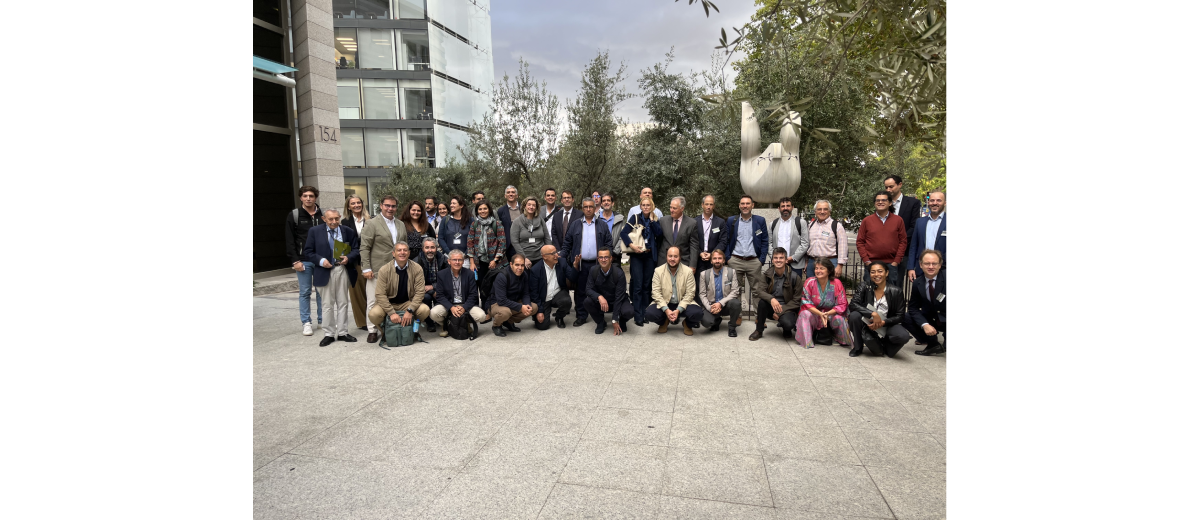
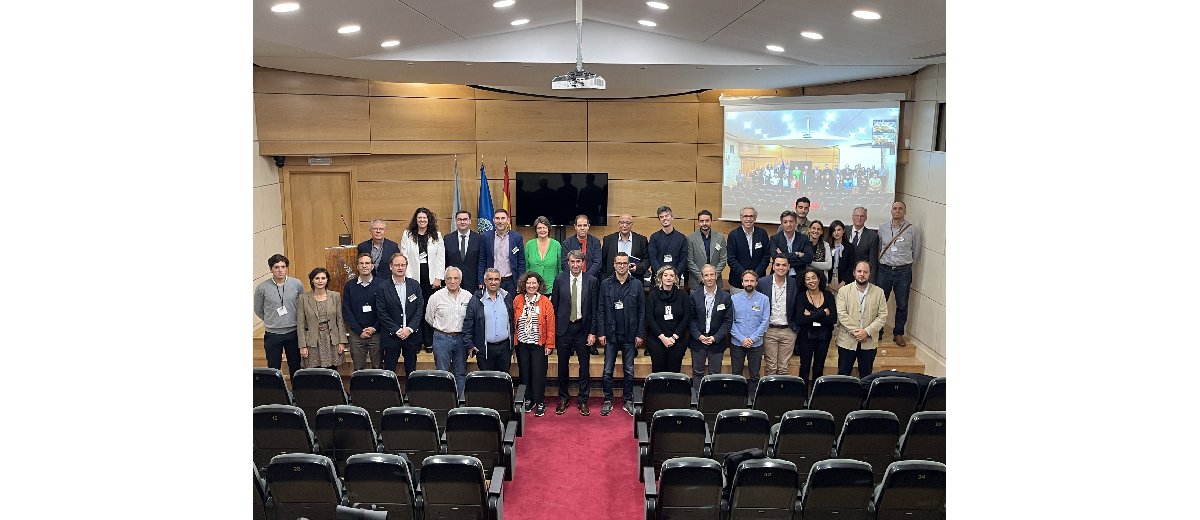
The carbon balance of olive groves is a strategic area of work for the International Olive Council (IOC), which is why this intergovernmental organisation has decided to contribute to the development of methodological and policy frameworks aimed at strengthening the role of olive groves as an effective strategy for achieving the United Nations’ climate objectives, and to provide its member states with technically robust tools within the framework of recognised, validated standards that are easy for end users to use. Against this backdrop, the IOC organised an international workshop entitled “Carbon balance of the olive sector: part of the solution against climate change”, which took place at the IOC headquarters in Madrid (Spain) and by videoconference from 17 to 19 October 2023.

The workshop brought together experts from the olive sector, as well as lawyers, policy-makers, project coordinators and representatives of private companies, who are interested in carbon balance assessment, CO2 removal, carbon credit markets, etc., creating a platform for reflection on these key issues. It provided a unique opportunity for participants to exchange experiences, to reflect on the  position of the olive oil and table olive sector in terms of its contribution to achieving “CO2 neutrality” objectives, and to consider how the current situation can benefit the sector as a whole.

The main conclusions of this workshop are as follows:

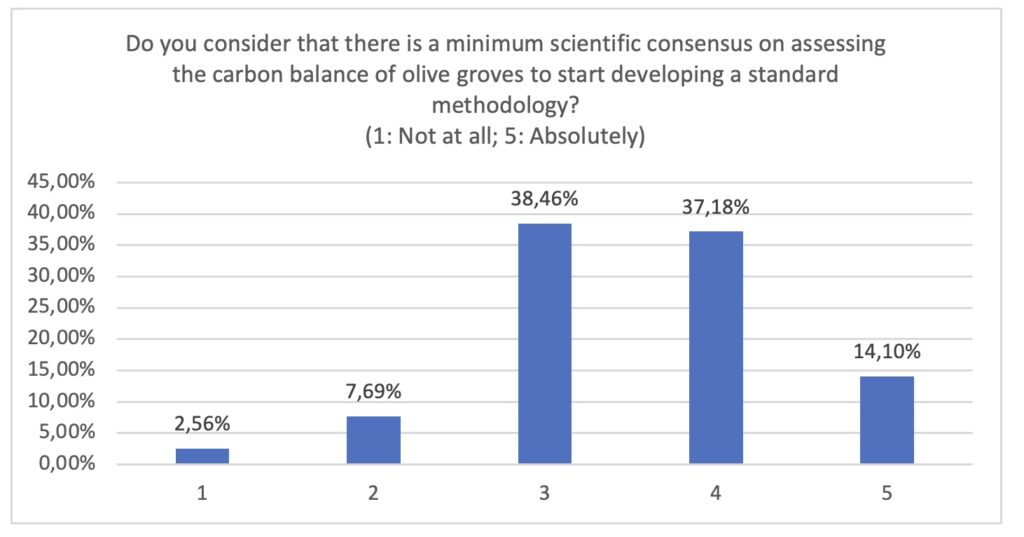
  • To the question of whether there is a minimum consensus on the assessment of the carbon balance in order to start developing a methodology, the average response from participants was 3.53/5, which means that this consensus does exist.
  • The main priorities identified for this work were as follows:
    1. Consider how to establish basic criteria for the olive sector.
    2. Develop a methodology for assessing the carbon balance of olive groves.
    3. Model CO2 absorption capacity in olive groves.
    4. Consider how to adapt the QU.A.L.ITY criteria (QUantification, Additionality, Long-term Storage, Sustainability) to the olive sector.
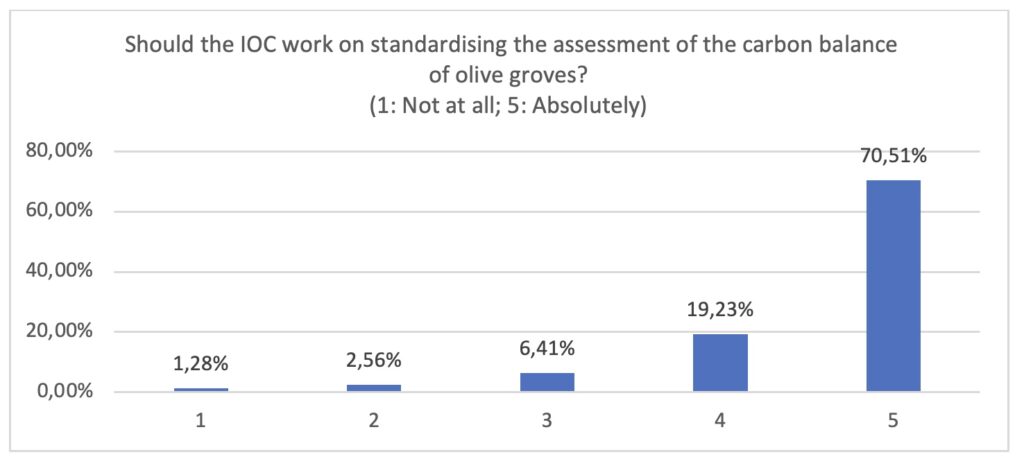
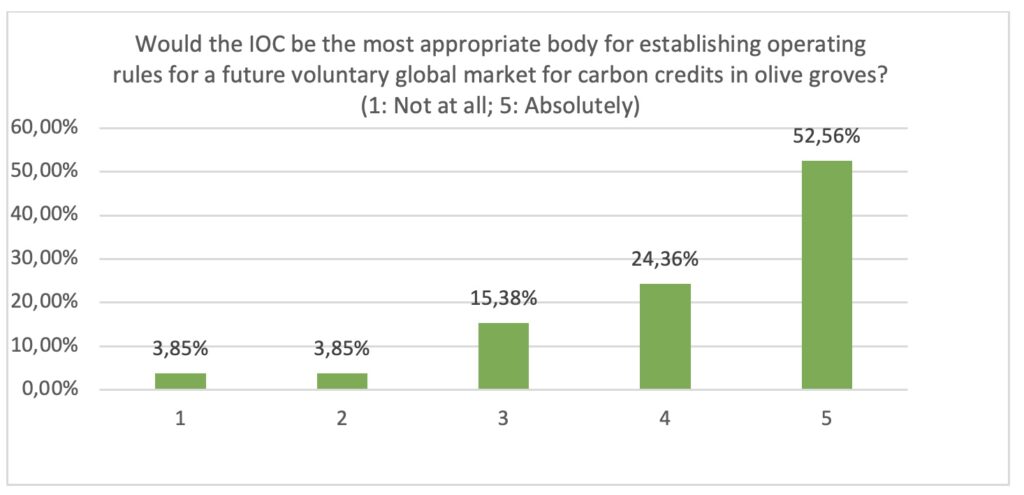
  • Over 90% of participants said that the IOC should provide robust methodologies and tools based on scientific knowledge and facilitate access to these tools, and over 80% said that it was the most appropriate body for defining the rules for the future carbon credit market for olive groves.
  • The current scenario is presented as a great opportunity for the sector, and the aim is for society to associate the olive grove with the concept of sustainability and see it as an effective strategy against climate change: “Olive oil is good for your health and for the environment”.
 

Enviar noticiaShare Enlace a facebook Enlace a twitter Enlace a linkedin
Last Posts
IOC at SOL Expo 2026
VERONA, ITALY / 03.03.2026

The Deputy Executive Director of the International Olive Council (IOC), Abderraouf Laajimi, participated in the second edition of SOL Expo, held at Veronafiere in Verona from 1 to 3 March 2026. High-level institutional...

Info

This week on OHIS
MADRID, SPAIN / 02.03.2026

This week on the Olive Health Information System website The newsletter of the University of Navarra and the IOC dedicated to health Article 1 Growing evidence supports the Mediterranean diet as an effective nutritional...

Info

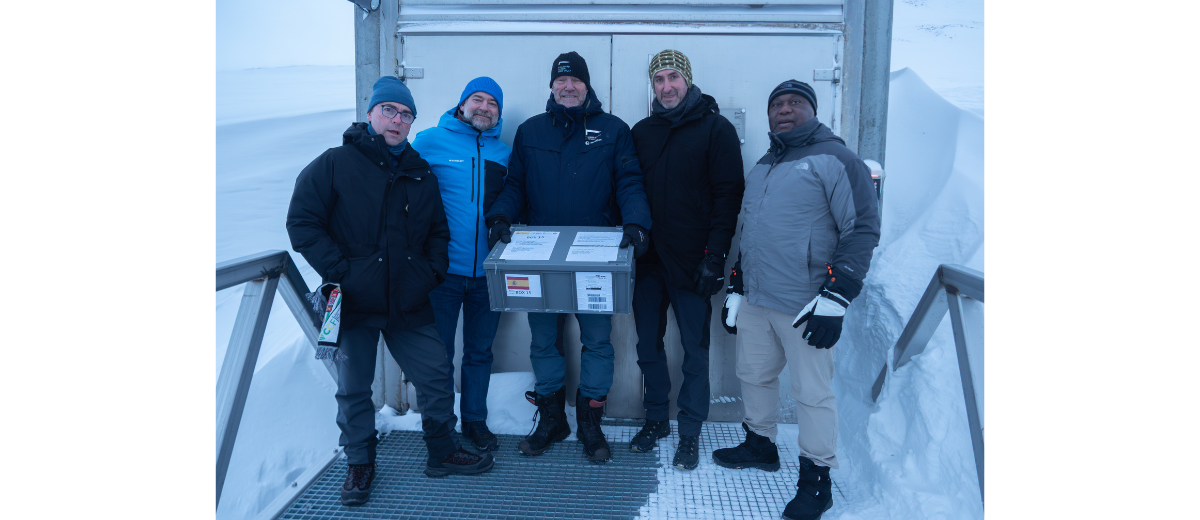
The Svalbard Global Seed Vault receives olive seeds for the first time

A historic milestone in the conservation of olive genetic diversity, made possible thanks to the collaboration of various organisations and research centres. The International Olive Council (IOC) took part in the first-ever...

Info

International olive council logo
Privacy Policy
We are social
  • Linkedin icon
  • Twitter icon
© International Olive Council, 2026
Manage Cookie Consent
To provide the best experiences, we use technologies like cookies to store and/or access device information. Consenting to these technologies will allow us to process data such as browsing behavior or unique IDs on this site. Not consenting or withdrawing consent, may adversely affect certain features and functions.
Functional Always active
The technical storage or access is strictly necessary for the legitimate purpose of enabling the use of a specific service explicitly requested by the subscriber or user, or for the sole purpose of carrying out the transmission of a communication over an electronic communications network.
Preferencias
El almacenamiento o acceso técnico es necesario para la finalidad legítima de almacenar preferencias no solicitadas por el abonado o usuario.
Statistics
The technical storage or access that is used exclusively for statistical purposes. El almacenamiento o acceso técnico que se utiliza exclusivamente con fines estadísticos anónimos. Sin un requerimiento, el cumplimiento voluntario por parte de tu proveedor de servicios de Internet, o los registros adicionales de un tercero, la información almacenada o recuperada sólo para este propósito no se puede utilizar para identificarte.
Marketing
The technical storage or access is required to create user profiles to send advertising, or to track the user on a website or across several websites for similar marketing purposes.
Manage options Manage services Manage {vendor_count} vendors Read more about these purposes
View preferences
{title} {title} {title}

Sustainability in the Olive Sector

Access the sustainability portal developed in collaboration between the IOC, the University of Jaén and the Instituto Universitario de Investigación en Olivar y Aceites de Oliva.

Explore research, tools and knowledge supporting sustainable olive growing and responsible production practices.

Culinary

Olive Oil and the Plant-Forward Kitchen

Discover how the Mediterranean Diet inspires contemporary cooking.

Explore this collaboration between the International Olive Council and The Culinary Institute of America, designed to promote healthy, sustainable and flavourful food choices, with a strong focus on technical training and menu innovation for chefs.

COI logo
CIA logo

Health

The IOC and the University of Navarra, through OHIS (the Olive Health Information System), a platform dedicated to research on the health properties of olive oil and table olives, publish a weekly or bi-weekly collection of scientific articles and summaries of research carried out in this field.

These articles highlight the numerous health benefits of these products.

You can read the summaries of this research here in French, English and Spanish and access the list of articles, or visit the OHIS portal.

For any assistance, please contact iooc@internationaloliveoil.org.

IOC Logo
CIA logo

Olive et la cuisine avant-gardiste

Inspiration du régime méditerranéen pour les biscuits contemporains

Apprenez-en plus sur cette collaboration entre le Culinary Institute of America et le Conseil oléicole international pour faire progresser des choix alimentaires sains, durables et délicieux, avec un accent particulier sur la formation technique et l’innovation des menus pour les chefs.

X