
 Share
Share


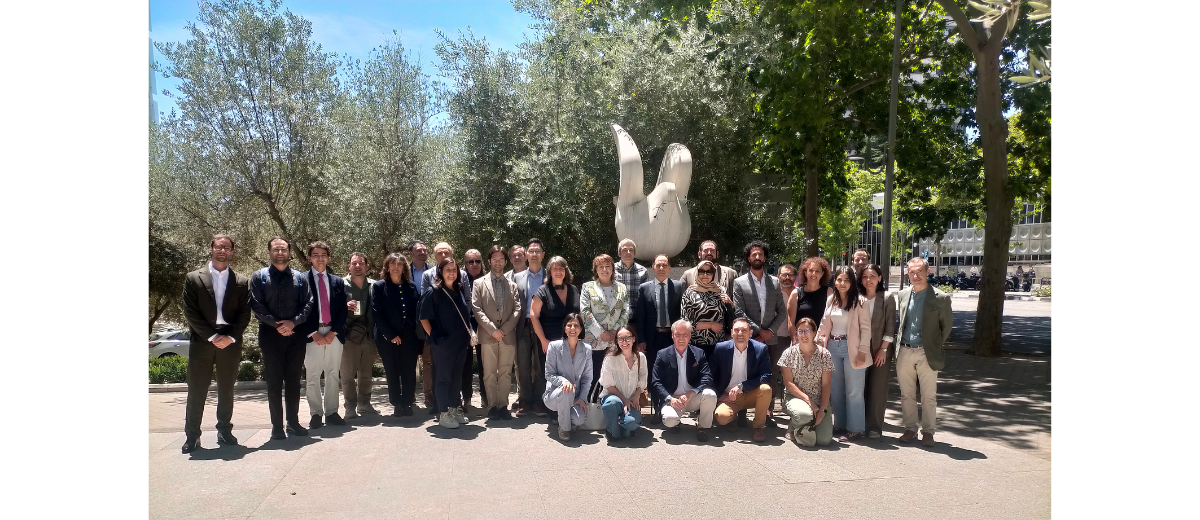
The International Olive Council (IOC) concluded yesterday two specialised workshops dedicated to strengthening knowledge-sharing and international cooperation in two key areas for the olive sector: data collection and crop forecasting, and Protected Designations of Origin (PDOs) and Protected Geographical Indications (PGIs). Held at IOC headquarters in Madrid with both in-person and online participation, the events brought together experts, policymakers, researchers and representatives from producing countries across several continents. The full two-day programme is available here..
Data and cooperation for a resilient olive sector
The first workshop, open exclusively to IOC experts and devoted to data availability, policy analysis and decision support, examined how reliable statistics and improved forecasting systems can contribute to market transparency, evidence-based policymaking and the sustainable development of the sector. Experts from the Food and Agriculture Policy Research Institute (FAPRI), Food and Agriculture Organization of the United Nations (FAO), the European Commission’s Joint Research Centre (JRC), the Junta de Andalucía, Tunisia and Greece shared experiences and methodologies aimed at improving the reliability and comparability of olive sector information.
Participants stressed that robust methodologies and closer cooperation among producers, mills, traders, researchers, public authorities and international organisations are essential to building more efficient information systems. Discussions also highlighted the need to integrate climate and water indicators into monitoring systems and to harness digital technologies, remote sensing and artificial intelligence to improve forecasting and decision-making.
Protecting a unique heritage
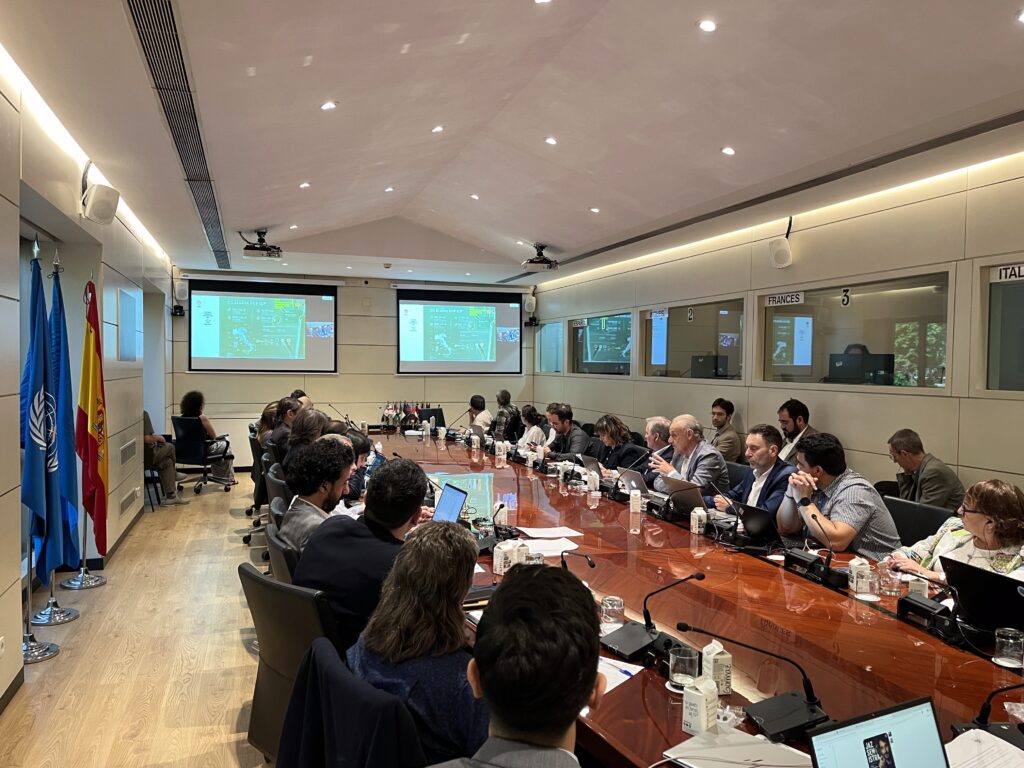 The second workshop, which brought over 150 participants, focused on the role of PDOs and PGIs as drivers of quality, territorial development and competitiveness. Under the supervision of IOC Deputy Executive Director Abderraouf Laajimi, the Executive Secretariat has undertaken a comprehensive update of the IOC’s 2010 analysis on geographical indications in the olive sector. This refreshed and expanded study –which the IOC hopes to publish in the near future– provided the background for the seminar and served as a basis for discussions on the evolution of PDO and PGI systems over the past fifteen years.
Through case studies from Spain, Greece, Morocco, Argentina and Italy, participants explored governance models, certification systems, legal frameworks and future opportunities for origin-certified products. Discussions underscored that geographical indications are much more than legal instruments. They contribute to preserving heritage, strengthening local identity, creating value for producers and supporting rural communities. Speakers also highlighted the importance of research, innovation and cooperation between producers, public authorities and research institutions in ensuring the long-term sustainability of these schemes.
At the same time, participants identified a number of challenges, including the complexity and cost of certification systems and the need to improve consumer awareness of the value and authenticity associated with GI products. The workshop concluded that the future of geographical indications lies in balancing strong protection with innovation, consumer trust and international cooperation while creating sustainable value for producers and territories.
Key takeaways and outlook
Summing up the conclusions of the first workshop, Deputy Executive Director Abderraouf Laajimi noted that forecasting enables the sector to anticipate future developments, but that the real challenge lies not only in predicting the future, but in shaping the future we want for the olive sector. Likewise, discussions on geographical indications reaffirmed that appellations of origin are far more than labels: they embody a collective guarantee of quality, trust and identity, allowing producers to preserve heritage while generating economic value in increasingly competitive markets.
Through these two workshops, the IOC reaffirmed its commitment to promoting knowledge exchange and fostering international cooperation in support of a more transparent, competitive and sustainable global olive sector.