• Skip to main content

International Olive Council

The website of the International Olive Council

International olive council logo
Linkedin icon Twitter icon
  • Health
  • Culinary
  • Sustainability
Contracts Grants Vacancies Patronage
Mail envelope Contact us
Magnifier Search
Person icon Private area
Person icon
Menu icon
MENUMENU
  • Who we are
    • Mission and Vision
    • Fundamental Texts
    • Governance and Structure
    • Member Countries and Observers
  • What we do
    • Standardisation and Research Unit
      • IOC Standards, Methods and Guides
      • Working Groups
      • Recognition of Laboratories and Panels
      • IOC Mario Solinas Quality Award
      • IOC Institutional Support
      • Olive Oil, Nutrition and Health
      • Research & Internship in the Standardisation and Research Unit
      • Database of IOC Documents
    • Olive Growing, Olive Oil Technology and Environment Unit
      • Technical Cooperation and Training
      • Olive Oil Technology and the Environment
      • IOC Scholarships
      • Supporting Member Countries
      • External Projects and Institutional Agreements
      • IOC Network of International Olive Germplasm Banks
      • Key Projects and Technical Resources
    • Economic Affairs & Promotion Unit
      • Market Statistics
      • Country Profiles
      • Promotion Campaigns
      • Grants for Promotion Activities
      • Studies & Seminars
  • Olive World
    • The Olive Tree
    • Table olives
    • Olive Oil
    • Olive Oil & Health
    • Home-Cured Olives
    • Olive Museums & Routes
    • World Olive Tree Day
      • World Olive Day Celebrations
    • Recipes
    • Glossary
  • Resources
    • Carbon Balance Project
    • World Catalogue of Olive Varieties 
    • IOC Published Documents
    • Videos
    • Infographics
  • Standards
  • Statistics
  • Arabic
  • English
  • French
  • Italian
  • Spanish
Contracts Grants Vacancies Patronage
Mail envelope Contact
Magnifier Search
We are social
  • Linkedin icon
  • Twitter icon
MENUMENU
  • Who we are
    • Mission and Vision
    • Fundamental Texts
    • Governance and Structure
    • Member Countries and Observers
  • What we do
    • Standardisation and Research Unit
      • IOC Standards, Methods and Guides
      • Working Groups
      • Recognition of Laboratories and Panels
      • IOC Mario Solinas Quality Award
      • IOC Institutional Support
      • Olive Oil, Nutrition and Health
      • Research & Internship in the Standardisation and Research Unit
      • Database of IOC Documents
    • Olive Growing, Olive Oil Technology and Environment Unit
      • Technical Cooperation and Training
      • Olive Oil Technology and the Environment
      • IOC Scholarships
      • Supporting Member Countries
      • External Projects and Institutional Agreements
      • IOC Network of International Olive Germplasm Banks
      • Key Projects and Technical Resources
    • Economic Affairs & Promotion Unit
      • Market Statistics
      • Country Profiles
      • Promotion Campaigns
      • Grants for Promotion Activities
      • Studies & Seminars
  • Olive World
    • The Olive Tree
    • Table olives
    • Olive Oil
    • Olive Oil & Health
    • Home-Cured Olives
    • Olive Museums & Routes
    • World Olive Tree Day
      • World Olive Day Celebrations
    • Recipes
    • Glossary
  • Resources
    • Carbon Balance Project
    • World Catalogue of Olive Varieties 
    • IOC Published Documents
    • Videos
    • Infographics
  • Standards
  • Statistics
  • Arabic
  • English
  • French
  • Italian
  • Spanish
  • Health
  • Culinary
  • Sustainability
Tools icon

IOC NEWS

Home / Blog / Tunisian Foreign Affairs Minister Visits IOC
Enviar noticiaShare Enlace a facebook Enlace a twitter Enlace a linkedin

Tunisian Foreign Affairs Minister Visits IOC

MADRID, SPAIN / 31.03.2025

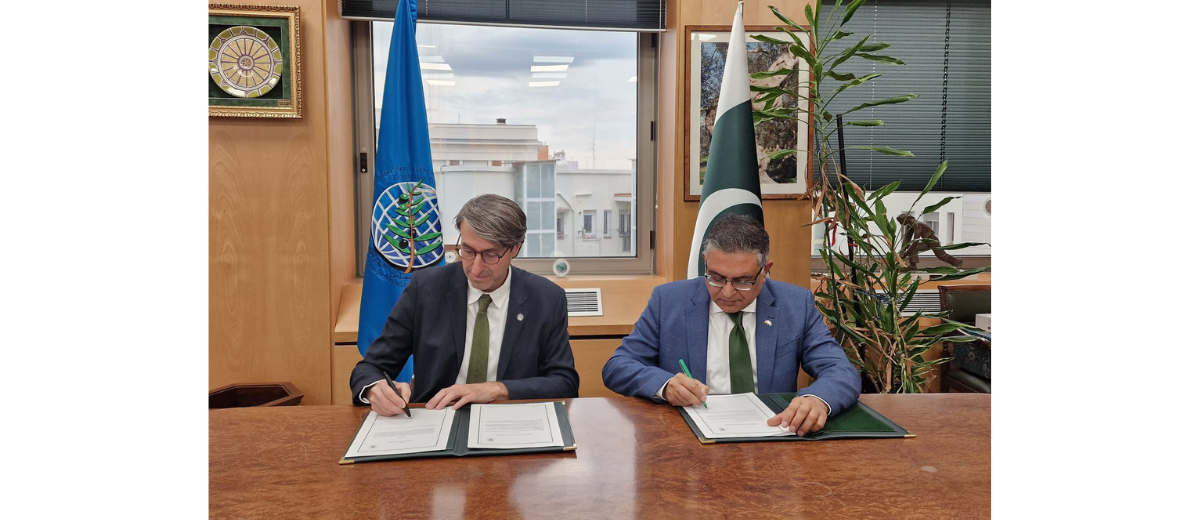
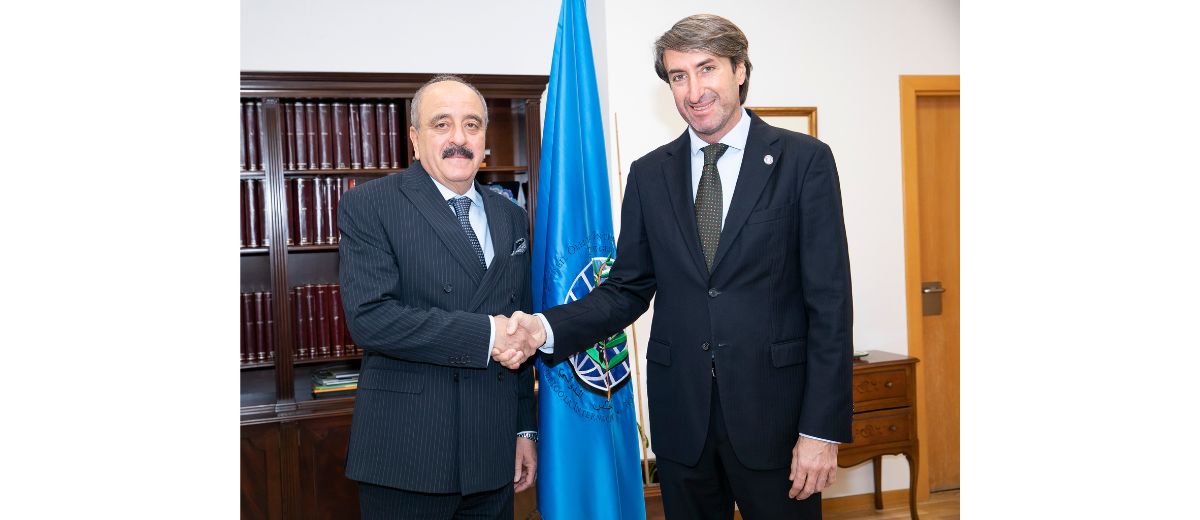
On 28 March 2025, the Executive Director of the International Olive Council (IOC), Jaime Lillo, together with Deputy Executive Director for Operational Affairs, Abderraouf Laajimi, and Deputy Executive Director for Administrative and Financial Affairs, Imdat Pekdemir, welcomed Tunisia’s Minister of Foreign Affairs, Migration and Tunisians Abroad, Mohamed Ali Nafti, to the IOC headquarters in Madrid. Minister Nafti was accompanied by Tunisia’s Ambassador to Spain, Fatma Omrani Chargui.

During the visit, the Tunisian Minister addressed the delegation in Spanish—a language he speaks fluently—to highlight the importance of enhancing efforts to promote olive oil on the international stage. He expressed particular interest in the IOC’s relationships with the United States, China and countries in the Balkan region, and discussed the potential for expanding the Organisation’s cooperation to new global regions.

Nafti reaffirmed Tunisia’s commitment—especially through his ministry—to supporting IOC initiatives, while acknowledging the persistent challenge of budget constraints on promotional activities. Ambassador Omrani also underlined the work of the Arab Organisation for Agricultural Development’s Olive Bureau and emphasised the importance of strengthening ties between this body and the IOC as the key interlocutor for the olive sector in the Arab world.

Executive Director Lillo reiterated the strategic importance of olive oil promotion and presented the IOC’s updated approaches in this area. He also welcomed the appointment of Mr Laajimi—a highly regarded figure nominated by Tunisia—as Deputy Executive Director.

Laajimi went on to outline the IOC’s key technical, economic and promotional activities, with particular emphasis on collaborative efforts with Tunisia. He cited the recent training session in olive oil organoleptic assessment held in Tunis in cooperation with the National Olive Oil Office and the International Centre for Advanced Mediterranean Agronomic Studies (CIHEAM). He also mentioned IOC scholarships awarded to Tunisian students for specialised training programmes, including the Expert Course at the University of Jaén, the Master’s in Olive Growing and Olive Oil Technology at the University of Córdoba, and various doctoral programmes.

Laajimi further highlighted the capacity-building efforts for Tunisian technicians, the active participation of Tunisian experts in IOC working groups, and the recognition of numerous Tunisian producers at the IOC’s Mario Solinas Quality Award for extra virgin olive oils. He concluded by noting the growing number of IOC-recognised laboratories for physico-chemical analysis (32) and tasting panels (28) in Tunisia.

A historical actor and a pillar of the global olive sector, Tunisia plays a leading role within the International Olive Council. As the world’s second-largest exporter of olive oil, the country is widely recognised for the quality of its products, the heritage of its expertise, and its active involvement in the IOC’s technical and scientific work. A founding member of the Organisation, Tunisia continues to contribute significantly to standard-setting, professional training, research, and international cooperation—fully embodying the IOC’s mission and values.


The photo is attributed to @juliaroblesfoto.
Enviar noticiaShare Enlace a facebook Enlace a twitter Enlace a linkedin
Last Posts
This week on OHIS
MADRID, SPAIN / 13.03.2026

This week on the Olive Health Information System website The newsletter of the University of Navarra and the IOC dedicated to health Article 1 Recent studies have examined the role of overall dietary patterns in...

Info

European Day for the Prevention of Cardiovascular Risk
MADRID, SPAIN / 13.03.2026

Olive oil, an ally in cardiovascular prevention On the occasion of the European Day for the Prevention of Cardiovascular Risk, the International Olive Council (IOC) reiterates the importance of preventing cardiovascular...

Info

Olive sector statistics – February/March 2026
MADRID, SPAIN / 09.03.2026

Welcome to the International Olive Council (IOC), the world’s only intergovernmental organisation bringing together all stakeholders involved in the production and consumption of olive oil and table olives. Here you will...

Info

International olive council logo
Privacy Policy
We are social
  • Linkedin icon
  • Twitter icon
© International Olive Council, 2026
Manage Cookie Consent
To provide the best experiences, we use technologies like cookies to store and/or access device information. Consenting to these technologies will allow us to process data such as browsing behavior or unique IDs on this site. Not consenting or withdrawing consent, may adversely affect certain features and functions.
Functional Always active
The technical storage or access is strictly necessary for the legitimate purpose of enabling the use of a specific service explicitly requested by the subscriber or user, or for the sole purpose of carrying out the transmission of a communication over an electronic communications network.
Preferencias
El almacenamiento o acceso técnico es necesario para la finalidad legítima de almacenar preferencias no solicitadas por el abonado o usuario.
Statistics
The technical storage or access that is used exclusively for statistical purposes. El almacenamiento o acceso técnico que se utiliza exclusivamente con fines estadísticos anónimos. Sin un requerimiento, el cumplimiento voluntario por parte de tu proveedor de servicios de Internet, o los registros adicionales de un tercero, la información almacenada o recuperada sólo para este propósito no se puede utilizar para identificarte.
Marketing
The technical storage or access is required to create user profiles to send advertising, or to track the user on a website or across several websites for similar marketing purposes.
Manage options Manage services Manage {vendor_count} vendors Read more about these purposes
View preferences
{title} {title} {title}

Culinary

Olive Oil and the Plant-Forward Kitchen

Discover how the Mediterranean Diet inspires contemporary cooking.

Explore this collaboration between the International Olive Council and The Culinary Institute of America, designed to promote healthy, sustainable and flavourful food choices, with a strong focus on technical training and menu innovation for chefs.

External link

COI logo
CIA logo

Health

The IOC and the University of Navarra, through OHIS (the Olive Health Information System), a platform dedicated to research on the health properties of olive oil and table olives, publish a weekly or bi-weekly collection of scientific articles and summaries of research carried out in this field.

These articles highlight the numerous health benefits of these products.

You can read the summaries of this research here in French, English and Spanish and access the list of articles, or visit the OHIS portal.

Summaries OHIS portal

For any assistance, please contact iooc@internationaloliveoil.org.

Sustainability in the Olive Sector

Access the sustainability portal developed in collaboration between the IOC, the University of Jaén and the Instituto Universitario de Investigación en Olivar y Aceites de Oliva.

Explore research, tools and knowledge supporting sustainable olive growing and responsible production practices.

External link

COI logo
CIA logo

Olive et la cuisine avant-gardiste

Inspiration du régime méditerranéen pour les biscuits contemporains

Apprenez-en plus sur cette collaboration entre le Culinary Institute of America et le Conseil oléicole international pour faire progresser des choix alimentaires sains, durables et délicieux, avec un accent particulier sur la formation technique et l’innovation des menus pour les chefs.

X