
 Share


The International Olive Council (IOC) marked the first United Nations International Day of the Mediterranean Diet with a series of activities in New York, highlighting the importance of olive oil for human health, sustainable food systems, cultural dialogue and biodiversity conservation.
On 16 November 2026, the international community celebrated the first International Day of the Mediterranean Diet, proclaimed by the United Nations General Assembly to recognise the health, cultural and environmental value of this dietary pattern. Rooted in centuries of tradition, the Mediterranean diet is widely recognised as a model of healthy and sustainable eating, with olive oil at its heart.
As the only intergovernmental organisation dedicated to olive oil and table olives, the IOC is joining this historic celebration through the participation of its Executive Director, Jaime Lillo, and the Head of its Standardisation and Research Unit, Mercedes Fernández, in a series of events in New York from 16 to 18 November.
Promoting dialogue, peace and sustainability through food
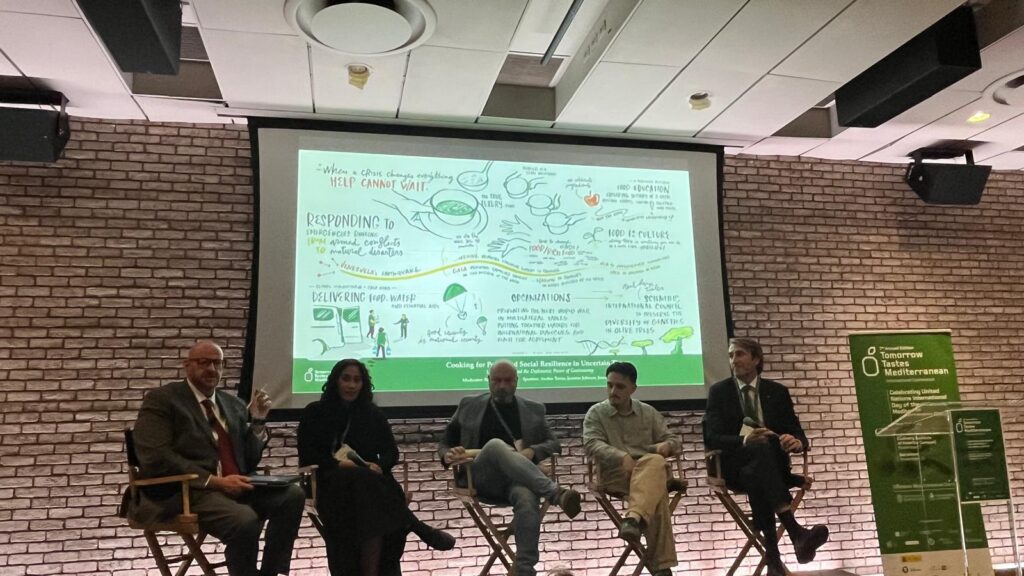 On 16 November, IOC Executive Director Jaime Lillo participated in Tomorrow Tastes Mediterranean, an initiative of the Culinary Institute of America (CIA) and the Torribera Mediterranean Center, joining an international panel entitled Cooking for Peace and Social Resilience in Uncertain Times: Longer Tables and the Diplomatic Power of Gastronomy.
Moderated by Robert E. Jones, Vice President of Strategic Partnerships, Industry Leadership and Impact at the CIA, the discussion brought together professionals from the culinary and international cooperation sectors to explore how food can foster peace, social cohesion and cultural understanding.
The session also addressed the contribution of healthy, sustainable dietary patterns, such as the Mediterranean diet, to tackling challenges including climate change, freshwater scarcity, land degradation and biodiversity loss.
The IOC’s participation reflects its commitment to promoting the olive tree and its products not only as essential components of healthy diets, but also as symbols of cooperation, dialogue and shared cultural heritage. The Organisation has also given its institutional patronage to the Tomorrow Tastes Mediterranean celebration that will take place on 23 November in Barcelona.
The IOC presents its documentary on olive biodiversity conservation at the United Nations
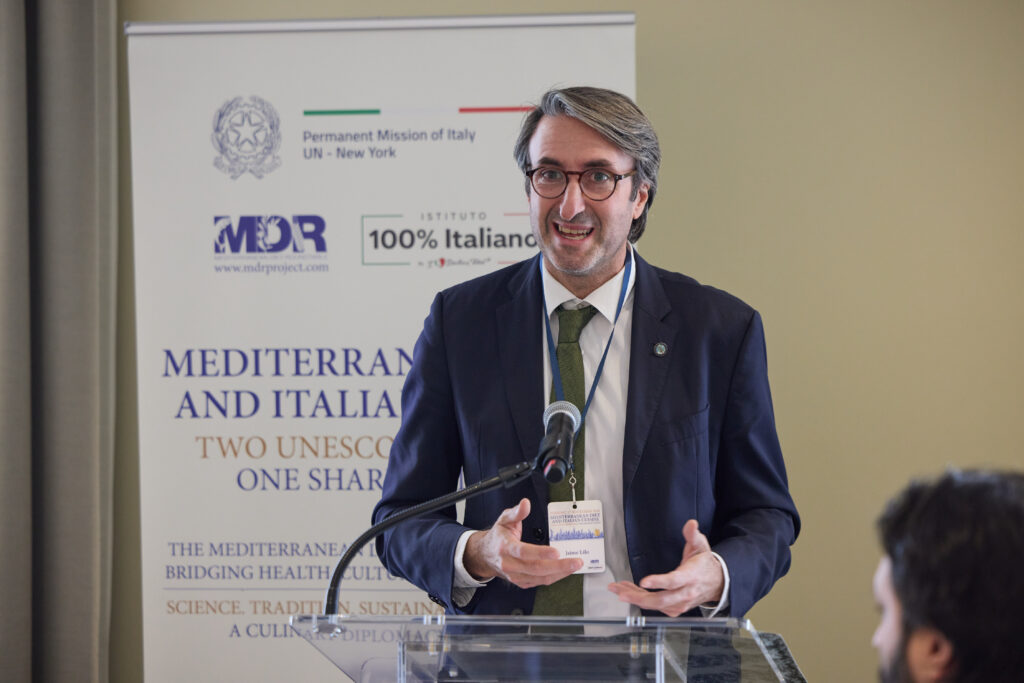 On 17 November, Jaime Lillo and Mercedes Fernández attended Mediterranean Diet and Italian Cuisine, an event organised at United Nations Headquarters in New York by the Permanent Mission of Italy to the United Nations and the Mediterranean Diet Roundtable.
The occasion will provide the setting for the first presentation of “The Olive Tree’s Legacy”, an IOC documentary highlighting international scientific cooperation to safeguard olive genetic resources, including the historic deposit of olive seeds in the Svalbard Global Seed Vault in Norway.
The documentary showcases the IOC’s work to preserve olive biodiversity for future generations, bringing attention to the importance of international cooperation in protecting the genetic diversity of the olive tree. The documentary also illustrates the close relationship between biodiversity, sustainable agriculture and food security, reminding audiences that preserving the olive tree’s genetic heritage is essential to the resilience and future of Mediterranean food systems.
Strengthening scientific cooperation in New York
The IOC delegation’s visit continued on 18 November with a meeting at the City College of New York, where Jaime Lillo met the institution’s President, Vincent Boudreau, and Professor Antonia Trichopoulou, an internationally recognised authority on the Mediterranean diet.
The meeting provided an opportunity to strengthen institutional and scientific ties, with a cooperation agreement between the IOC and the university planned as part of their efforts to advance research and knowledge exchange.
This initiative reflects the IOC’s broader commitment to fostering partnerships with leading academic and scientific institutions, particularly in areas related to nutrition, olive oil quality, health and sustainability.
A longstanding commitment to the Mediterranean diet and its health benefits
The Mediterranean diet is characterised by a high consumption of vegetables, fruits, legumes, whole grains and nuts, with olive oil as its principal source of added fat. Its benefits are supported by extensive scientific research, particularly in relation to cardiovascular health and the prevention of chronic diseases.
Extra virgin olive oil, rich in monounsaturated fatty acids and bioactive compounds, including phenolic compounds, plays a central role in this dietary pattern.
The IOC actively promotes scientific knowledge on the health benefits of olive oil and table olives through the Olive Health Information System (OHIS), developed in collaboration with the University of Navarra. This initiative facilitates access to scientific evidence and research findings, helping health professionals, researchers and the wider public better understand the contribution of olive products to a healthy, balanced diet.
Readers can explore the latest scientific information through the Olive Health Information System.
Building on World Olive Day 2024: 30 years of the Mediterranean Diet Pyramid
The first International Day of the Mediterranean Diet also offers an opportunity to revisit the IOC’s 2024 World Olive Day celebrations, dedicated to the 30th anniversary of the Mediterranean Diet Pyramid.
Organised in collaboration with the Spanish National Research Council (CSIC) and the International Centre for Advanced Mediterranean Agronomic Studies (CIHEAM), the celebration brought together internationally renowned experts to discuss the scientific evidence supporting the Mediterranean diet, its evolution and the challenges and opportunities facing this dietary model.
Among the participating experts were Antonia Trichopoulou, a pioneer in Mediterranean diet research; Frank Hu, Professor of Nutrition and Epidemiology at Harvard University; Greg Drescher, one of the creators of the Mediterranean Diet Pyramid; and Miguel Ángel Martínez-González, Professor of Public Health at the University of Navarra and a leading researcher in nutritional epidemiology.
The IOC recorded a series of interviews with these experts, exploring the health, cultural and environmental dimensions of the Mediterranean diet and the importance of preserving and promoting this dietary heritage.
These interviews remain available on the IOC website, offering valuable insights into the future of the Mediterranean diet and its contribution to healthier, more sustainable societies.
Watch the expert interviews on the challenges and opportunities of the Mediterranean diet
Readers can also revisit the IOC’s World Olive Day celebrations.
Through its participation in international events, scientific partnerships and public information initiatives, the IOC reaffirms its commitment to promoting olive oil as a cornerstone of the Mediterranean diet and to advancing the shared values of health, sustainability, biodiversity and international cooperation that this dietary heritage represents.