• Skip to primary navigation
  • Skip to main content

International Olive Council

The website of the International Olive Council

  • Council of members
  • Chair
  • Advisory committee
  • Operational committees
  • Executive secretariat
International olive council logo
Linkedin icon Twitter icon
  • Health
  • Culinary
  • Sustainability
Contracts Grants Vacancies Patronage
Mail envelope Contact us
Magnifier Search
Person icon Private area
Person icon
Menu icon
  • Who we are
    • Mission and Vision
    • Fundamental Texts
    • Governance and Structure
    • Member Countries and Observers
  • What we do
    • Standardisation and Research Unit
      • IOC Standards, Methods and Guides
      • Working Groups
      • Recognition of Laboratories and Panels
      • IOC Mario Solinas Quality Award
      • IOC Institutional Support
      • Olive Oil, Nutrition and Health
      • Research & Internship in the Standardisation and Research Unit
      • Database of IOC Documents
    • Olive Growing, Olive Oil Technology and Environment Unit
      • Technical Cooperation and Training
      • Olive Oil Technology and the Environment
      • IOC Scholarships
      • Supporting Member Countries
      • External Projects and Institutional Agreements
      • IOC Network of International Olive Germplasm Banks
      • Key Projects and Technical Resources
    • Economic Affairs & Promotion Unit
      • Market Statistics
      • Country Profiles
      • Promotion Campaigns
      • Grants for Promotion Activities
      • Studies & Seminars
  • Press Room
    • Articles
    • Olive Health Information System
    • Monthly Olive Sector Statistics
    • Agenda 2026
    • Videos
    • Infographics
  • Key Projects
    • Carbon Balance Project
    • World Catalogue of Olive Varieties 
    • World Olive Tree Day
      • World Olive Day Celebrations
    • IOC Published Documents
    • Glossary of Olive Terminology
    • Svalbard Global Seed Vault Deposit
  • Standards
  • Statistics
  • Arabic
  • English
  • French
  • Italian
  • Spanish
Contracts Grants Vacancies Patronage
Mail envelope Contact
Magnifier Search
We are social
  • Linkedin icon
  • Twitter icon
  • Who we are
    • Mission and Vision
    • Fundamental Texts
    • Governance and Structure
    • Member Countries and Observers
  • What we do
    • Standardisation and Research Unit
      • IOC Standards, Methods and Guides
      • Working Groups
      • Recognition of Laboratories and Panels
      • IOC Mario Solinas Quality Award
      • IOC Institutional Support
      • Olive Oil, Nutrition and Health
      • Research & Internship in the Standardisation and Research Unit
      • Database of IOC Documents
    • Olive Growing, Olive Oil Technology and Environment Unit
      • Technical Cooperation and Training
      • Olive Oil Technology and the Environment
      • IOC Scholarships
      • Supporting Member Countries
      • External Projects and Institutional Agreements
      • IOC Network of International Olive Germplasm Banks
      • Key Projects and Technical Resources
    • Economic Affairs & Promotion Unit
      • Market Statistics
      • Country Profiles
      • Promotion Campaigns
      • Grants for Promotion Activities
      • Studies & Seminars
  • Press Room
    • Articles
    • Olive Health Information System
    • Monthly Olive Sector Statistics
    • Agenda 2026
    • Videos
    • Infographics
  • Key Projects
    • Carbon Balance Project
    • World Catalogue of Olive Varieties 
    • World Olive Tree Day
      • World Olive Day Celebrations
    • IOC Published Documents
    • Glossary of Olive Terminology
    • Svalbard Global Seed Vault Deposit
  • Standards
  • Statistics
  • Arabic
  • English
  • French
  • Italian
  • Spanish
  • Health
  • Culinary
  • Sustainability
Tools icon

IOC NEWS

Home / Blog / IOC celebrates the first International Day of the Mediterranean Diet with events in New York
Enviar noticiaShare Enlace a facebook Enlace a twitter Enlace a linkedin

IOC celebrates the first International Day of the Mediterranean Diet with events in New York

New York, United States / 20.11.2026

The International Olive Council (IOC) marked the first United Nations International Day of the Mediterranean Diet with a series of activities in New York, highlighting the importance of olive oil for human health, sustainable food systems, cultural dialogue and biodiversity conservation.

On 16 November 2026, the international community celebrated the first International Day of the Mediterranean Diet, proclaimed by the United Nations General Assembly to recognise the health, cultural and environmental value of this dietary pattern. Rooted in centuries of tradition, the Mediterranean diet is widely recognised as a model of healthy and sustainable eating, with olive oil at its heart.

As the only intergovernmental organisation dedicated to olive oil and table olives, the IOC is joining this historic celebration through the participation of its Executive Director, Jaime Lillo, and the Head of its Standardisation and Research Unit, Mercedes Fernández, in a series of events in New York from 16 to 18 November.

Promoting dialogue, peace and sustainability through food
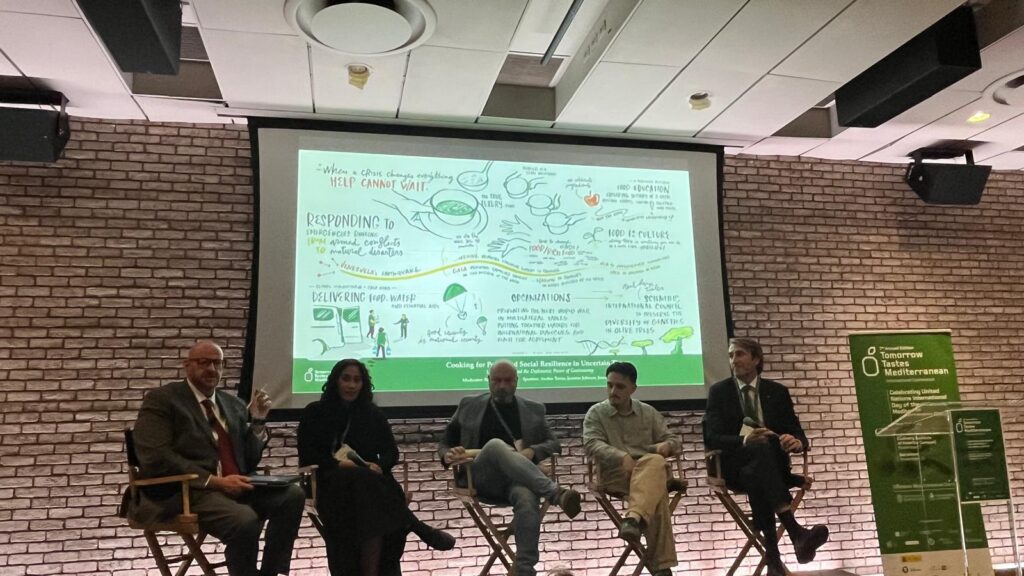
On 16 November, IOC Executive Director Jaime Lillo participated in Tomorrow Tastes Mediterranean, an initiative of the Culinary Institute of America (CIA) and the Torribera Mediterranean Center, joining an international panel entitled Cooking for Peace and Social Resilience in Uncertain Times: Longer Tables and the Diplomatic Power of Gastronomy.

Moderated by Robert E. Jones, Vice President of Strategic Partnerships, Industry Leadership and Impact at the CIA, the discussion brought together professionals from the culinary and international cooperation sectors to explore how food can foster peace, social cohesion and cultural understanding.

The session also addressed the contribution of healthy, sustainable dietary patterns, such as the Mediterranean diet, to tackling challenges including climate change, freshwater scarcity, land degradation and biodiversity loss.

The IOC’s participation reflects its commitment to promoting the olive tree and its products not only as essential components of healthy diets, but also as symbols of cooperation, dialogue and shared cultural heritage. The Organisation has also given its institutional patronage to the Tomorrow Tastes Mediterranean celebration that will take place on 23 November in Barcelona.

The IOC presents its documentary on olive biodiversity conservation at the United Nations
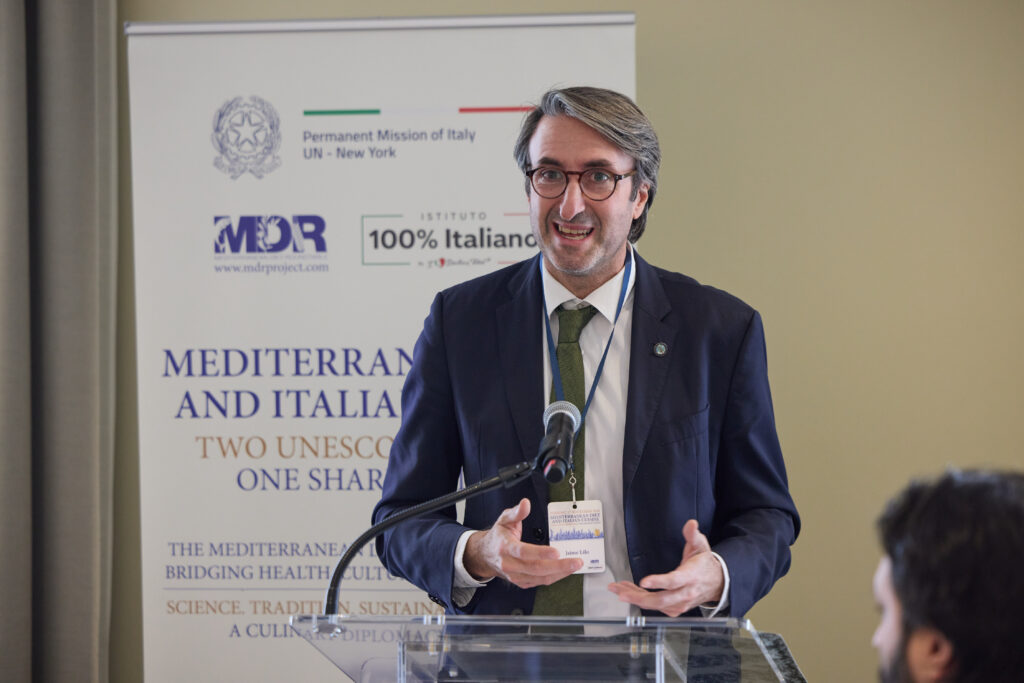
On 17 November, Jaime Lillo and Mercedes Fernández attended Mediterranean Diet and Italian Cuisine, an event organised at United Nations Headquarters in New York by the Permanent Mission of Italy to the United Nations and the Mediterranean Diet Roundtable.

The occasion will provide the setting for the first presentation of “The Olive Tree’s Legacy”, an IOC documentary highlighting international scientific cooperation to safeguard olive genetic resources, including the historic deposit of olive seeds in the Svalbard Global Seed Vault in Norway.

The documentary showcases the IOC’s work to preserve olive biodiversity for future generations, bringing attention to the importance of international cooperation in protecting the genetic diversity of the olive tree. The documentary also illustrates the close relationship between biodiversity, sustainable agriculture and food security, reminding audiences that preserving the olive tree’s genetic heritage is essential to the resilience and future of Mediterranean food systems.

Strengthening scientific cooperation in New York

The IOC delegation’s visit continued on 18 November with a meeting at the City College of New York, where Jaime Lillo met the institution’s President, Vincent Boudreau, and Professor Antonia Trichopoulou, an internationally recognised authority on the Mediterranean diet.

The meeting provided an opportunity to strengthen institutional and scientific ties, with a cooperation agreement between the IOC and the university planned as part of their efforts to advance research and knowledge exchange.

This initiative reflects the IOC’s broader commitment to fostering partnerships with leading academic and scientific institutions, particularly in areas related to nutrition, olive oil quality, health and sustainability.

A longstanding commitment to the Mediterranean diet and its health benefits

The Mediterranean diet is characterised by a high consumption of vegetables, fruits, legumes, whole grains and nuts, with olive oil as its principal source of added fat. Its benefits are supported by extensive scientific research, particularly in relation to cardiovascular health and the prevention of chronic diseases.

Extra virgin olive oil, rich in monounsaturated fatty acids and bioactive compounds, including phenolic compounds, plays a central role in this dietary pattern.

The IOC actively promotes scientific knowledge on the health benefits of olive oil and table olives through the Olive Health Information System (OHIS), developed in collaboration with the University of Navarra. This initiative facilitates access to scientific evidence and research findings, helping health professionals, researchers and the wider public better understand the contribution of olive products to a healthy, balanced diet.

Readers can explore the latest scientific information through the Olive Health Information System.

Building on World Olive Day 2024: 30 years of the Mediterranean Diet Pyramid

The first International Day of the Mediterranean Diet also offers an opportunity to revisit the IOC’s 2024 World Olive Day celebrations, dedicated to the 30th anniversary of the Mediterranean Diet Pyramid.

Organised in collaboration with the Spanish National Research Council (CSIC) and the International Centre for Advanced Mediterranean Agronomic Studies (CIHEAM), the celebration brought together internationally renowned experts to discuss the scientific evidence supporting the Mediterranean diet, its evolution and the challenges and opportunities facing this dietary model.

Among the participating experts were Antonia Trichopoulou, a pioneer in Mediterranean diet research; Frank Hu, Professor of Nutrition and Epidemiology at Harvard University; Greg Drescher, one of the creators of the Mediterranean Diet Pyramid; and Miguel Ángel Martínez-González, Professor of Public Health at the University of Navarra and a leading researcher in nutritional epidemiology.

The IOC recorded a series of interviews with these experts, exploring the health, cultural and environmental dimensions of the Mediterranean diet and the importance of preserving and promoting this dietary heritage.

These interviews remain available on the IOC website, offering valuable insights into the future of the Mediterranean diet and its contribution to healthier, more sustainable societies.

Watch the expert interviews on the challenges and opportunities of the Mediterranean diet

Readers can also revisit the IOC’s World Olive Day celebrations.

Through its participation in international events, scientific partnerships and public information initiatives, the IOC reaffirms its commitment to promoting olive oil as a cornerstone of the Mediterranean diet and to advancing the shared values of health, sustainability, biodiversity and international cooperation that this dietary heritage represents.
 

Enviar noticiaShare Enlace a facebook Enlace a twitter Enlace a linkedin
Last Posts
IOC celebrates the first International Day of the Mediterranean Diet with events in New York

The International Olive Council (IOC) marked the first United Nations International Day of the Mediterranean Diet with a series of activities in New York, highlighting the importance of olive oil for human health,...

Info

IOC welcomes Pakistan with flag-raising ceremony at its headquarters in Madrid

The International Olive Council (IOC) officially welcomed Pakistan with a flag-raising ceremony at its headquarters in Madrid, celebrating the country’s accession to the Organisation and the strengthening of...

Info

Montevideo honours the winners of the 2026 Mario Solinas Quality Award for the Southern Hemisphere

Eight extra virgin olive oils from Argentina, Brazil, South Africa and Uruguay were honoured at the third Mario Solinas Quality Award for the Southern Hemisphere. The International Olive Council (IOC) held the prize-giving...

Info

International olive council logo
Privacy Policy
We are social
  • Linkedin icon
  • Twitter icon
© International Olive Council, 2026
Manage Cookie Consent
To provide the best experiences, we use technologies like cookies to store and/or access device information. Consenting to these technologies will allow us to process data such as browsing behavior or unique IDs on this site. Not consenting or withdrawing consent, may adversely affect certain features and functions.
Functional Always active
The technical storage or access is strictly necessary for the legitimate purpose of enabling the use of a specific service explicitly requested by the subscriber or user, or for the sole purpose of carrying out the transmission of a communication over an electronic communications network.
Preferencias
El almacenamiento o acceso técnico es necesario para la finalidad legítima de almacenar preferencias no solicitadas por el abonado o usuario.
Statistics
The technical storage or access that is used exclusively for statistical purposes. El almacenamiento o acceso técnico que se utiliza exclusivamente con fines estadísticos anónimos. Sin un requerimiento, el cumplimiento voluntario por parte de tu proveedor de servicios de Internet, o los registros adicionales de un tercero, la información almacenada o recuperada sólo para este propósito no se puede utilizar para identificarte.
Marketing
The technical storage or access is required to create user profiles to send advertising, or to track the user on a website or across several websites for similar marketing purposes.
  • Manage options
  • Manage services
  • Manage {vendor_count} vendors
  • Read more about these purposes
View preferences
  • {title}
  • {title}
  • {title}

Sustainability in the Olive Sector

Access the sustainability portal developed in collaboration between the IOC, the University of Jaén and the Instituto Universitario de Investigación en Olivar y Aceites de Oliva.

Explore research, tools and knowledge supporting sustainable olive growing and responsible production practices.

External link

Health

The IOC and the University of Navarra, through OHIS (the Olive Health Information System), a platform dedicated to research on the health properties of olive oil and table olives, publish a weekly or bi-weekly collection of scientific articles and summaries of research carried out in this field.

These articles highlight the numerous health benefits of these products.

You can read the summaries of this research here in French, English and Spanish and access the list of articles, or visit the OHIS portal.

Summaries OHIS portal

For any assistance, please contact iooc@internationaloliveoil.org.

COI logo
CIA logo

Olive et la cuisine avant-gardiste

Inspiration du régime méditerranéen pour les biscuits contemporains

Apprenez-en plus sur cette collaboration entre le Culinary Institute of America et le Conseil oléicole international pour faire progresser des choix alimentaires sains, durables et délicieux, avec un accent particulier sur la formation technique et l’innovation des menus pour les chefs.

Culinary

Olive Oil and the Plant-Forward Kitchen

Discover how the Mediterranean Diet inspires contemporary cooking.

Explore this collaboration between the International Olive Council and The Culinary Institute of America, designed to promote healthy, sustainable and flavourful food choices, with a strong focus on technical training and menu innovation for chefs.

External link

COI logo
CIA logo

X