• Skip to main content

International Olive Council

The website of the International Olive Council

المجلس الدولي للزيتون
Linkedin icon Twitter icon
  • صحة وعافية
  • الطهي
  • الاستدامة
المناقصات منح الوظائف الشاغرة Patronage
Mail envelope تواصل معنا
Magnifier البحث في الموقع
Person icon الحيز الخاص
Person icon
Menu icon
MENUMENU
  • Who we are
    • Mission and Vision
    • Fundamental Texts
    • Governance and Structure
    • Member Countries and Observers
  • مهمتنا
    • وحدة الكيمياء وتوحيد المعايير
      • معايير وأساليب ودليل المجلس الدولي للزيتون
      • معايير, مناهج وأدلة المجلس
      • فريق العمل
      • اعتماد المخابر ولجان التذوق
      • جائزة ماريو سوليناس للجودة
      • IOC institutional support
      • زيت الزيتون والتغذية والصحة
      • البحوث داخل وحدة توحيد المعايير والبحث
      • Database of ioc documents
    • Olive Growing, Olive Oil Technology and Environment Unit
      • Technical Cooperation and Training
      • Olive Oil Technology and the Environment
      • IOC Scholarships
      • Supporting Member Countries
      • External Projects and Institutional Agreements
      • IOC Network of International Olive Germplasm Banks
      • Key Projects and Technical Resources
    • وحدة الترويج والشؤون الاقتصادية
      • Market Statistics
      • Country Profiles
      • Promotion Campaigns
      • Grants for Promotion Activities
      • الدراسات والندوات
  • عالم الزيتون
    • شجرة الزيتون
    • زيتون المائدة
    • زيت الزيتون
    • زيت الزيتون والصحة
    • تحضير زيتون منزلي
    • متاحف الزيتون ومسارات "طريق الزيتون"
    • اليوم العالمي لشجرة الزيتون
      • احتفالات اليوم العالمي لشجرة الزيتون
    • وصفات
    • مسرد
  • المنشورات
    • Carbon Balance Project
    • World Catalogue of Olive Varieties 
    • IOC Published Documents
    • Videos
    • Infographics
  • المعايير
  • إحصائيات
  • العربية
  • الإنجليزية
  • الفرنسية
  • الإيطالية
  • الأسبانية
Contracts Grants Vacancies Patronage
Mail envelope Contact
Magnifier Search
We are social
  • Linkedin icon
  • Twitter icon
MENUMENU
  • Who we are
    • Mission and Vision
    • Fundamental Texts
    • Governance and Structure
    • Member Countries and Observers
  • مهمتنا
    • وحدة الكيمياء وتوحيد المعايير
      • معايير وأساليب ودليل المجلس الدولي للزيتون
      • معايير, مناهج وأدلة المجلس
      • فريق العمل
      • اعتماد المخابر ولجان التذوق
      • جائزة ماريو سوليناس للجودة
      • IOC institutional support
      • زيت الزيتون والتغذية والصحة
      • البحوث داخل وحدة توحيد المعايير والبحث
      • Database of ioc documents
    • Olive Growing, Olive Oil Technology and Environment Unit
      • Technical Cooperation and Training
      • Olive Oil Technology and the Environment
      • IOC Scholarships
      • Supporting Member Countries
      • External Projects and Institutional Agreements
      • IOC Network of International Olive Germplasm Banks
      • Key Projects and Technical Resources
    • وحدة الترويج والشؤون الاقتصادية
      • Market Statistics
      • Country Profiles
      • Promotion Campaigns
      • Grants for Promotion Activities
      • الدراسات والندوات
  • عالم الزيتون
    • شجرة الزيتون
    • زيتون المائدة
    • زيت الزيتون
    • زيت الزيتون والصحة
    • تحضير زيتون منزلي
    • متاحف الزيتون ومسارات "طريق الزيتون"
    • اليوم العالمي لشجرة الزيتون
      • احتفالات اليوم العالمي لشجرة الزيتون
    • وصفات
    • مسرد
  • المنشورات
    • Carbon Balance Project
    • World Catalogue of Olive Varieties 
    • IOC Published Documents
    • Videos
    • Infographics
  • المعايير
  • إحصائيات
  • العربية
  • الإنجليزية
  • الفرنسية
  • الإيطالية
  • الأسبانية
  • صحة وعافية
  • الطهي
  • الاستدامة
Tools icon

IOC NEWS

Home / Blog / This week on the Olive Health Information System website, the newsletter of the University of Navarra and the IOC dedicated to health
Enviar noticiaShare Enlace a facebook Enlace a twitter Enlace a linkedin

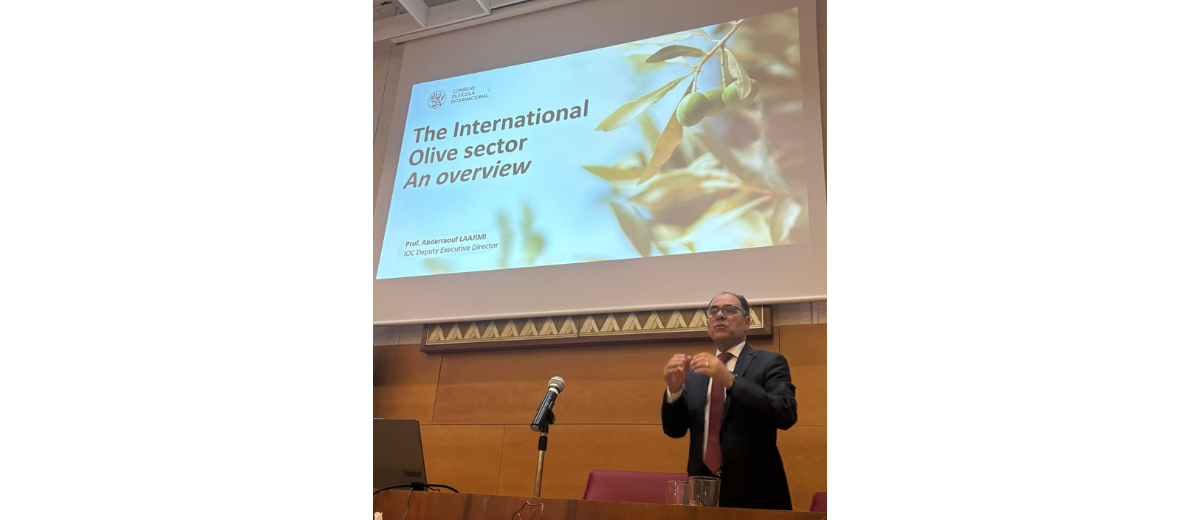
This week on the Olive Health Information System website, the newsletter of the University of Navarra and the IOC dedicated to health

MADRID, SPAIN / 24.10.2023

Recent research conducted in Türkiye tackles the issue of the growing global population and the increasing importance of ensuring food security while also considering environmental concerns. The article underscores the impact of food production on the environment and stresses the importance of adopting sustainable and healthy dietary models for both human health and environmental well-being. In this regard, the Mediterranean Diet (MedDiet), which is characterized by a high intake of plant-based foods and olive oil and low consumption of red and processed meat, is highlighted as a sustainable dietary model with numerous health benefits. Notwithstanding this, data from the Turkish Nutrition and Health Studies (TNHS) conducted in 2010 and 2017 reveal that adherence to the MedDiet in Türkiye has decreased, primarily due to a rising preference for Western-style diets, carrying potential consequences for both health and environmental sustainability.

Regarding the MedDiet’s well-known health benefits, a recently published review suggests that a mutually influencing connection between the MedDiet and the gut microbiome could explain many of its benefits and that the mechanism in question could involve the numerous bioactive compounds present in the MedDiet. This theory suggests that the composition and functional capabilities of the gut microbiota respond to dietary choices, and in turn, the nutrients accessible to the microbiome play a role in shaping and adjusting the microbiome toward a specific probiotic condition. As increasingly comprehensive omics-based investigations unfold, new evidence emerges confirming that adopting a MedDiet is a promising strategy to positively influence the microbiome.

Finally, much is known about the MedDiet and its association with lower systemic inflammation and cardiovascular disease risk. On this matter, a cross-sectional study explored the relationship between adherence to various healthy dietary patterns and markers of inflammation, including C-reactive protein (hsCRP), platelet-activating factor (PAF), and lipoprotein-associated phospholipase A2 (Lp-PLA2). The Med Diet was assessed with the Mediterranean Diet Adherence Screener (MEDAS) and the erMedDiet Score. In both cases, higher scores showed associations with lower hsCRP levels. Unexpectedly, no association was observed with Lp-PLA2 or PAF. Researchers believe further investigation is needed to provide a clearer insight into this relation, suggesting that their results may have been due to confounding by COVID-19 infections and/or vaccinations.

Click HERE to see the latest posts…
Enviar noticiaShare Enlace a facebook Enlace a twitter Enlace a linkedin
Last Posts
IOC and UPM sign MoU
MADRID, SPAIN / 16.03.2026

The International Olive Council (IOC) and the Polytechnic University of Madrid (UPM) in Spain have signed a Memorandum of Understanding (MoU) to strengthen cooperation in the olive sector. The agreement was signed by Mr...

Info

This week on OHIS
MADRID, SPAIN / 13.03.2026

This week on the Olive Health Information System website The newsletter of the University of Navarra and the IOC dedicated to health Article 1 Recent studies have examined the role of overall dietary patterns in...

Info

European Day for the Prevention of Cardiovascular Risk
MADRID, SPAIN / 13.03.2026

Olive oil, an ally in cardiovascular prevention On the occasion of the European Day for the Prevention of Cardiovascular Risk, the International Olive Council (IOC) reiterates the importance of preventing cardiovascular...

Info

International olive council logo
Privacy Policy
المجلس على شبكات التواصل الاجتماعي
  • Linkedin icon
  • Twitter icon
© International Olive Council, 2026
Manage Cookie Consent
To provide the best experiences, we use technologies like cookies to store and/or access device information. Consenting to these technologies will allow us to process data such as browsing behavior or unique IDs on this site. Not consenting or withdrawing consent, may adversely affect certain features and functions.
Functional Always active
The technical storage or access is strictly necessary for the legitimate purpose of enabling the use of a specific service explicitly requested by the subscriber or user, or for the sole purpose of carrying out the transmission of a communication over an electronic communications network.
Preferencias
El almacenamiento o acceso técnico es necesario para la finalidad legítima de almacenar preferencias no solicitadas por el abonado o usuario.
Statistics
The technical storage or access that is used exclusively for statistical purposes. El almacenamiento o acceso técnico que se utiliza exclusivamente con fines estadísticos anónimos. Sin un requerimiento, el cumplimiento voluntario por parte de tu proveedor de servicios de Internet, o los registros adicionales de un tercero, la información almacenada o recuperada sólo para este propósito no se puede utilizar para identificarte.
Marketing
The technical storage or access is required to create user profiles to send advertising, or to track the user on a website or across several websites for similar marketing purposes.
Manage options Manage services Manage {vendor_count} vendors Read more about these purposes
View preferences
{title} {title} {title}

Culinary

Olive Oil and the Plant-Forward Kitchen

Discover how the Mediterranean Diet inspires contemporary cooking.

Explore this collaboration between the International Olive Council and The Culinary Institute of America, designed to promote healthy, sustainable and flavourful food choices, with a strong focus on technical training and menu innovation for chefs.

External link

COI logo
CIA logo

Health

The IOC and the University of Navarra, through OHIS (the Olive Health Information System), a platform dedicated to research on the health properties of olive oil and table olives, publish a weekly or bi-weekly collection of scientific articles and summaries of research carried out in this field.

These articles highlight the numerous health benefits of these products.

You can read the summaries of this research here in French, English and Spanish and access the list of articles, or visit the OHIS portal.

Summaries OHIS portal

For any assistance, please contact iooc@internationaloliveoil.org.

Sustainability in the Olive Sector

Access the sustainability portal developed in collaboration between the IOC, the University of Jaén and the Instituto Universitario de Investigación en Olivar y Aceites de Oliva.

Explore research, tools and knowledge supporting sustainable olive growing and responsible production practices.

External link

X