• Skip to main content

International Olive Council

The website of the International Olive Council

International olive council logo
Linkedin icon Twitter icon
  • Health
  • Culinary
  • Sustainability
Contracts Grants Vacancies Patronage
Mail envelope Contact us
Magnifier Search
Person icon Private area
Person icon
Menu icon
MENUMENU
  • About IOC
    • Welcome Message
    • Mission & Basic Text
    • Structure
    • List of IOC Members
    • Where we are
    • IOC News
  • What we do
    • Standardisation and Research Unit
      • IOC Standards, Methods and Guides
      • Working Groups
      • Recognition of Laboratories and Panels
      • IOC Mario Solinas Quality Award
      • IOC Institutional Support
      • Olive Oil, Nutrition and Health
      • Research & Internship in the Standardisation and Research Unit
      • Database of IOC Documents
    • Olive Growing, Olive Oil Technology and Environment Unit
      • Technical Cooperation and Training
      • Olive Oil Technology and the Environment
      • IOC Scholarships
      • Supporting Member Countries
      • External Projects and Institutional Agreements
      • IOC Network of International Olive Germplasm Banks
      • Key Projects and Technical Resources
    • Financial Management Unit
    • Economic Affairs & Promotion Unit
      • Market Statistics
      • Country Profiles
      • Promotion Campaigns
      • Grants for Promotion Activities
      • Studies & Seminars
    • Administrative Management and Human Resources Unit
    • Observatory & IT System Department
    • Health
    • Culinary
    • Sustainability
    • Statistics
  • Olive World
    • The Olive Tree
    • Table olives
    • Olive Oil
    • Olive Oil & Health
    • Home-Cured Olives
    • Olive Museums & Routes
    • World Olive Tree Day
      • World Olive Day Celebrations
    • Recipes
    • Glossary
  • Resources
    • Carbon Balance Project
    • World Catalogue of Olive Varieties 
    • IOC Published Documents
    • Videos
    • Infographics
  • Standards
  • Statistics
  • Arabic
  • English
  • French
  • Italian
  • Spanish
Contracts Grants Vacancies Patronage
Mail envelope Contact
Magnifier Search
We are social
  • Linkedin icon
  • Twitter icon
MENUMENU
  • About IOC
    • Welcome Message
    • Mission & Basic Text
    • Structure
    • List of IOC Members
    • Where we are
    • IOC News
  • What we do
    • Standardisation and Research Unit
      • IOC Standards, Methods and Guides
      • Working Groups
      • Recognition of Laboratories and Panels
      • IOC Mario Solinas Quality Award
      • IOC Institutional Support
      • Olive Oil, Nutrition and Health
      • Research & Internship in the Standardisation and Research Unit
      • Database of IOC Documents
    • Olive Growing, Olive Oil Technology and Environment Unit
      • Technical Cooperation and Training
      • Olive Oil Technology and the Environment
      • IOC Scholarships
      • Supporting Member Countries
      • External Projects and Institutional Agreements
      • IOC Network of International Olive Germplasm Banks
      • Key Projects and Technical Resources
    • Financial Management Unit
    • Economic Affairs & Promotion Unit
      • Market Statistics
      • Country Profiles
      • Promotion Campaigns
      • Grants for Promotion Activities
      • Studies & Seminars
    • Administrative Management and Human Resources Unit
    • Observatory & IT System Department
    • Health
    • Culinary
    • Sustainability
    • Statistics
  • Olive World
    • The Olive Tree
    • Table olives
    • Olive Oil
    • Olive Oil & Health
    • Home-Cured Olives
    • Olive Museums & Routes
    • World Olive Tree Day
      • World Olive Day Celebrations
    • Recipes
    • Glossary
  • Resources
    • Carbon Balance Project
    • World Catalogue of Olive Varieties 
    • IOC Published Documents
    • Videos
    • Infographics
  • Standards
  • Statistics
  • Arabic
  • English
  • French
  • Italian
  • Spanish
  • Health
  • Culinary
  • Sustainability
Tools icon

IOC NEWS

Home / Blog / The IOC’s Executive Director mission to Egypt
Enviar noticiaShare Enlace a facebook Enlace a twitter Enlace a linkedin

The IOC’s Executive Director mission to Egypt

EGYPT / 07.11.2023

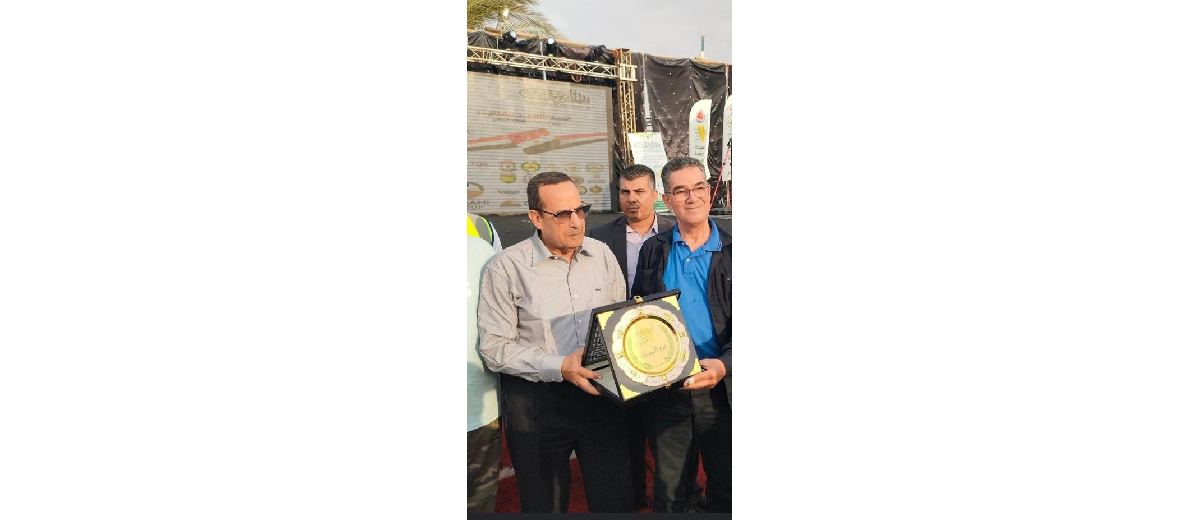
In response to an invitation from the President of the Egyptian Olive Council, IOC Executive Director Abdellatif Ghedira visited Egypt from 4 to 6 October 2023, where he took part in a number of events.

The Executive Director held a meeting with the Egyptian members of the IOC Advisory Committee and the Egyptian delegation to the IOC, during which he encouraged them to increase their participation and involvement in IOC activities, to appoint experts and to collaborate more closely with the IOC Executive Secretariat as a whole.

Together with the national and local authorities, he took part in the inauguration of the first olive-growing festival to be held in the Sinai Peninsula, during which he planted an olive tree on a plot where 10,000 trees were planted on the same day. The IOC Director was able to witness the importance of the olive sector in this arid region which should soon be home to 25 million new varieties of olive trees. This initiative is part of an ambitious programme to plant 100 million oil olive seedlings, which the Egyptian authorities announced at the 53d meeting of the IOC Advisory Committee in 2019. More than 60% of this programme has already been implemented in various regions of the country. Egypt, which is the world’s leading producer of table olives – with 600,000 tonnes produced in 2022/23 – has decided to diversify its production and grow more varieties of oil to boost domestic consumption, which is still well below what it could be in a traditionally producer country, reaching no more than 400 grams of olive oil per capita per year.

The IOC Executive Director recommended that this planting programme be part of an overall strategy that should include all components of the value chain, in particular the choice of suitable varieties, the revitalisation of nurseries, the installation of processing and storage units, the establishing and recognition of analysis laboratories and tasting panels, and the development of agribusiness as a whole. He also proposed that this Mediterranean country consider the development of communication campaigns with the IOC’s support, as part of the intergovernmental organisation’s promotional activities in member countries.

Furthermore, he discussed the possibility of making a national germplasm bank available to the competent Egyptian authorities in order to study the adaptation of international varieties to Egypt’s diverse edaphic conditions, as well as the possibility of setting up a training centre exclusively dedicated to the study of table olives.

Mr Ghedira also extended an official invitation to the Egyptian Minister of Agriculture to attend the 118th session of the Council of Members to be held in Madrid in November.

Enviar noticiaShare Enlace a facebook Enlace a twitter Enlace a linkedin
Last Posts
The Svalbard Global Seed Vault receives olive seeds for the first time

A historic milestone in the conservation of olive genetic diversity, made possible thanks to the collaboration of various organisations and research centres. The International Olive Council (IOC) took part in the first-ever...

Info

Madrid Salud enjoys an olive oil tasting session
MADRID, SPAIN / 26.02.2026

On 25 February 2026, the International Olive Council (IOC) organised an olive oil tasting session at its headquarters in Madrid for 26 officials from Madrid Salud, the public body responsible for health promotion and...

Info

The olive seeds’ journey to Svalbard is postponed
Norway / 24.02.2026

We wish to inform you that the deposit of olive seeds in the Svalbard Global Seed Vault will not take place on 25 February as initially planned. Due to adverse weather conditions, the international delegation responsible for...

Info

International olive council logo
Privacy Policy
We are social
  • Linkedin icon
  • Twitter icon
© International Olive Council, 2026
Manage Cookie Consent
To provide the best experiences, we use technologies like cookies to store and/or access device information. Consenting to these technologies will allow us to process data such as browsing behavior or unique IDs on this site. Not consenting or withdrawing consent, may adversely affect certain features and functions.
Functional Always active
The technical storage or access is strictly necessary for the legitimate purpose of enabling the use of a specific service explicitly requested by the subscriber or user, or for the sole purpose of carrying out the transmission of a communication over an electronic communications network.
Preferencias
El almacenamiento o acceso técnico es necesario para la finalidad legítima de almacenar preferencias no solicitadas por el abonado o usuario.
Statistics
The technical storage or access that is used exclusively for statistical purposes. El almacenamiento o acceso técnico que se utiliza exclusivamente con fines estadísticos anónimos. Sin un requerimiento, el cumplimiento voluntario por parte de tu proveedor de servicios de Internet, o los registros adicionales de un tercero, la información almacenada o recuperada sólo para este propósito no se puede utilizar para identificarte.
Marketing
The technical storage or access is required to create user profiles to send advertising, or to track the user on a website or across several websites for similar marketing purposes.
Manage options Manage services Manage {vendor_count} vendors Read more about these purposes
View preferences
{title} {title} {title}

COI logo
CIA logo

Olive and the Plant-Forward Kitchen

Inspiration from the Mediterranean Diet for Contemporary Cooking Learn more about this collaboration between The Culinary Institute of America and the International Olive Council to advance healthy, sustainable, delicious food choices -with a special focus on technical training and menu innovation for chefs.

The IOC and the University of Navarra, through OHIS (the Olive Health Information System), a platform dedicated to research on the health properties of olive oil and table olives, publish a weekly or bi-weekly collection of scientific articles and summaries of research carried out in this field.

These articles highlight the numerous health benefits of these products.

You can read the summaries of this research here in French, English and Spanish and access the list of articles, or visit the OHIS portal.

For any assistance, please contact iooc@internationaloliveoil.org.

IOC Logo
CIA logo

Olive et la cuisine avant-gardiste

Inspiration du régime méditerranéen pour les biscuits contemporains

Apprenez-en plus sur cette collaboration entre le Culinary Institute of America et le Conseil oléicole international pour faire progresser des choix alimentaires sains, durables et délicieux, avec un accent particulier sur la formation technique et l’innovation des menus pour les chefs.

X