
 Share
Share


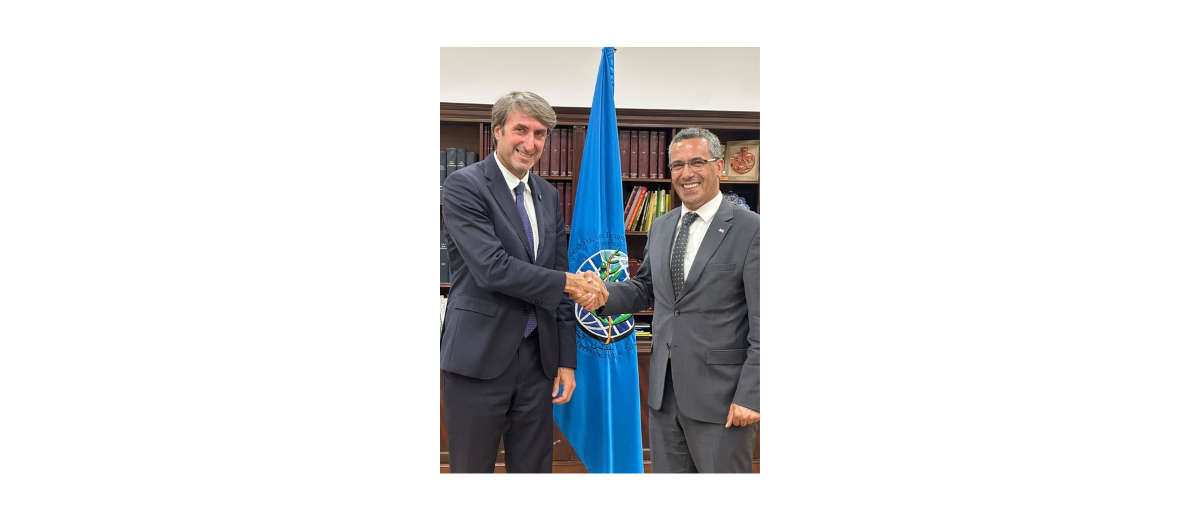
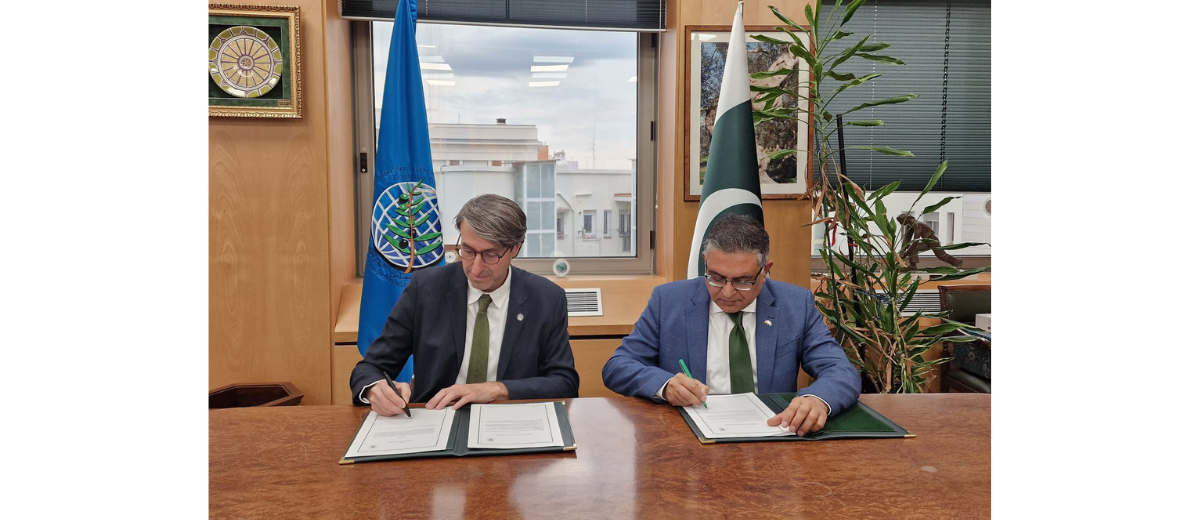
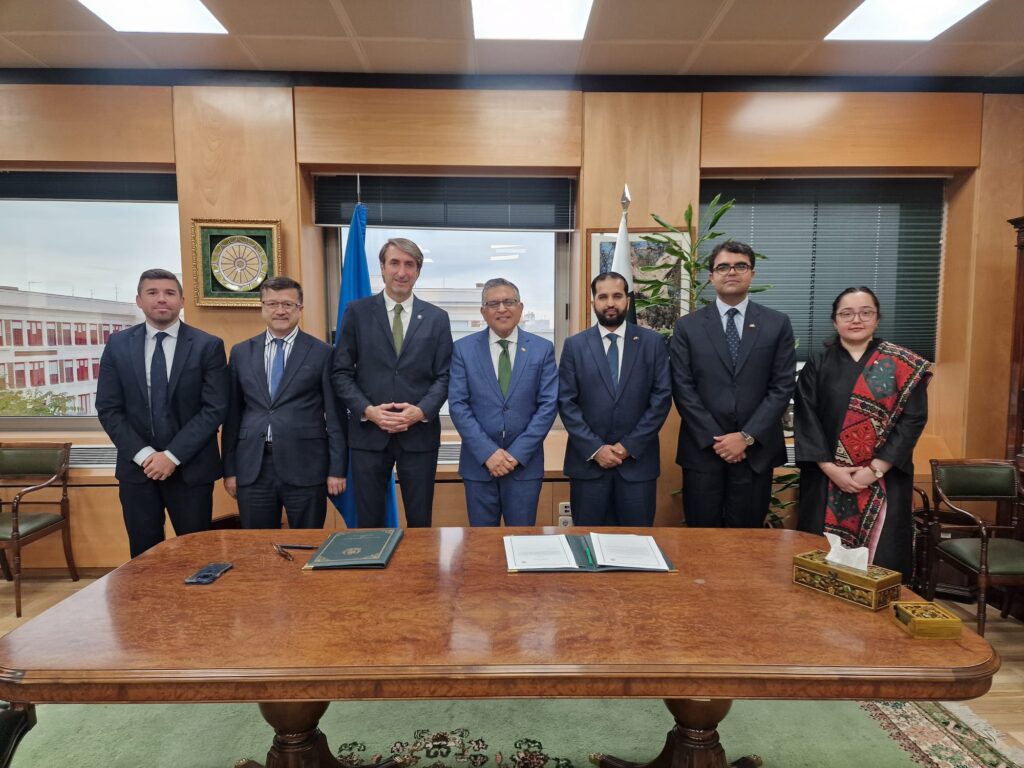
The International Olive Council (IOC) welcomed a delegation from the Embassy of Pakistan to Spain, led by Ambassador H.E. Mr Zahoor Ahmed, to IOC headquarters in Madrid for the signature of the instrument of accession to the International Agreement on Olive Oil and Table Olives, 2015, on Friday, 8 May 2026.
During the visit, IOC Executive Director Jaime Lillo formally handed to the Ambassador the decision adopted by the Council of Members approving Pakistan’s accession to the Organisation. Ambassador Ahmed subsequently signed the model instrument of accession, which will now be deposited with the United Nations Treaty Section in New York to complete the formal process for Pakistan to become an IOC member country.
Pakistan’s accession represents an important milestone both for the country’s developing olive sector and for the IOC itself, reflecting the growing international reach of the Organisation beyond its traditional Mediterranean roots. As global interest in olive cultivation and olive oil consumption continues to expand, Pakistan’s membership illustrates the increasing relevance of IOC standards, expertise and cooperation frameworks in emerging olive-producing countries.
During the meeting, discussions also focused on future avenues for collaboration between the IOC and Pakistan, including the possibility of organising a technical webinar involving the IOC’s operational units and representatives of Pakistan’s Ministry of Agriculture. The exchange highlighted shared interest in strengthening technical cooperation, capacity building, quality standards, research and knowledge transfer in support of the country’s olive sector development.
A growing olive sector
Pakistan has demonstrated growing momentum in the olive sector in recent years, supported by expanding cultivation areas and increasing domestic demand. According to IOC estimates, Pakistan’s olive oil production for the 2024/25 crop year is expected to reach approximately 1,500 tonnes, while imports are estimated at 3,500 tonnes and total consumption at around 5,000 tonnes. The European Union remains Pakistan’s principal trading partner in the sector, underlining the country’s increasing integration into international olive oil trade flows.
As the only intergovernmental organisation dedicated to olive oil and table olives, the IOC plays a central role in developing international trade standards, promoting quality and authenticity, and fostering technical cooperation among its members.