Olives
The olive fruit is a drupe, similar in botanical structure to fruits such as cherries or plums. However, it differs in several important ways. Olives contain a bitter compound called oleuropein, relatively low levels of sugar (2.6–6%) compared with other drupes (which typically contain 12% or more), and a high oil content ranging from 12% to 30%, depending on the variety and the stage of ripeness.

Because of these characteristics, olives cannot normally be consumed directly from the tree. The natural bitterness caused by oleuropein requires the fruit to undergo processing or curing methods, which vary widely across olive-growing regions and according to the variety used.
There are, however, a few exceptions. Certain olives become naturally sweeter as they ripen on the tree, often due to natural fermentation processes. One example is the Thrubolea variety in Greece.
Although oleuropein gives olives their strong bitter taste, it is not harmful to health. To make olives suitable for consumption, this compound must be removed or transformed during processing. Traditionally, olives are treated using sodium or potassium hydroxide solutions, brine, or repeated rinsing in water, depending on local customs and preparation techniques.
Characteristics of table olives
The suitability of olives for table consumption depends on several physical and chemical characteristics.
Size
Size is an important factor for presentation and commercial value.
- Olives weighing 3–5 grams are considered medium-sized.
- Olives over 5 grams are considered large and are generally preferred for table olives.
Stone
Ideally, the stone should separate easily from the flesh. A flesh-to-stone ratio of 5:1 is considered acceptable; the higher the ratio, the greater the commercial value.
Sugar content
Sugar content influences fermentation and flavour development during processing.
Shape
Fruits that are more or less spherical generally sell best, although some elongated varieties are also popular in certain markets.
Skin
The skin should be fine yet elastic, capable of resisting impacts and withstanding treatment in alkaline solutions and brines during processing.
Oil content
Oil content varies according to variety and ripening stage and plays an important role in flavour and texture.
Olives turning colour
These olives are harvested when their colour begins to change during the ripening process, before full maturity is reached. At this stage the flesh is still firm and oil formation has not yet been completed.
A well-known method for producing these olives involves oxidation to darken the fruit, a technique widely used in California-style olives.
After harvesting, olives suitable for processing are sorted at the factory and placed in brine solutions ranging from 2.5% to 10%, depending on fruit size, while being protected from air exposure.
The olives are then transferred to large concrete tanks containing an initial 2% lye solution. Before final preparation for market, they undergo further treatments in diluted lye followed by washing in aerated water. These steps allow the solution to penetrate the fruit and remove bitterness.
After the lye treatment:
- olives are washed to remove residues,
- the pH is adjusted close to neutral,
- ferrous gluconate or lactate (0.1%) may be added to enhance darkening.
After several days in brine, the olives are ready for canning, followed by heat sterilisation under controlled temperature and pressure, which ensures proper preservation.
Green olives
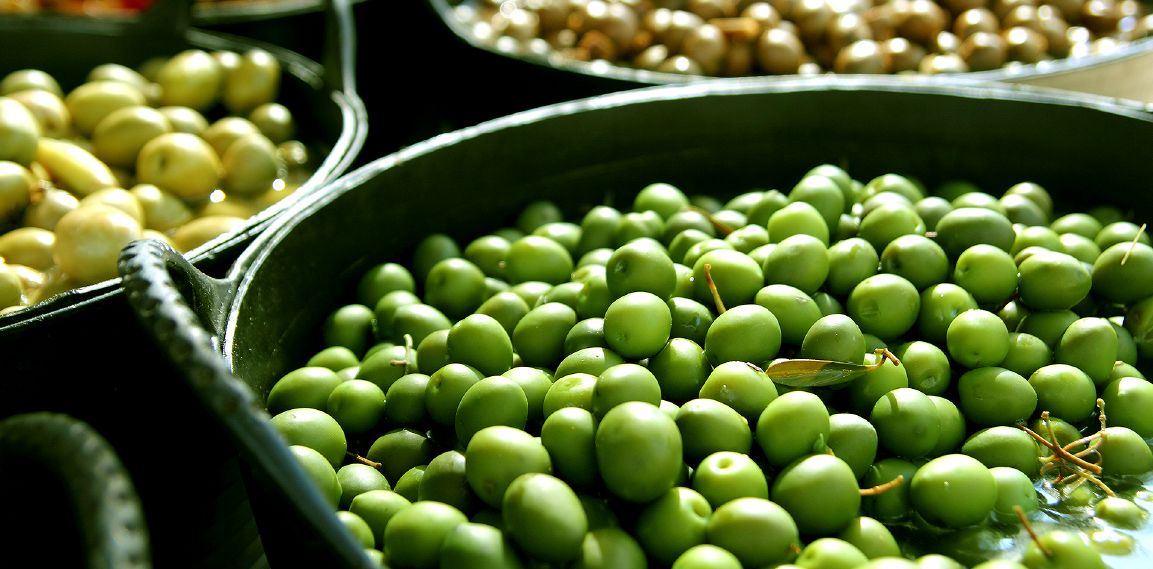
Green olives are harvested during the ripening cycle before any colour change occurs, when the fruit has reached its normal size but remains firm. They are usually hand-picked when the colour changes slightly from leaf-green to yellowish green.
Although mechanical harvesting has been tested, it often causes bruising, which can damage fruit quality. For this reason, hand harvesting remains common for table olives.
Ideally, olives are transported to the processing plant and treated on the same day they are harvested
Processing methods for green olives
Green olives are mainly processed using two principal methods:
- Spanish (or Sevillian) style – with fermentation
- Picholine (or American) style – without fermentation
Spanish or Sevillian style
In this traditional method, olives are treated in diluted sodium hydroxide (lye) to eliminate oleuropein and transform sugars into compounds that support fermentation. The treatment also increases the fruit’s permeability.
Lye concentrations usually range from 2% to 3.5%, depending on factors such as ripeness, temperature, variety and water quality. The olives remain in the solution until it penetrates about two-thirds of the flesh, after which they are washed to remove residues.
The olives are then placed in brine, where fermentation takes place. Traditionally fermentation occurred in wooden barrels, although modern processing often uses large inert containers.
Fermentation produces a favourable environment for lactic acid bacteria, particularly Lactobacillus plantarum, which converts glucose into lactic acid and lowers the pH of the brine to around 4.5.
If properly controlled, fermentation preserves olives for long periods. However, undesirable microorganisms may sometimes alter the process, causing defects such as:
- gas pocket fermentation
- butyric fermentation
- putrid fermentation
- “zapatería” deterioration, which produces unpleasant flavours and odours
Maintaining appropriate hygiene, salt concentration (around 5%) and pH (around 4.5) helps prevent these problems.
Once fermentation is complete, olives are sorted and packed in barrels, glass jars or tins, sometimes pitted or stuffed with ingredients such as anchovies or pimento.
Common varieties used for this method include Manzanillo, Gordal and Moroccan Picholine.
Picholine style
This method is typical for olives such as Picholine from Languedoc and Lucques in southern France, as well as some varieties from Morocco and Algeria.
Bitterness is removed by soaking the olives in a 3–3.5°B lye solution for 8 to 72 hours, until the solution penetrates approximately three-quarters of the flesh.
The olives are then rinsed repeatedly and placed in 5–6% brine for two days. A second brine solution of 7% is then prepared, and acidity is adjusted with citric acid to pH 4.5.
After 8–10 days, the olives are ready for consumption and retain their intense green colour.
If storage is required, the olives can remain in 8% brine until spring, after which the concentration is increased to 10%. Large facilities may also store olives in cold rooms at 5–7°C in 3% brine.
Before shipment, olives are washed, sorted and packed in containers with 5–6°B brine.
Black olives
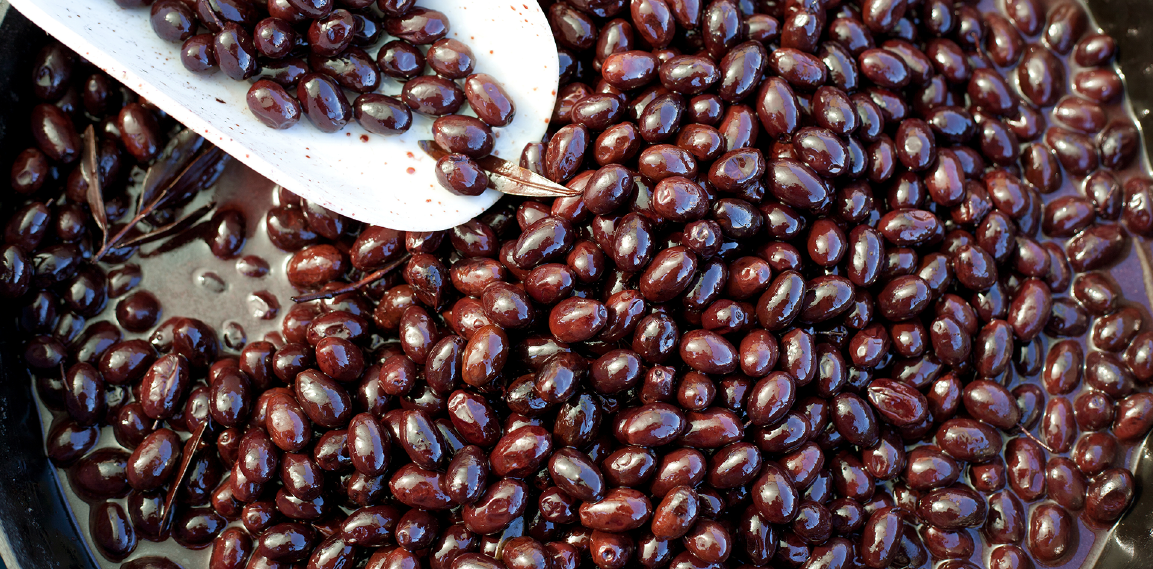
Black olives are harvested when the fruit is close to full ripeness, once it has reached the colour and oil content characteristic of its variety. Numerous preparation styles exist depending on local traditions.
Two of the most common are outlined below.
Black olives in brine
This method is typical of eastern Mediterranean countries.
In Greece, olives of the Conservolea variety are commonly used, while in Türkiye the Gemlik variety is typical. The olives are picked by hand when fully ripe but before they become overripe or damaged by frost.
After harvesting, the olives are quickly transported to the processing plant where they are sorted, washed and placed in 8–10% brine. During fermentation the tanks are sealed to prevent air exposure.
The brine stimulates microbial activity, reducing bitterness. As fermentation progresses, the salt concentration drops and must be readjusted to 8–10%.
If the colour fades during processing, olives may be aerated for several days or treated with 0.1% ferrous gluconate or lactate to restore a deeper black colour.
Finally, olives are sorted and packed in barrels or varnished cans with fresh 8% brine.
They may also be packed with vinegar (about 25% of the brine volume) and sometimes undergo heat processing. In some cases a small amount of oil is added to form a protective surface layer.
The Kalamata variety is commonly prepared in this way. These elongated olives are often slit to absorb the flavour of marinades before packaging.
Black olives in dry salt
This preparation, also of Greek origin, uses overripe olives of the Megaritiki variety.
The olives are washed and layered in baskets with dry salt equal to about 15% of their weight. The resulting product is salty rather than bitter and has a wrinkled appearance similar to raisins. It is usually consumed locally.
A diversity of traditions
Across olive-growing regions, many other traditional preparation methods exist. In some cases olives are soaked in water to remove bitterness before being crushed or split, which speeds up washing.
They are often seasoned with herbs, garlic, citrus peel, paprika, oregano and other ingredients, reflecting regional culinary traditions.
Until the early twentieth century, the table olive market was largely local and regional. Since then it has expanded globally, and table olives have become popular in many non-producing regions. Today, Spanish, Greek and California-style olives are among the most widely recognised preparations worldwide.
Home-cured olives
Preparing olives at home is a traditional practice in many olive-growing regions. Although methods may vary slightly depending on local customs and varieties, the basic process follows a number of key steps.
When to harvest
Olives should be harvested while still green but at their maximum size, just before they begin to change colour and develop a faint pale-yellow tone.
Depending on the variety, producing area, cultivation system (irrigated or dry-farmed) and the weather conditions of the season, harvesting generally takes place between late August and the first ten days of October.
Grading and washing
After harvesting, the olives should be graded and thoroughly washed to remove dust, leaves and other impurities. Once cleaned, they are ready to be placed in a lye solution.
Preparing the lye solution
In the past, olive or oak ash — and sometimes lime — was used to remove bitterness. Today, however, lye (sodium hydroxide) is almost always used.
The quantity required depends partly on the water content of the olives:
- 20 g of lye per kilogram of olives for dry-farmed fruit
- 25 g of lye per kilogram of olives for irrigated fruit or during seasons with normal rainfall
To prepare the solution:
- Use 1 litre of water per kilogram of olives.
- For example, 10 kg of olives require 10 litres of water.
- If using the 25 g proportion, add 250 g of lye to the water.
When lye dissolves in water, it produces an exothermic reaction, causing the liquid to heat up. The solution must therefore be left to cool before use.
Containers can be made of plastic, wood, tin-plated aluminium or terracotta.
Soaking the olives in the lye solution
Place the olives in the solution and stir them using a wooden spoon or spatula so that they are fully coated.
Most olives will sink to the bottom, but some may float. It is important to keep all olives fully submerged, otherwise the exposed part may turn brown.
If olives coated with the solution are exposed to air, they may absorb carbon dioxide, which converts sodium hydroxide into sodium carbonate, turning the fruit a dark blackish colour instead of the desired uniform green.
To avoid this, cover the container with a lid made of galvanised tin, aluminium or another suitable material so the olives remain completely immersed.
How long to soak the olives
Soaking time depends on several factors:
- rainfall during the season
- irrigation conditions
- olive variety
- fruit size
- thickness of the flesh
In general, olives should remain in the solution for 8 to 12 hours.
After 8 hours, testing should begin every 30 minutes to determine how far the solution has penetrated the flesh.
The olives are ready when the solution has penetrated about halfway through the flesh. If the penetration is insufficient, return the olives to the solution and test again after another half hour.
Removing the olives from the lye
When the soaking process is complete, the solution will appear very dark.
The olives can either be lifted out of the container or the liquid can be drained off, depending on the available equipment. Care should be taken not to touch the olives directly with bare hands.
The olives must then be washed in clean tap water. Use more water than was used in the lye solution in order to remove residual lye and other compounds.
As the water darkens, it should be replaced repeatedly until it remains clear and clean. At this stage it is advisable to taste the olives to ensure the bitterness has been reduced sufficiently.
Seasoning the olives
Once the olives have been almost completely washed, the seasoning liquid can be prepared.
In a saucepan, add water equivalent to two-thirds of the weight of the olives (in litres) and the following ingredients:
- 20–25 g bay leaves
- 10–15 g dill
- the peel of 3–4 medium lemons, roughly chopped
Preserving the olives
Place the olives in well-washed containers, such as glass jars or terracotta vessels with long necks and airtight lids.
Fill the container with olives up to two fingers below the lid, then pour in the filtered seasoning liquid until the jar is full.
Store the jars in a cool, dry place.
The olives can be eaten immediately, although leaving them for a few days allows them to absorb the full aroma of the seasoning.
After two weeks, it is advisable to drain the seasoning liquid and cover the olives with clean water containing 25 g of salt per kilogram of olives.