Safeguarding the olive tree
For the first time in history, olive seeds were deposited in the Svalbard Global Seed Vault in February 2026.
The International Olive Council (IOC), together with the University of Córdoba (UCO) and the University of Granada (UGR), the Spanish National Research Council (CSIC), the National Institute for Agricultural and Food Research and Technology (INIA-CSIC) and the Centre for Plant Genetic Resources (CRF), participated in the first-ever deposit of a safety duplicate of the world’s olive genetic heritage in the Svalbard Global Seed Vault, the world’s largest facility dedicated to the long-term conservation of agricultural seeds. Located in the Arctic archipelago of Svalbard, Norway, and managed by the Nordic Genetic Resource Center (NordGen), this infrastructure offers the highest guarantees of security and stability for the preservation of plant biodiversity in the face of global risks. This initiative was launched by the consortium of the European H2020 GEN4OLIVE project and was subsequently promoted by the IOC and the Food and Agriculture Organization of the United Nations (FAO), which were members of that project.
Thanks to the cooperation between the FAO, the IOC and the Spanish Ministry of Agriculture, Fisheries and Food (MAPA), a tripartite agreement was signed in 2024 formally incorporating the World Olive Germplasm Bank of Córdoba (BGMO-UCO) into the framework of the International Treaty on Plant Genetic Resources for Food and Agriculture (ITPGRFA). This incorporation has enabled the integration of the olive tree into the major international mechanisms for the conservation and use of plant genetic resources, namely the use of the Standard Material Transfer Agreement and the possibility of depositing seeds in the Svalbard Vault, thereby strengthening the long-term safeguarding of olive genetic diversity for future generations. As olive varieties are multiplied by vegetative reproduction, a different approach has been adopted for this deposit so that the selected olive seeds represent the genetic diversity of cultivated olives worldwide.
Why is it essential to protect the olive tree?
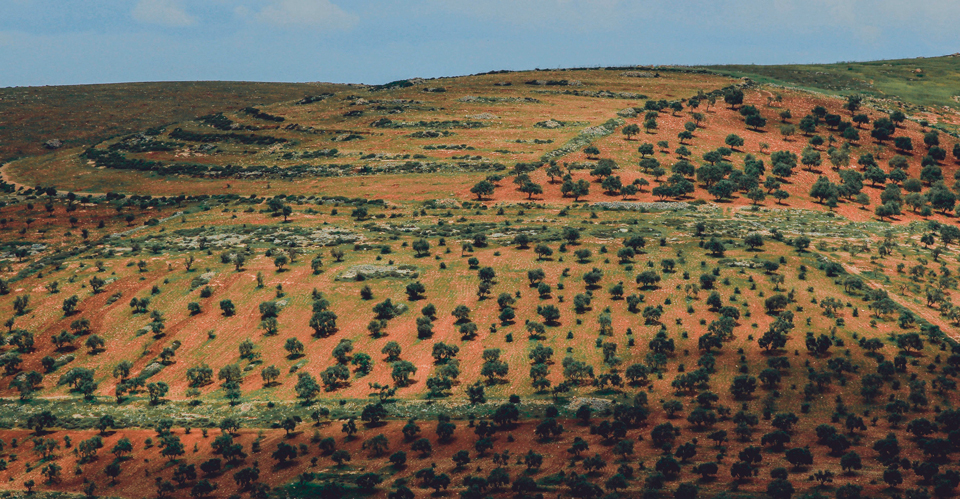
The olive tree is not exempt from the major challenges facing humanity, such as climate change and the accelerated loss of genetic diversity. In fact, the risks posed by climate change to a species that reproduces vegetatively are far greater, not only because of abiotic changes in temperature or rainfall but also due to associated pest and disease problems, to which tree collections are particularly susceptible.
Responding to one of the main objectives of the international agreement it administers, the IOC, together with UCO and UGR, has led the establishment of a safety duplicate representing the maximum genetic diversity of cultivated olives worldwide and of Spanish wild olive populations, in the form of seeds collected from open-pollinated trees in the BGMO-UCO collection and from wild populations surveyed by UGR. This safety duplicate will be conserved at the CRF of INIA-CSIC and a duplicate will be sent to Svalbard. This initiative seeks to preserve the genetic heritage of the olive tree for future generations, ensuring its conservation in the event of natural disasters, conflicts or global crises.
The Svalbard Global Seed Vault
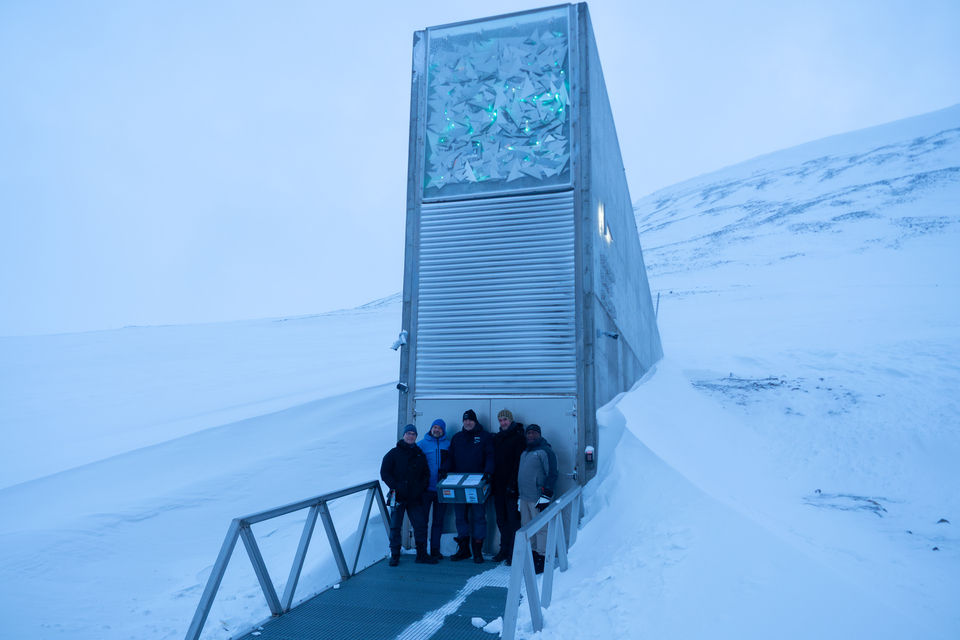
The Svalbard Global Seed Vault is the world’s largest facility dedicated to the conservation of agricultural seeds. It is located on the island of Spitsbergen, in the Norwegian archipelago of Svalbard, near Longyearbyen. It provides secure, long-term storage of duplicate seed samples conserved in gene banks around the world, with the aim of safeguarding crop biodiversity against various threats (natural disasters, conflicts, failures in gene banks, the effects of climate change, etc.).
The facility is designed to operate even in the event of electrical system failures, relying on the natural Arctic permafrost and additional refrigeration equipment to maintain seeds at very low temperatures (−18°C), optimal for their long-term preservation.
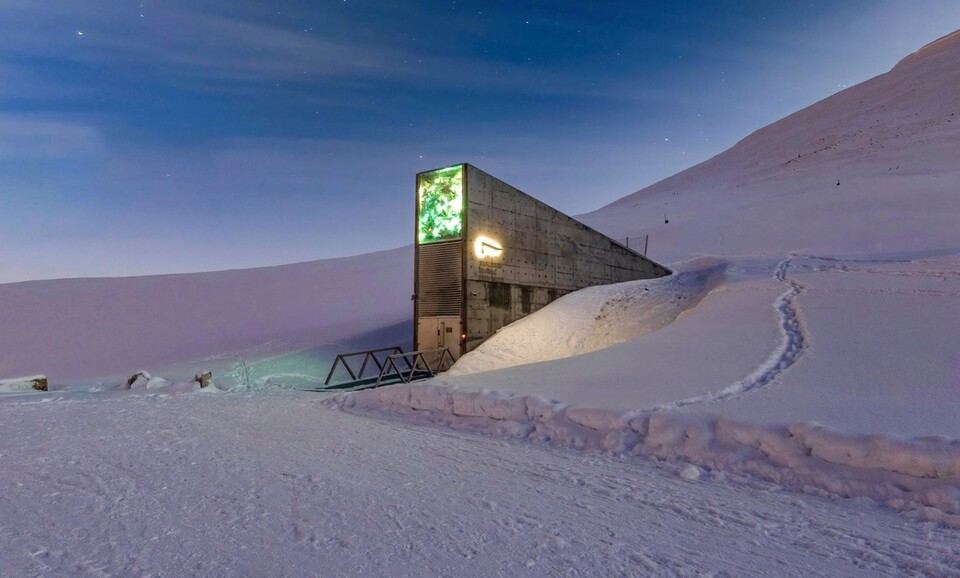
Svalbard Global Seed Vault. Photo: NordGen.
The first-ever deposit of olive seeds
This project symbolises a concrete commitment to the conservation of olive genetic diversity, one of the most deeply rooted agricultural species in the history of the Mediterranean basin. It involves the first-ever deposit of olive seeds for conservation in the Svalbard Vault. Between 23 and 27 February 2026, a delegation from the IOC, UCO and FAO travelled to Norway to attend the official ceremony marking the introduction of olive seeds into the Vault, a highly significant and symbolic milestone in the conservation of olive genetic diversity.
This historic milestone has been made possible thanks to the initiative generated within the European GEN4OLIVE project under the Horizon 2020 call, a project focused on the conservation, characterisation and valorisation of olive genetic resources, led by UCO and supported by the IOC.
The work required to carry out this deposit involves a scientific process comprising several stages and the involvement of different research centres.
Collection of seed simples:
- The storage conditions of the Svalbard Vault require that the material deposited consist of seeds. Since cultivated olives are propagated vegetatively, the selection of seed samples is critical to guarantee the biodiversity of the material deposited.
- The seeds sent to Svalbard come both from living specimens in the ex situ collection of the BGMO-UCO — which houses more than 700 olive varieties — and from seeds collected by UGR from wild olive trees (oleasters) in different natural populations across the Iberian Peninsula.
- The seeds collected from the Córdoba collection originate from native varieties from different IOC member countries, including Albania, Algeria, Cyprus, Croatia, Spain, France, Greece, Italy, Morocco, Portugal, Syria, Tunisia and Türkiye.
- Following their selection, the fruits collected from the UCO collection, together with those from wild specimens, were processed in the laboratory in accordance with a protocol developed by UGR and UCO.
Preparation of the material in the laboratory
- The olives collected from each variety are depulped by extracting the stones (endocarps), which are cleaned of organic residues and air-dried. The seeds are located inside the stones, protected by their natural casing against possible damage.
- The classified and labelled samples are sent for conservation in the base or safety collection of the CRF, where germination tests are carried out to assess seed viability, following protocols established by UGR and UCO, thereby establishing a reference point for monitoring their conservation every ten years.
- Once prepared, part of the samples are stored in airtight containers at –18°C, under the same conditions as those they have in Svalbard.
- The remaining seeds are placed in special hermetically sealed envelopes labelled with detailed information.
- Throughout this process, the samples are accompanied by information (codes, collection sites) which is sent to NordGen for incorporation into the Vault’s collection databases.
- The seed envelopes, together with the accompanying information, are placed inside special boxes prepared for transport and storage in the Vault.
Shipment and deposit
- The material traveled from the collection site to the UCO laboratory and from there to the CRF laboratory, from where it was finally shipped to the Svalbard Vault by land and air transport to Longyearbyen.
- Upon arrival, authorised NordGen staff coordinated its reception and the deposit of the boxes in the underground chambers of the Vault, where they will be stored for the long term.
This procedure follows the international rules in force for deposits in Svalbard: each gene bank retains ownership of its seeds. The deposit does not transfer genetic ownership of the seeds but acts as a global safety duplicate. In addition, an exact copy of the material deposited in Svalbard is stored at the CRF facilities as a duplicate.
What is the significance of this project?
For both the olive sector and global society, this initiative:
- Guarantees the conservation of olive genetic diversity for future generations in the face of environmental, social and economic risks.
- Represents a multilateral collection of native varieties from olive-growing countries that are members of the IOC.
- Serves as an inspiring example of international cooperation among scientific institutions, academic bodies and international organisations in favour of crop conservation and global food security.
- Underscores that the conservation of traditional and wild olive varieties is not merely a scientific action but a commitment to the resilience of agricultural systems and future food security.
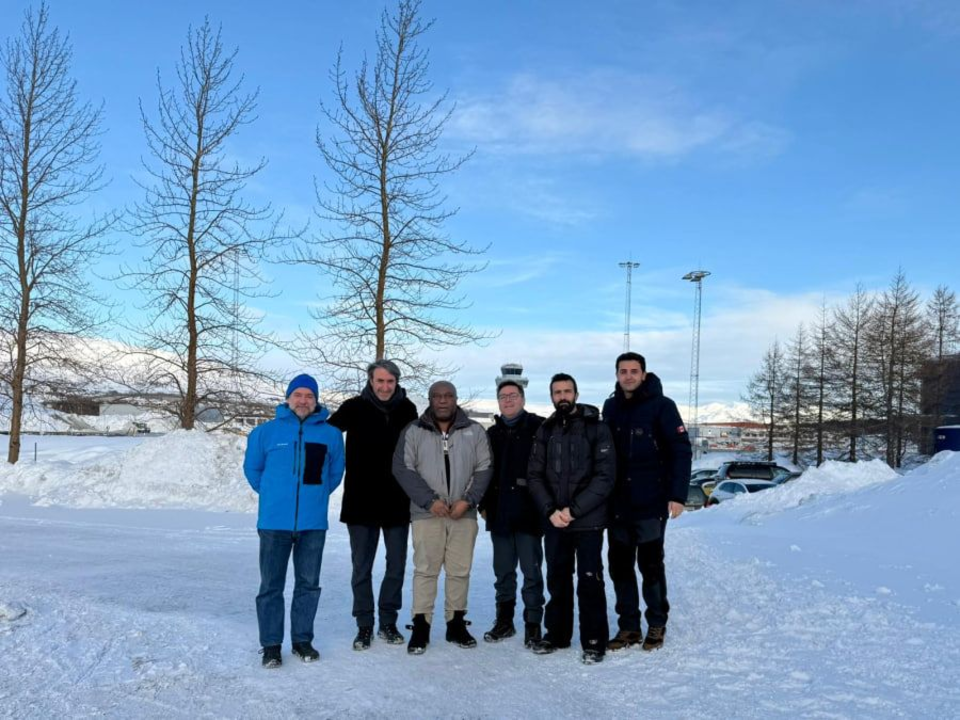
IOC, FAO and UCO delegation.
Olive seed deposit in the Svalbard Global Seed Vault.
Institutional participation
The project was made possible thanks to the generous collaboration between several key institutions:
- University of Córdoba and University of Granada – Identification, selection and preparation of genetic material, through the H2020 GEN4OLIVE project, from which this initiative originated.
- Centre for Plant Genetic Resources, National Institute for Agricultural and Food Research and Technology, Spanish National Research Council (CRF, INIA-CSIC) – Scientific and technical assistance, seed preparation and management of shipment to Svalbard.
- Spanish Ministry of Agriculture, Fisheries and Food – Institutional and logistical support.
- Food and Agriculture Organization of the United Nations (FAO) – International cooperation framework and advisory role. The FAO administers the International Treaty on Plant Genetic Resources for Food and Agriculture (ITPGRFA).
- International Olive Council (IOC) – Coordination and leadership of the project.
Taking a closer look:
The International Olive Germplasm Bank of Spain (WOGB-Spain)
The International Olive Germplasm Bank of Spain forms part of the IOC network of germplasm banks created in 1994. The Spanish bank is the most important in this network and is the result of ongoing cooperation between two institutions: the current Institute for Agricultural and Fisheries Research and Training of the Regional Government of Andalusia (IFAPA) and the University of Córdoba, since 1970. It consists of two collections hosted by these institutions.
University of Córdoba (UCO)
The University of Córdoba (UCO) is a public higher education institution located in the city of Córdoba, in the autonomous community of Andalusia, founded in 1972. It offers a wide range of undergraduate, master’s and doctoral degrees in fields such as science, engineering, health sciences, social sciences and the humanities. It stands out particularly for its prestige in agri-food studies, veterinary sciences and environmental sciences, being a national and international reference in research in these fields. Its strong tradition in agri-food research, especially in the olive sector — one of the economic and cultural pillars of the Mediterranean — has been made possible thanks to research groups such as UCOLIVO, which is internationally pioneering in the characterisation and conservation of olive genetic resources, the genetic improvement of varieties and the optimisation of cultivation systems such as intensive and hedgerow olive groves. In the field of specialised training, UCO organises the Master’s Degree in Olive Growing and Olive Oil Technology, an officially recognised and accredited programme within the Spanish university system, delivered in collaboration with institutions such as the Regional Ministry of Agriculture of the Government of Andalusia, the CSIC, the IOC and IFAPA.
World Olive Germplasm Bank of the University of Córdoba (WOGB-UCO)
The collection of the International Olive Germplasm Bank located at the University of Córdoba is managed by the CEVO Unit and the UCOLIVO research group. It is one of the world’s most important collections dedicated to conserving the genetic diversity of this crop. It houses more than 700 olive varieties from 26 countries, making it a key resource for research, breeding, adaptation to climate change and the preservation of the world’s olive heritage.
World Olive Germplasm Bank of the University of Córdoba (WOGB-UCO)
GEN4OLIVE Project
GEN4OLIVE was an innovation action funded by European funds that concluded in March 2025 and aimed to increase the mobilisation of olive genetic resources and promote pre-breeding activities through: (1) the characterisation of around 500 varieties and 1,000 wild and ancestral genotypes from across the Mediterranean basin; (2) the development of smart ICT tools to make genetic resources more accessible to end users; and (3) the promotion of breeder and producer participation through two open calls to support pre-breeding activities. The main objective of this project was to accelerate the mobilisation of olive genetic resources and foster pre-breeding activities around four main themes: resilience to climate change, pest and disease resistance, high productivity and quality varieties, and adaptation to modern planting systems. The project was supported by the European Union’s Horizon 2020 programme.
International Treaty on Plant Genetic Resources for Food and Agriculture (ITPGRFA)
The ITPGRFA is an international agreement adopted within the framework of the FAO to facilitate access to plant genetic resources and to ensure the fair and equitable sharing of benefits arising from their use, particularly in support of global food security. Spain, Morocco and, in the near future, other IOC member countries are among the signatories to this treaty, which establishes a multilateral system of access to an agreed list of key crops for their conservation, research and genetic improvement. The signature of the ITPGRFA by these countries reflects their commitment to protecting agricultural biodiversity, the responsible exchange of plant material and the recognition of farmers’ rights in the management of these essential resources within the framework of the IOC olive germplasm bank network.
International Treaty on Plant Genetic Resources for Food and Agriculture (ITPGRFA)
Spanish National Research Council (CSIC), National Institute for Agricultural and Food Research and Technology (INIA) and Centre for Plant Genetic Resources (CRF)
The CSIC is Spain’s largest public research organisation who managed and signed the agreement with the Government of Norway for the deposit of Spanish seeds in the Svalbard Vault in 2022. INIA, now integrated into the CSIC, is the specialised centre for agri-food research. The mission of the CRF of INIA-CSIC is to contribute to the preservation and use of the genetic diversity of native plant species, varieties and ecotypes, obsolete cultivars, wild species and other materials whose genetic potential may be used in agriculture and food production. As the body responsible for the long-term conservation of plant genetic resources, the management of the National Inventory and the coordination of activities of the gene banks within the National Programme Collection Network, the CRF ensures that the triplicates sent correspond to the same sample batch conserved in its base collection and that monitoring and updated information on the material sent can be maintained. These resources may constitute the essential base material required for the development of new varieties adapted to changing conditions and for the advancement of new agricultural systems. Many of these materials, no longer cultivated today, would have disappeared had they not been conserved in gene banks such as the CRF.
Spanish National Research Council (CSIC)
National Institute for Agricultural and Food Research and Technology (INIA)
International Olive Council (IOC)
The IOC is the only international and intergovernmental organisation dedicated to olive oil and table olives. It was established in 1959 under the auspices of the United Nations with the aim of making a decisive contribution to the sustainable development of the sector by promoting quality, research and international trade in olive oil and table olives. Its member countries account for more than 95% of global olive production.
Documentary “The Olive Tree’s Legacy”
To highlight this milestone in the conservation of the olive tree, the IOC produced a documentary covering the entire process: from collection and preparation in Spain to the journey and deposit ceremony in Svalbard. This documentary is a key communication tool that helps to explain the value of agricultural biodiversity, the role of the olive tree in Mediterranean culture and the importance of global conservation initiatives.
It was produced by Llamaranta Comunicación in 2026 and aired for the first time on 30 October 2026 at the headquarters of the Spanish Ministry of Agriculture.
Official documentary presentation
“The Olive Tree’s Legacy”: Official documentary presentation event at the Spanish Ministry of Agriculture, Fisheries and Food.
Draft event programme
Friday 30 October 2026 | 11h.
Venue: Auditorium of the Ministry of Agriculture, Fisheries and Food.
| 11.00 | 12.00 | Official opening | |
| 11.00 | 11.10 | Spanish Minister for Agriculture, Fisheries and Food (MAPA) | Luis Planas |
| 11.10 | 11.20 | Norwegian Minister for Agriculture | Nils Kristen Sandtrøen (TBC) |
| 11.20 | 11.30 | Executive Director of NordGen (Nordic Centre for Genetic Resources) | Lene Krøl Andersen (Video) |
| 11.30 | 11.40 | Secretary of the International Treaty on Plant Genetic Resources for Food and Agriculture (ITPGRFA) | Kent Nnadozie (Video) |
| 11.40 | 11.50 | Vice President of the Spanish National Research Council (CSIC) | Elena Cartea |
| 11.50 | 12.00 | Vice-Chancellor, University of Córdoba | Manuel Torralbo Rodríguez (TBC) |
| 12.00 | 12.15 | Screening of the documentary ‘The Olive Tree’s Legacy’ | |
| 12.15 | 12.25 | Executive Director, International Olive Council (IOC) | Jaime Lillo |
| 12.30 | 13.30 | Closing reception | |
Provisional programme · Times subject to confirmation