• Skip to main content

International Olive Council

The website of the International Olive Council

International olive council logo
Linkedin icon Twitter icon
  • Health
  • Culinary
  • Sustainability
Contracts Grants Vacancies Patronage
Mail envelope Contact us
Magnifier Search
Person icon Private area
Person icon
Menu icon
MENUMENU
  • About IOC
    • Welcome Message
    • Mission & Basic Text
    • Structure
    • List of IOC Members
    • Where we are
    • IOC News
  • What we do
    • Standardisation and Research Unit
      • IOC Standards, Methods and Guides
      • Working Groups
      • Recognition of Laboratories and Panels
      • IOC Mario Solinas Quality Award
      • IOC Institutional Support
      • Olive Oil, Nutrition and Health
      • Research & Internship in the Standardisation and Research Unit
      • Database of IOC Documents
    • Olive Growing, Olive Oil Technology and Environment Unit
      • Technical Cooperation and Training
      • Olive Oil Technology and the Environment
      • IOC Scholarships
      • Supporting Member Countries
      • External Projects and Institutional Agreements
      • IOC Network of International Olive Germplasm Banks
      • Key Projects and Technical Resources
    • Financial Management Unit
    • Economic Affairs & Promotion Unit
      • Market Statistics
      • Country Profiles
      • Promotion Campaigns
      • Grants for Promotion Activities
      • Studies & Seminars
    • Administrative Management and Human Resources Unit
    • Observatory & IT System Department
    • Health
    • Culinary
    • Sustainability
    • Statistics
  • Olive World
    • The Olive Tree
    • Table olives
    • Olive Oil
    • Olive Oil & Health
    • Home-Cured Olives
    • Olive Museums & Routes
    • World Olive Tree Day
      • World Olive Day Celebrations
    • Recipes
    • Glossary
  • Resources
    • Carbon Balance Project
    • World Catalogue of Olive Varieties 
    • IOC Published Documents
    • Videos
    • Infographics
  • Standards
  • Statistics
  • Arabic
  • English
  • French
  • Italian
  • Spanish
Contracts Grants Vacancies Patronage
Mail envelope Contact
Magnifier Search
We are social
  • Linkedin icon
  • Twitter icon
MENUMENU
  • About IOC
    • Welcome Message
    • Mission & Basic Text
    • Structure
    • List of IOC Members
    • Where we are
    • IOC News
  • What we do
    • Standardisation and Research Unit
      • IOC Standards, Methods and Guides
      • Working Groups
      • Recognition of Laboratories and Panels
      • IOC Mario Solinas Quality Award
      • IOC Institutional Support
      • Olive Oil, Nutrition and Health
      • Research & Internship in the Standardisation and Research Unit
      • Database of IOC Documents
    • Olive Growing, Olive Oil Technology and Environment Unit
      • Technical Cooperation and Training
      • Olive Oil Technology and the Environment
      • IOC Scholarships
      • Supporting Member Countries
      • External Projects and Institutional Agreements
      • IOC Network of International Olive Germplasm Banks
      • Key Projects and Technical Resources
    • Financial Management Unit
    • Economic Affairs & Promotion Unit
      • Market Statistics
      • Country Profiles
      • Promotion Campaigns
      • Grants for Promotion Activities
      • Studies & Seminars
    • Administrative Management and Human Resources Unit
    • Observatory & IT System Department
    • Health
    • Culinary
    • Sustainability
    • Statistics
  • Olive World
    • The Olive Tree
    • Table olives
    • Olive Oil
    • Olive Oil & Health
    • Home-Cured Olives
    • Olive Museums & Routes
    • World Olive Tree Day
      • World Olive Day Celebrations
    • Recipes
    • Glossary
  • Resources
    • Carbon Balance Project
    • World Catalogue of Olive Varieties 
    • IOC Published Documents
    • Videos
    • Infographics
  • Standards
  • Statistics
  • Arabic
  • English
  • French
  • Italian
  • Spanish
  • Health
  • Culinary
  • Sustainability
Tools icon

IOC NEWS

Home / Blog / International seminar on Xylella fastidiosa
coi ciheam
Enviar noticiaShare Enlace a facebook Enlace a twitter Enlace a linkedin

International seminar on Xylella fastidiosa

28.11.2016

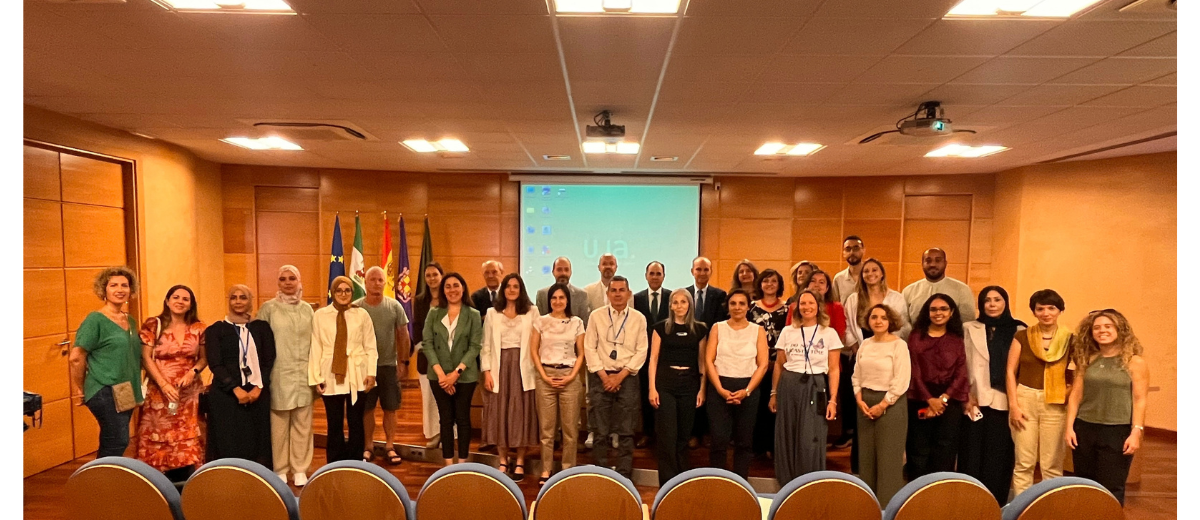
The International Olive Council (IOC) and the International Centre for Advanced Mediterranean Agronomic Studies (CIHEAM), under the Memorandum of Understanding signed in July 2016, have organised a seminar on Xylella fastidiosa¸ the bacterium which, since 2013, has been causing the death of hundreds of olive trees in the Italian region of Apulia, raising grave concerns among all olive producing countries. This seminar is being held from 28 to 30 November at the Mediterranean Agronomic Institute in Bari (Italy).

The organisers’ objective is to examine the current situation and the development of the bacterium and to draw up recommendations and conclusions with a view to developing a technical guide containing guidelines for preventing, identifying, confining and combating this disease. The protocol that will be drawn up in collaboration with the CIHEAM, the Italian Research Council (CNR) and the Food and Agriculture Organization of the United Nations (FAO) will draw on the scientific research available and will build a control and certification instrument, for use not only by the authorities but also by technical experts assisting companies and supplying them with relevant information.

Following the inauguration speech by the Secretary-General of the CIHEAM, Mr Cosimo Cacirignola, the morning proceedings will be led by Mr Francesco Serafini, Head of the Department of Research & Development and Environment of the IOC, the afternoon proceedings being presided over by Ms Françoise Petter from the European and Mediterranean Plant Protection Organization (EPPO). 

The meeting agenda includes a discussion of the preliminary results of monitoring tests carried out on the bacterium and its vectors, possible strategies, agricultural measures to combat the rapid decline syndrome in olive trees, plant certification, the main vectors of Xylella in the world, research projects launched by the European Union, the international standards on phytosanitary measures, Community and Italian legislation and the instruments provided by the Mediterranean Agronomic Institute and CIHEAM for the monitoring and early detection of the bacterium.

A number of experts will be speaking at this seminar: Mr G.P. Martelli and Mr F. Porcelli of the University of Bari, Ms M. Saponari and Dr D. Boccia of the Bari CNR, Mr B. Legendre of ANSES (French Agency for Food, Environmental and Occupational Health & Safety), Mr M. Scortichini and Ms M. Barba of the Council for Agricultural Research and Agricultural Economics Analysis (CREA), Ms A.M. D’Onghia and Mr V. Verrastro of CIHEAM, Ms A. Carlucci of the University of Foggia, Ms S. Brunel of the International Plant Protection Convention (IPPC – FAO), Mr H. Arijs of the Directorate General for Health and Food Safety (European Commission), Mr C. Xiloyannis of the University of Basilicata and Mr S. Schito (Puglia Region).

The participants, including Heads of Delegation of various IOC member countries and those appointed by them to participate in this seminar, will carry out a field trip on Tuesday to make themselves better acquainted with the symptoms of infestation and learn techniques for the collection of plant material and vector insect samples. They will also be able to observe the results of the first tolerance/resistance tests carried out on different olive varieties.

The morning of 30 November will be dedicated to information technology applied to the surveillance of the pathogen, to detection instruments and methods of diagnosis. The participants will be invited to attend a demonstration of a software application, XylApp, developed for the detection of the bacterium. This session will be presided over by Ms D’Onghia from the CIHEAM in Bari and presented by various experts of the same centre, Mr F. Santoro, Ms S. Gualano, Mr K. Djelouah and Mr Yaseen.

Bringing the seminar to a close, the Executive Director of the International Olive Council, Mr Abdellatif Ghedira, will present the conclusions on the measures to be adopted by farmers in order to prevent and limit the spread of Xylella fastidiosa.

,

Enviar noticiaShare Enlace a facebook Enlace a twitter Enlace a linkedin
Last Posts
IOC Executive Director inaugurates WOOE
MADRID, SPAIN / 05.03.2026

The Executive Director of the International Olive Council (IOC) inaugurated the 13th edition of the World Olive Oil Exhibition (WOOE) in Madrid on 3 March, one of the leading international meeting points for the olive oil...

Info

IOC celebrates young culinary talent in Puglia
PUGLIA, ITALY / 04.03.2026

The Organisation reaffirms its commitment to the Italian olive sector Last week, the International Olive Council (IOC) visited Puglia, Italy’s main olive oil producing region. On this occasion, Dr Mercedes Fernández...

Info

IOC at SOL Expo 2026
VERONA, ITALY / 03.03.2026

The Deputy Executive Director of the International Olive Council (IOC), Abderraouf Laajimi, participated in the second edition of SOL Expo, held at Veronafiere in Verona from 1 to 3 March 2026. High-level institutional...

Info

International olive council logo
Privacy Policy
We are social
  • Linkedin icon
  • Twitter icon
© International Olive Council, 2026
Manage Cookie Consent
To provide the best experiences, we use technologies like cookies to store and/or access device information. Consenting to these technologies will allow us to process data such as browsing behavior or unique IDs on this site. Not consenting or withdrawing consent, may adversely affect certain features and functions.
Functional Always active
The technical storage or access is strictly necessary for the legitimate purpose of enabling the use of a specific service explicitly requested by the subscriber or user, or for the sole purpose of carrying out the transmission of a communication over an electronic communications network.
Preferencias
El almacenamiento o acceso técnico es necesario para la finalidad legítima de almacenar preferencias no solicitadas por el abonado o usuario.
Statistics
The technical storage or access that is used exclusively for statistical purposes. El almacenamiento o acceso técnico que se utiliza exclusivamente con fines estadísticos anónimos. Sin un requerimiento, el cumplimiento voluntario por parte de tu proveedor de servicios de Internet, o los registros adicionales de un tercero, la información almacenada o recuperada sólo para este propósito no se puede utilizar para identificarte.
Marketing
The technical storage or access is required to create user profiles to send advertising, or to track the user on a website or across several websites for similar marketing purposes.
Manage options Manage services Manage {vendor_count} vendors Read more about these purposes
View preferences
{title} {title} {title}

Culinary

Olive Oil and the Plant-Forward Kitchen

Discover how the Mediterranean Diet inspires contemporary cooking.

Explore this collaboration between the International Olive Council and The Culinary Institute of America, designed to promote healthy, sustainable and flavourful food choices, with a strong focus on technical training and menu innovation for chefs.

External link

COI logo
CIA logo

Health

The IOC and the University of Navarra, through OHIS (the Olive Health Information System), a platform dedicated to research on the health properties of olive oil and table olives, publish a weekly or bi-weekly collection of scientific articles and summaries of research carried out in this field.

These articles highlight the numerous health benefits of these products.

You can read the summaries of this research here in French, English and Spanish and access the list of articles, or visit the OHIS portal.

Summaries OHIS portal

For any assistance, please contact iooc@internationaloliveoil.org.

Sustainability in the Olive Sector

Access the sustainability portal developed in collaboration between the IOC, the University of Jaén and the Instituto Universitario de Investigación en Olivar y Aceites de Oliva.

Explore research, tools and knowledge supporting sustainable olive growing and responsible production practices.

External link

COI logo
CIA logo

Olive et la cuisine avant-gardiste

Inspiration du régime méditerranéen pour les biscuits contemporains

Apprenez-en plus sur cette collaboration entre le Culinary Institute of America et le Conseil oléicole international pour faire progresser des choix alimentaires sains, durables et délicieux, avec un accent particulier sur la formation technique et l’innovation des menus pour les chefs.

X