
 Share
Share


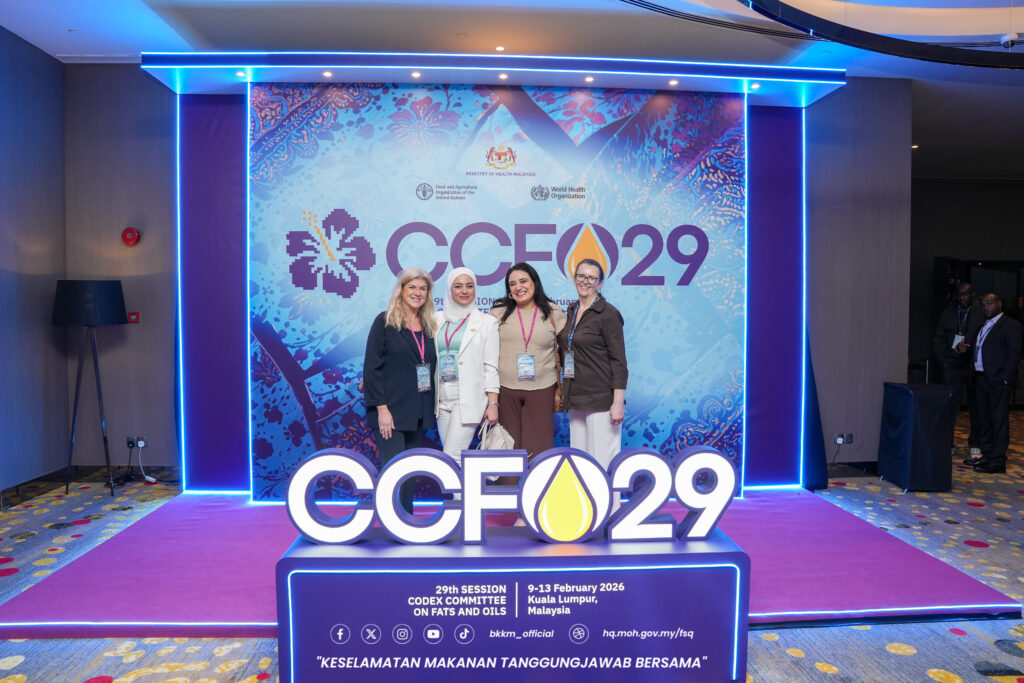
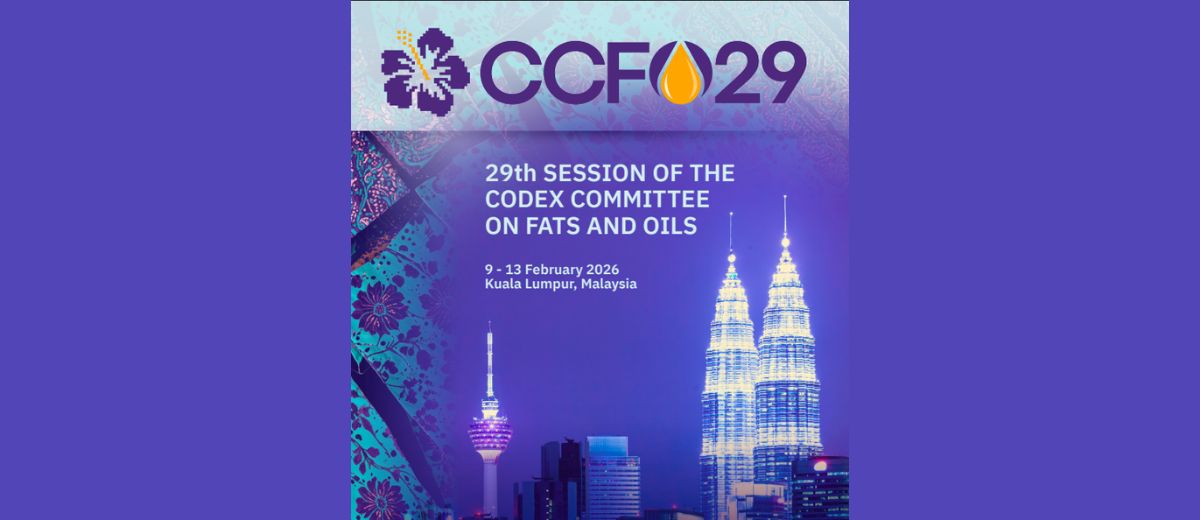
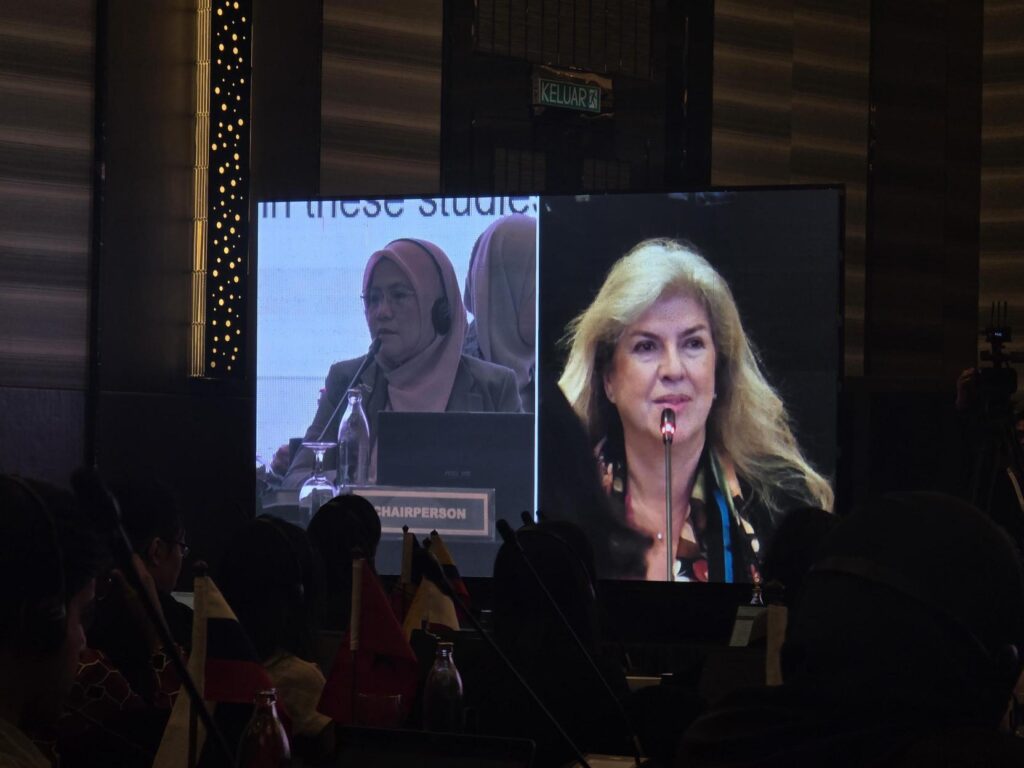
The International Olive Council (IOC) participated in the 29th Session of the Codex Committee on Fats and Oils (CCFO), held from 9 to 13 February 2026 in Kuala Lumpur, Malaysia.
For more than six decades, the IOC has worked closely with Codex to harmonise standards for olive oils and table olives. As the only intergovernmental organisation established under the auspices of the United Nations, it administers the International Agreement on Olive Oils and Table Olives, 2015. The IOC brings together 47 member countries representing over 94% of global production and 96% of international trade — the IOC plays a central role in ensuring that standards are scientifically robust, globally applicable and aligned with market realities.
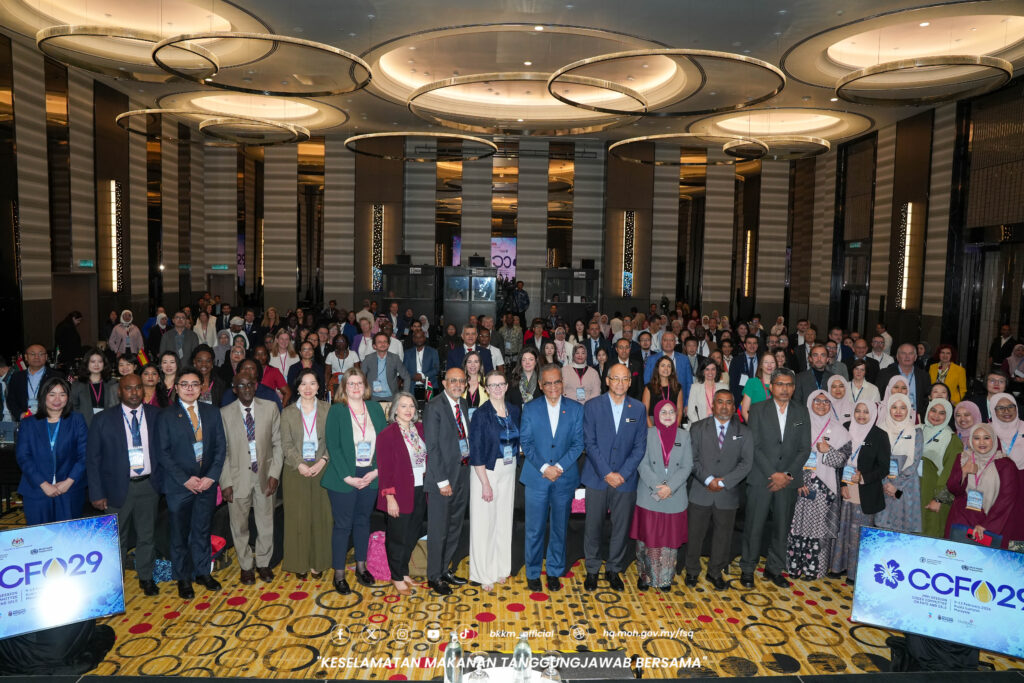
Represented by Dr Mercedes Fernández Albaladejo, Head of the Standardization and Research Unit, and Dr Yousra Antit, Head of the Olive Oil Chemistry Department, the IOC reaffirmed its long-standing collaboration with the Codex Alimentarius in the field of international standard-setting. During the session, the IOC highlighted its extensive technical network, which includes recognised physico-chemical laboratories and sensory panels from both member and non-member countries. This global scientific structure supports the development and continuous improvement of IOC standards.
In the framework of the revision of the Codex Standard on Olive Oil and Olive Pomace Oils (CXS 33-1981), the IOC has conducted several studies at the request of Codex, including studies on fatty acids (2003, 2006 and 2009), on campesterol (2009 – 2011), and on Delta-7-stigmastenol (2007 – 2011), among others.
 In addition, in 2020, five electronic Working Groups (eWG) were established to study fatty acids, the median of the predominant defect, the category of ordinary virgin olive oil, ethyl esters, and parameters such as Pyropheophytins (PPP) and Diacylglycerols (DAG) Between 2022 and 2025, studies on total and individual sterols were also conducted, and since 2025, the IOC has been carrying out studies on olive-pomace oils.
Also in 2025, the IOC established an eWG to study PPP and DAG, where 57 samples from producing countries were received and 46 of them were analysed by IOC-recognised physico-chemical laboratories. The IOC submitted the results of this study to the CCFO eWG, highlighting the technical complexity of these parameters and the challenges related to their analysis.
In the framework of the discussions concerning the revision of the decisional tree on the parameter Delta-7-stigamastenol proposed by Syria at the 47th Codex Alimentarius Commission (CAC), the IOC affirmed its readiness to collaborate closely with Codex, offering access to datasets, laboratories, relevant literature and scientific expertise. On this occasion, the IOC highlighted that it had already conducted relevant studies on this subject and insisted on the importance of including a sufficient range of the parameters included in the IOC-established protocol, in order to ensure robust and significant analyses. The IOC will co-chair the CCFO eWG to study the delta 7 stigmastenol.
As mentioned during Dr Fernández’s intervention, the International Olive Council remains fully at the disposal of the Codex Alimentarius and stands ready to place its expertise, technical structure and scientific capacities at the service of the Codex, as the international reference organisation for olive oils and table olives, in order to conduct studies in a scientific, objective and transparent manner.
The IOC continues to actively participate in Codex committees, including CCFO, Codex Committee for Methods of Analysis and Sampling (CCMAS) and the CAC, contributing to its technical expertise and sharing scientific data. This cooperation supports the harmonisation of international standards, facilitates trade, strengthens consumer protection and helps prevent fraudulent practices in the olive oil sector.